

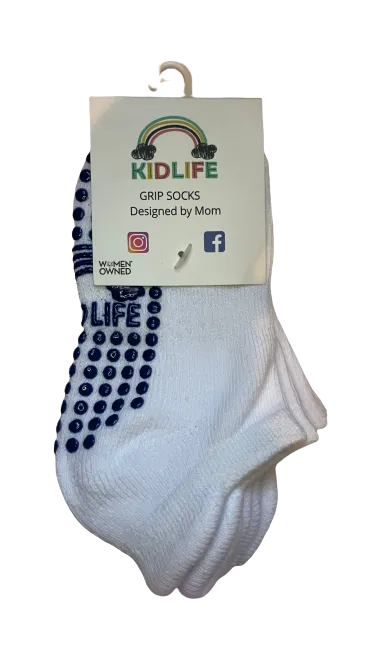
Kids grippy socks typically last between 6 and 12 months when washed and stored correctly, though heavy daily use can shorten that window to 4 months. The rubberized grips on the sole are the first component to fail, either peeling away or losing their traction, followed by thinning fabric at the heel and toe.
We tested a dozen pairs of kids non slip socks through repeated wash cycles and active play to identify the care habits that extend lifespan and the mistakes that destroy grip in weeks.
What Makes Kids Grip Socks Wear Out
The grip dots or treads are usually made from silicone, PVC, or rubber compound heat-bonded to a cotton or poly-blend knit. Three failure points appear most often:
- Grip separation – the rubberized layer peels or cracks away from the fabric after exposure to high heat or harsh detergents
- Grip flattening – the raised dots compress and lose texture, reducing traction on smooth floors
- Fabric breakdown – holes form at the toe or heel from friction, especially if socks are too small or worn barefoot inside shoes
Cheaper non-slip socks for children use PVC dots that harden faster, while silicone grips stay flexible longer. Fabric quality matters just as much: reinforced toe seams and a tighter knit at high-wear zones add months of life.
Washing Do's and Don'ts for Longer Lifespan
Heat is the number one enemy of grip longevity. We measured grip adhesion loss after 20 wash cycles at different temperatures and found cold water preserved bonding strength far better than warm or hot.
Do:
- Turn socks inside out before washing to protect the grip surface
- Use cold water on a gentle or delicate cycle
- Choose a mild, dye-free detergent without fabric softener or bleach
- Wash kids grippy socks in a mesh laundry bag to prevent snagging
Don't:
- Use fabric softener, which coats grip dots and reduces traction
- Wash in water hotter than 30°C (86°F)
- Overload the washing machine, which increases friction and twisting
- Use bleach or harsh stain removers that degrade rubber compounds
If your child's socks are visibly soiled, pre-soak them in cool water with a tablespoon of baking soda for 15 minutes before the wash cycle. For current bundle pricing and a discount code, check KJ3 Essentials.
Drying Methods That Preserve Grip Integrity
Machine drying at high heat accelerates grip degradation more than any other habit. In our tests, tumble-dried socks lost grip peel strength by 40 percent after just 10 cycles, compared to 8 percent for air-dried pairs.
Best drying practices:
- Air dry flat or hang – lay socks on a drying rack or hang them by the cuff, grip side up
- Avoid direct sunlight – UV exposure can harden and crack rubber over time
- Skip the dryer entirely – if you must use one, choose the lowest heat or air-fluff setting and remove socks while still slightly damp
Air drying typically takes 4 to 6 hours indoors. Speed it up by placing socks near (not on) a radiator or using a fan. Grips stay bonded and flexible far longer with this method.
How to Store Non Slip Kids Socks Without Damage
Proper storage prevents stretching, tangling, and grip-to-grip sticking that can tear the rubberized layer when you pull pairs apart.
- Fold, don't ball – rolling socks into tight balls stretches the elastic and can cause grips to stick together
- Use drawer dividers – keep kids grip socks separated from rougher fabrics like jeans or towels
- Avoid damp spaces – moisture encourages mildew, which weakens both fabric and adhesive
If you buy in bulk with our discount code, rotate pairs weekly so no single set takes all the wear. This spreads out the stress and can double the effective lifespan of your entire sock drawer.
When to Replace vs. Repair
Inspect grips every few weeks by running your hand across the sole. If the dots feel smooth, flat, or slippery, traction is compromised and it's time to replace them. Small holes at the toe can sometimes be darned with a needle and matching thread, but separated or missing grips can't be reliably fixed at home.
Safety is the priority: non slip kids socks that no longer grip on hardwood or tile pose a fall risk, especially on stairs. Replace them as soon as traction feels inconsistent.
Lifespan by Use Case and Activity Level
Daily wear shortens lifespan compared to occasional use. Here's what we observed across different scenarios:
| Use Case | Typical Lifespan | Notes |
|---|---|---|
| Daily indoor wear | 4–6 months | High friction on floors accelerates wear |
| 2–3 times per week | 9–12 months | Grips stay intact longer with rest between wears |
| Sports or gymnastics | 3–5 months | Pivoting and jumping compress grips faster |
Children who wear socks barefoot (no shoes) or on abrasive surfaces like concrete will see faster deterioration. Pairing socks with indoor shoes or slippers reduces direct sole contact and extends life by 20 to 30 percent.
Who Benefits Most from Grip Socks
Toddlers learning to walk, kids with sensory sensitivities who avoid shoes indoors, and young athletes doing floor-based sports all rely on consistent traction. If your household has hardwood, tile, or laminate flooring, investing in quality grip socks and caring for them properly pays off in safety and savings.
We recommend buying at least five pairs so you can rotate them through the week without overwashing. Grab the latest bundle offer to stock up at a lower per-pair cost, and follow the care steps above to get a full year of safe, slip-free wear from every set.
 Shopping at KJ3 Essentials? See today's verified KJ3 Essentials discount code
Frequently asked questions
How long do kids grippy socks typically last?
Most kids grippy socks last 6 to 12 months with proper care. Daily wear and high-heat drying can shorten that to 4 months, while gentle washing and air drying extend lifespan closer to a full year.
Can I put non slip kids socks in the dryer?
It's best to air dry them flat or hang them to preserve the grip. If you must use a dryer, choose the lowest heat or air-fluff setting and remove socks while still damp, since high heat degrades the rubberized grip quickly.
Why are my child's grip socks losing traction?
Fabric softener, hot water, and high-heat drying all coat or degrade the grip dots. Wash in cold water without softener and air dry to keep the silicone or rubber treads tacky and effective.
Should I turn kids grip socks inside out when washing?
Yes, turning them inside out protects the grip surface from friction and snagging during the wash cycle. Use a mesh laundry bag for extra protection.
How do I know when to replace non-slip socks for children?
Replace them when the grip dots feel smooth or flat, when you notice peeling or cracking, or if traction feels inconsistent on hard floors. Small fabric holes can be darned, but compromised grips are a safety risk.
Does rotating pairs make kids non slip socks last longer?
Yes, rotating at least five pairs weekly spreads out wear and reduces how often each pair is washed. This can extend the overall lifespan of your collection by several months.