
How Long Should You Use Red Light Therapy Each Day for Results?

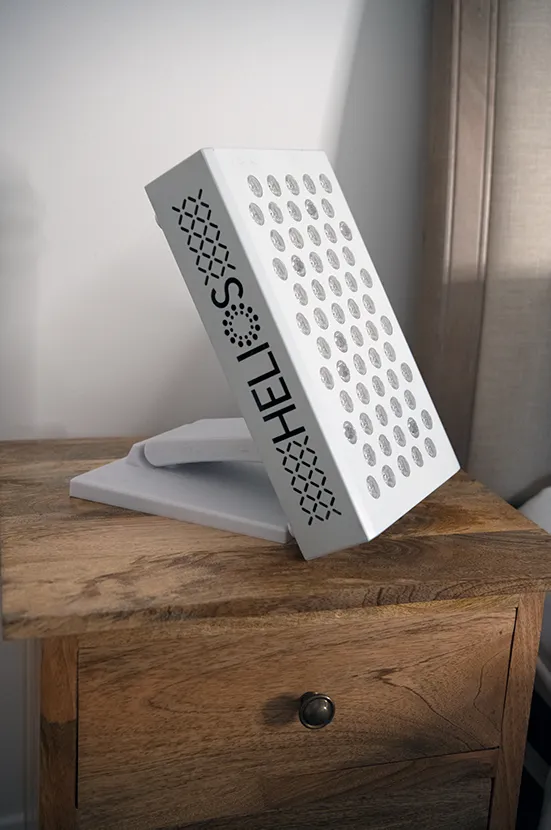
How Long Should You Use Red Light Therapy Daily?
Most studies and clinical practice suggest 10 to 20 minutes per session for red light therapy, depending on the device power output and your specific goal. Skin rejuvenation typically requires shorter sessions, while deeper tissue recovery or pain relief may benefit from the upper end of that range. Consistency matters more than duration—daily or near-daily use over several weeks delivers the clearest red light therapy benefits, from collagen production to faster muscle recovery.
We've tested a range of devices, from compact hand held light units to full-panel phototherapy boxes, and session length always depends on the device's irradiance (measured in mW/cm²). Higher-powered panels deliver therapeutic doses faster, so you can cut your session to 8 to 12 minutes. Lower-powered or handheld models may need 15 to 20 minutes to reach the same tissue penetration. Grab our code to save 5% on any device and start experimenting with the timing that fits your routine.
Optimal Session Length by Treatment Goal
Your ideal session length depends on what you're treating and how deep the target tissue sits.
- Skin and anti-aging – 8 to 12 minutes at 660 nm (red) stimulates fibroblasts in the dermis, boosting collagen and elastin without overheating the skin.
- Muscle recovery and pain relief – 15 to 20 minutes with 850 nm (near-infrared) penetrates deeper into muscle and joint tissue, reducing inflammation and accelerating ATP production.
- Hair growth – 10 to 15 minutes focused on the scalp, typically with a red light therapy mask or targeted panel, supports follicle circulation and cellular turnover.
- Wound healing – 10 to 12 minutes daily over the affected area, keeping the device 6 to 12 inches away to avoid excess heat.
Stanford Medicine research highlights that dose (energy delivered per square centimetre) matters more than time alone. A high-irradiance helios red light therapy panel at 100 mW/cm² delivers 6 J/cm² in just one minute, while a 30 mW/cm² handheld takes three minutes to match that dose. Always check your device specs and adjust accordingly.
Does Red Light Therapy at Home Work as Well as Clinics?
Yes, when you choose a device with clinical-grade irradiance and stick to a consistent schedule. Professional clinics often use panels exceeding 100 mW/cm², but quality red light therapy at home devices now reach 80 to 120 mW/cm², closing the gap significantly. The main advantage of clinic sessions is supervision and calibrated dosing; the main advantage of home use is convenience and cumulative consistency—daily 15-minute sessions at home often outperform sporadic monthly clinic visits.
We recommend starting with a mid-range panel or helios red light unit that offers both 660 nm and 850 nm wavelengths, so you can treat surface skin and deeper tissue in a single session. Position the device 6 to 12 inches from your skin and set a timer. Check the latest price and compare irradiance specs before you buy—higher output means shorter, more efficient sessions.
How Often Should You Use Red Light Therapy for Results?
Daily or five to six times per week is the sweet spot for most people. Red light therapy works by triggering cumulative cellular responses—mitochondrial ATP production, nitric oxide release, and reduced oxidative stress—so regular exposure builds momentum. Skipping more than two days in a row can slow visible progress, especially in the first four to six weeks when collagen remodeling and tissue repair are ramping up.
| Goal | Frequency | Session Length |
|---|---|---|
| Skin rejuvenation | Daily | 8–12 minutes |
| Muscle recovery | 5–6× per week | 15–20 minutes |
| Joint pain relief | Daily | 15–20 minutes |
| Hair regrowth | 5–6× per week | 10–15 minutes |
Many users on red light therapy Reddit threads report noticing skin texture improvements within two to three weeks of daily 10-minute sessions, while deeper benefits like pain reduction or hair density changes emerge closer to the eight to twelve-week mark. Patience and consistency trump intensity—don't double your session length hoping for faster results, as excessive exposure can cause temporary fatigue or skin sensitivity.
Can You Overdo Red Light Therapy?
Yes, though it's less common than under-dosing. Sessions longer than 30 minutes or multiple back-to-back treatments in a single day can trigger mild side effects: transient fatigue, headache, or skin irritation. The red light therapy dangers are generally minimal when you respect manufacturer guidelines, but more is not always better. Cellular repair pathways have natural saturation points, so extending a 20-minute session to 40 minutes won't double your gains—it may just tire you out.
If you're new to red light therapy, start with 8 to 10 minutes per day for the first week and gauge how you feel. Gradually increase to 15 or 20 minutes if your goal requires deeper tissue work. Listen to your body: if you notice redness, warmth that lingers beyond an hour, or unusual fatigue, scale back the duration or add a rest day. Red light therapy full body panels make it easy to treat larger areas in one session, but the same time limits apply—think of it as a therapeutic dose, not a passive tanning bed.
What Happens If You Skip Days?
Missing a day or two won't erase your progress, but inconsistent use dilutes the cumulative effect. Red light therapy at home thrives on routine—cellular pathways like collagen synthesis and mitochondrial biogenesis need repeated signals to shift into higher gear. If you skip three or more days in a row, you're essentially restarting the ramp-up phase each time you resume. For best results, treat your session like any other non-negotiable daily habit: morning skincare, evening wind-down, or post-workout recovery.
We've also heard the question "is red light therapy a hoax" from skeptics who tried sporadic sessions and saw nothing. The science is solid—dozens of peer-reviewed studies confirm measurable benefits—but real-world results depend on proper dosing, device quality, and sticking with it long enough for tissue remodeling to show. A hand held light used twice a week won't deliver the same outcome as a structured 10-minute daily protocol with a calibrated panel.
If you're searching for red light therapy near me to book professional sessions, that's a great way to start and learn optimal positioning. Once you've experienced the protocol in a clinical setting, replicating it at home with a quality device becomes straightforward. Check out our discount code and invest in a unit that matches your goals—short, consistent sessions at home beat occasional expensive clinic visits for most users.
Tips for Building a Sustainable Red Light Therapy Routine
- Anchor it to an existing habit – use your panel right after your morning coffee or before bed, so it becomes automatic.
- Set a visible timer – most devices don't auto-shutoff, and it's easy to lose track; a phone timer or kitchen timer keeps you honest.
- Track your progress – take weekly photos in consistent lighting to spot subtle skin texture or tone changes you might miss day-to-day.
- Combine wavelengths – devices offering both 660 nm and 850 nm let you address surface and deep tissue in one session, maximizing efficiency.
- Don't multitask too much – reading or scrolling is fine, but stay still enough that the light reaches your target area evenly.
Consistency beats perfection. Even a shorter 8-minute session every day will outperform a 25-minute session you do only when you remember. The best routine is the one you'll actually follow, so pick a time slot that feels effortless and protect it like any other self-care commitment.
Frequently asked questions
How long does it take to see results from red light therapy?
Most users notice skin texture improvements within two to three weeks of daily 10- to 15-minute sessions. Deeper benefits like pain relief, muscle recovery, or hair regrowth typically emerge after eight to twelve weeks of consistent use.
Can I use red light therapy twice a day?
Yes, but keep total daily exposure under 30 to 40 minutes. Splitting into two shorter sessions—morning and evening—can work well for targeting different areas or goals, as long as you avoid overloading a single treatment zone.
Is 5 minutes of red light therapy enough?
Five minutes may suffice for very high-irradiance devices (above 100 mW/cm²) aimed at superficial skin goals, but most users need 10 to 20 minutes to reach therapeutic doses for collagen production, pain relief, or muscle recovery.
What happens if I use red light therapy too long?
Sessions beyond 30 minutes can cause transient fatigue, mild headaches, or temporary skin sensitivity. Red light therapy is generally safe, but cellular pathways saturate, so longer sessions don't necessarily amplify benefits.
Do I need to use helios red light therapy every single day?
Daily use is ideal, but five to six times per week still delivers excellent results. Consistency matters more than perfection—regular sessions build cumulative cellular benefits over weeks, while sporadic use slows visible progress.
Can I use a hand held light for full body treatment?
Handheld devices work well for targeted areas like the face, joints, or small muscle groups, but treating your full body would take impractically long. For whole-body sessions, a larger panel or phototherapy box is far more efficient.