
Marquise vs Coffin Cut: Which Unique Diamond Shape Is Right for Your Engagement Ring?

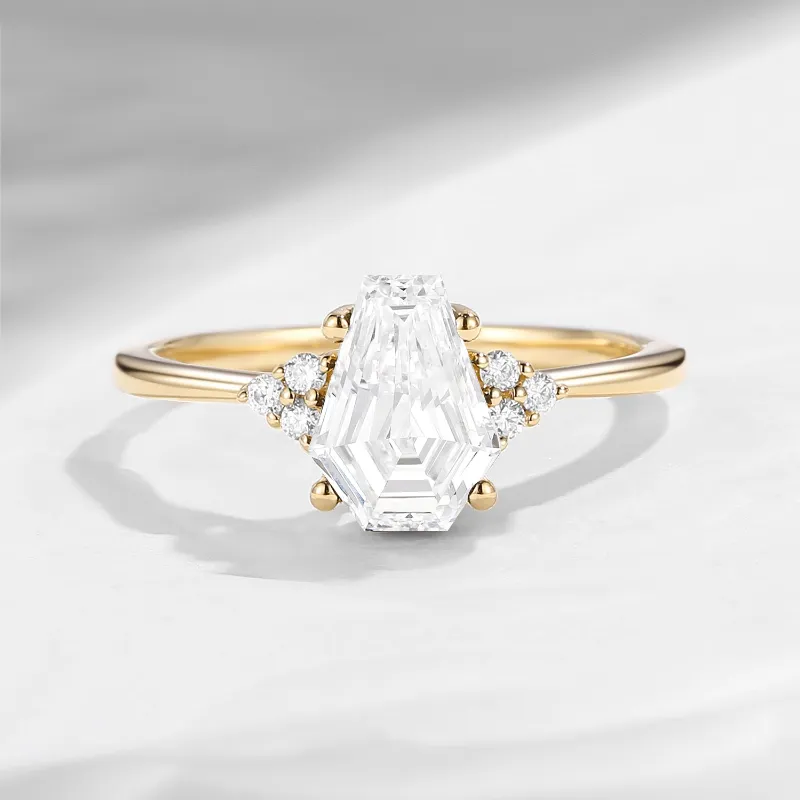
What Sets Coffin Cut and Marquise Diamond Shapes Apart
A coffin cut engagement ring features a bold hexagonal or elongated octagonal outline with step-cut facets that create a hall-of-mirrors effect, while a marquise diamond is a brilliant-cut ellipse with pointed ends that maximize carat weight and finger coverage. Both shapes turn heads, but they deliver completely different aesthetics: coffin cuts lean modern and architectural, marquise leans vintage and romantic. If you want a ring that doesn't look like anyone else's, either shape will do the job—the question is whether you prefer geometric drama or flowing curves.
We've tested both cuts in various settings and stones, and the choice comes down to your style priorities, hand shape, and how much maintenance you're willing to handle. Below we break down cut structure, sparkle type, setting requirements, durability, and which gemstones work best in each shape.
Cut Structure and Facet Pattern: Step vs Brilliant
The coffin cut (also called a hexagonal or coffin-shaped cut) uses step-cut facets—long, parallel planes that run across the stone like a staircase. This facet pattern shows fewer flashes of rainbow fire and instead produces broad flashes of light and dark, similar to an emerald or Asscher cut. Because step cuts have larger, open facets, they reveal inclusions and color tint more easily, so you'll want higher clarity and color grades (VS2 or better, G or better for diamonds).
Marquise diamonds use a brilliant-cut facet pattern with 56 to 58 triangular and kite-shaped facets radiating from the center. This arrangement creates intense sparkle and fire, masking inclusions better than step cuts. The marquise's pointed ends (called the "wings") are its signature feature but also its fragile spots—they're prone to chipping if the prongs don't fully protect them.
Key differences:
- Coffin cuts show clarity and color more openly; marquise hides imperfections with sparkle
- Coffin cuts produce bold, geometric flashes; marquise delivers constant twinkle
- Coffin cuts work beautifully in colored stones like lab grown alexandrite engagement rings or a black sapphire engagement ring where step facets showcase color depth
- Marquise requires V-prong or bezel protection at each point; coffin cuts can use simpler prong or bezel settings
How Each Shape Affects Finger Coverage and Proportion
Both cuts are elongated, so they make fingers look longer and slimmer. A 1-carat marquise typically measures around 10 × 5 mm, while a 1-carat coffin cut runs closer to 8 × 5.5 mm depending on the cutter's proportions. The marquise covers more surface area per carat, which is why it became popular during eras when maximizing visual size mattered (it originated in 18th-century France for King Louis XV).
If you have shorter fingers or wider knuckles, the marquise's length works in your favor—just avoid overly narrow ratios (anything over 2:1 length-to-width can look needle-thin). The coffin cut's straighter sides and geometric angles suit longer fingers and those who prefer a more modern, less traditional look.
For a coffin cut engagement ring, ask your jeweler about orientation: some prefer the long axis running parallel to the finger, others rotate it 90 degrees for a wider, shield-like effect. Marquise is almost always set north-south (point-to-point along the finger).
Setting and Metal Pairing: What Works Best for Each Cut
The coffin cut's straight edges and symmetrical outline make it easier to set than marquise. You can use:
- Bezel settings that wrap the perimeter for a sleek, protective look
- Four- or six-prong settings that sit at the corners or midpoints
- East-west settings that rotate the stone 90 degrees for a bold, wide profile
- Halo or accent stones that follow the hexagonal outline
Marquise demands more care. The pointed ends are vulnerable, so always use V-prongs or chevron prongs that cradle each tip. A halo can add protection while amplifying size, but poorly executed halos can make the marquise look dated. We recommend pairing marquise with a simple solitaire or a tapered band that echoes the stone's curves.
Metal choice matters for both: white gold and platinum show off the shape's geometry without competing, while yellow or rose gold adds warmth. If you're building a stack, consider pairing your coffin or marquise engagement ring with moissanite wedding bands or a contoured band that nests around the center stone. Check our current code for 10% off when you bundle rings.
Durability and Daily Wear: Which Shape Holds Up Better
Coffin cuts are more durable in day-to-day wear because they lack the ultra-thin points of a marquise. The straight edges and beveled corners distribute force more evenly, so accidental knocks are less likely to chip the stone. Step-cut facets also hide scratches better than brilliant cuts, though any diamond or gemstone will eventually show wear on the table if you're rough with it.
Marquise diamonds chip more easily at the points, especially if the prongs shift or the setting gets knocked. If you work with your hands, do a lot of lifting, or tend to bang your ring against surfaces, a coffin cut or a more rounded shape (like oval or cushion) will save you repair trips. That said, a well-set marquise with robust V-prongs can last decades—just remove it during high-impact activities.
For alternative gemstones, both cuts work well in harder materials:
- Lab grown diamond (Mohs 10) and marquise moissanite ring (Mohs 9.25) are both durable enough for daily wear in either cut
- Sapphire (Mohs 9), including fantasy cut sapphire, is excellent for coffin cuts that showcase color
- Alexandrite (Mohs 8.5) looks stunning in coffin cuts that display its color-change effect under different lighting
Softer stones like opal (Mohs 5.5–6.5) or pearl (Mohs 2.5–4.5) are better reserved for occasional-wear pieces like opal wedding band or pearl wedding bands, not center stones in either cut.
Which Shape Suits Your Style and Lifestyle
Choose a coffin cut engagement ring if you:
- Prefer bold, modern, or Art Deco–inspired aesthetics
- Want a shape that's rare and instantly recognizable
- Appreciate clean lines and geometric patterns
- Plan to feature a colored gemstone (step cuts showcase hue and saturation beautifully)
- Don't mind higher clarity and color grades to keep the stone looking crisp
Choose a marquise diamond ring if you:
- Love vintage or romantic styles (marquise peaked in the 1970s and '80s but is having a revival)
- Want maximum finger coverage and visual size per carat
- Prefer brilliant sparkle and fire over architectural flashes
- Have shorter fingers or want to elongate your hand's appearance
- Are comfortable with the extra setting maintenance (V-prongs, occasional prong checks)
Both shapes pair beautifully with side stones, halos, or three-stone designs. A coffin cut flanked by baguettes echoes Art Deco glamour, while a marquise with tapered baguettes or round side stones feels classic and balanced.
Where to Buy and How to Save on Unique Diamond Shapes
Most big-box jewelers don't stock coffin cuts—you'll need a specialty retailer or custom cutter. Starlandus offers a curated selection of both marquise and coffin cut stones in lab-grown diamond, moissanite, sapphire, and alexandrite, so you can compare shapes side-by-side. Grab our discount code to save 10% on all orders, whether you're buying a finished ring or a loose stone for a custom setting.
When shopping, ask for:
- Length-to-width ratio: 1.75:1 to 2:1 for marquise, closer to 1.5:1 for coffin cuts
- Symmetry grade: critical for both cuts; asymmetry is painfully obvious in elongated shapes
- Girdle thickness: medium to slightly thick protects the edges without adding bulk
- Certification: GIA, IGI, or GCAL reports confirm cut quality and help with insurance appraisals
If you're drawn to coffin cuts but want a more accessible price, consider a coffin cut alexandrite ring or a black diamond coffin engagement ring—both deliver the shape's drama at a fraction of the cost of a high-clarity white diamond. A coffin cut engagement ring set with a matching or contoured band creates a cohesive, stacked look that's trending hard right now.
Both marquise and coffin cuts reward careful selection and high-quality setting work. Take your time, compare stones in person or via video, and check current pricing with our code before you commit. Whichever shape you choose, you're getting a ring that stands out in the best possible way.
Frequently asked questions
What is a coffin cut engagement ring?
A coffin cut engagement ring features a hexagonal or elongated octagonal diamond or gemstone with step-cut facets that create bold flashes of light and dark. The shape resembles a coffin or elongated shield, offering a modern, architectural look that's rare and eye-catching.
Is a marquise diamond more fragile than a coffin cut?
Yes, marquise diamonds have two pointed ends that are more prone to chipping than the beveled corners of a coffin cut. Marquise stones require V-prongs or bezel protection at each tip, while coffin cuts can use simpler settings and distribute force more evenly.
Can I get a coffin cut in moissanite or colored gemstones?
Absolutely. Coffin cuts work beautifully in moissanite, lab-grown diamond, sapphire, and alexandrite. Step-cut facets showcase the depth and color-change effects in alexandrite and the saturation in sapphires, making them ideal for colored stones.
Which diamond shape looks bigger, marquise or coffin cut?
Marquise typically looks bigger per carat because its elongated ellipse covers more surface area. A 1-carat marquise measures around 10 × 5 mm, while a 1-carat coffin cut runs closer to 8 × 5.5 mm, though exact dimensions vary by cut proportions.
Do coffin cut rings require higher clarity grades?
Yes, step-cut facets have large, open windows that reveal inclusions and color tint more easily than brilliant cuts. For a clean look, choose VS2 clarity or better and color grade G or higher in white diamonds.
Are marquise diamonds coming back in style?
Yes, marquise diamonds are experiencing a major revival after peaking in the 1970s and '80s. Modern settings with tapered bands and minimal halos give marquise a fresh, contemporary feel that appeals to buyers looking for vintage-inspired shapes with a twist.