
OBD2 Scanner vs Code Reader: Which Diagnostic Tool Do You Actually Need?

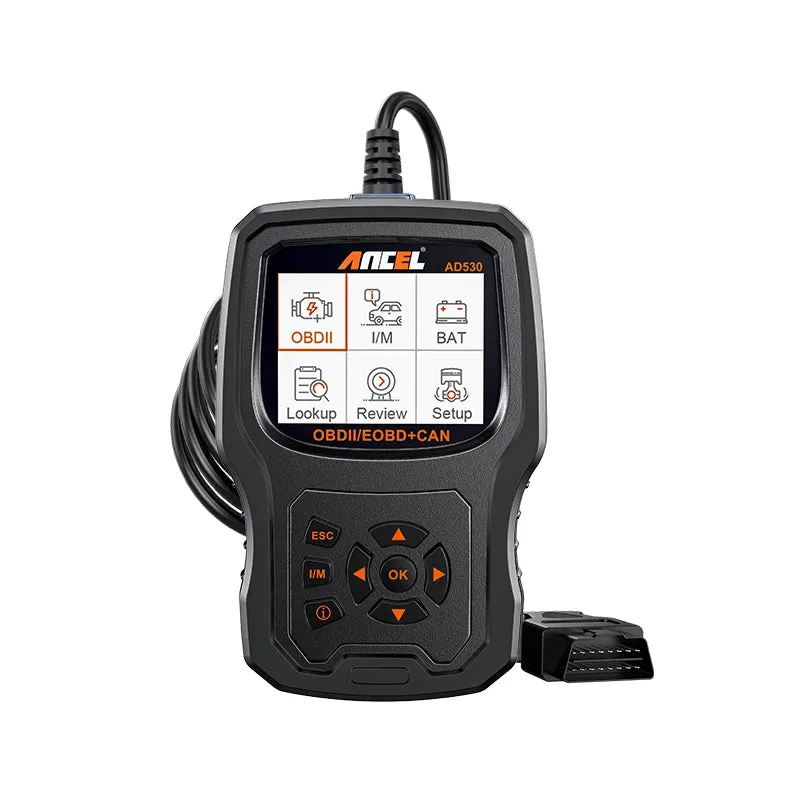
An obd2 scanner delivers advanced diagnostics, live data streams, and system monitoring, while a code reader simply pulls and clears trouble codes. If you only need to check why your check-engine light is on and reset it after a repair, a basic code reader does the job. If you want to monitor sensor performance, run emission readiness tests, or diagnose intermittent issues, you need a full obd2 scanner.
We tested both tool types on multiple vehicles to show you exactly what each can and cannot do, so you can buy the right diagnostic tool the first time.
What a Code Reader Actually Does
A code reader connects to your car's OBD2 port and retrieves diagnostic trouble codes (DTCs) when the check-engine light appears. Most entry-level models like the ancel ad310 read and clear codes, display freeze-frame data (the sensor snapshot captured when the fault occurred), and show I/M readiness status for emissions testing.
That covers the basics for DIY repairs:
- Pull the code (for example, p0420 code bank 1 or p0401 code)
- Look up what the code means
- Fix the problem
- Clear the code and drive to confirm the repair worked
Code readers work on any 1996-or-newer vehicle sold in the U.S., and most models under $30 handle generic powertrain codes without issue. They do not display live sensor data, graph trends over time, or access manufacturer-specific codes for ABS, airbag, or transmission systems.
Check the latest price on ANCEL code readers before you buy.
What an OBD2 Scanner Adds
An automotive scan tool or full-function obd reader reads the same codes as a basic reader, then adds layers of diagnostic capability that matter when codes reappear or you need to confirm a sensor is working correctly.
Key features you get with a scanner:
- Live data streams: watch oxygen sensor voltage, coolant temperature, fuel trims, and dozens of other parameters in real time
- Graphing and recording: track how a sensor behaves under load or during a test drive
- Enhanced codes: manufacturer-specific DTCs for body, chassis, and accessory systems (not just powertrain)
- Bi-directional control: command tests like cycling the EVAP purge valve or running the fuel pump (on advanced models)
- Mode 6 data: raw test results that help confirm whether a component is borderline or fully failed
If you've ever chased a po174 lean-condition code or tried to figure out why a repair didn't stick, live data makes the difference. You can watch fuel trim corrections, compare short-term and long-term values, and pinpoint a vacuum leak or failing mass-airflow sensor in minutes instead of swapping parts by guess.
Professional-grade scanners also integrate with tablets or smartphones via Bluetooth, turning your device into a mobile diagnostic display. Some enthusiasts prefer an obd car scan tool with a dedicated screen, while others run an obd2 scanner app on a tablet for a larger view. Tested: Best OBD-II Scanners for 2026 covers both wired and wireless options in detail.
Who Should Buy a Basic Code Reader
You only need a code reader if:
- You want to know why the check-engine light is on before visiting a shop
- You perform your own repairs and need to clear codes afterward
- You already have a repair manual or online forum to interpret the code
- Budget is tight and you rarely work on vehicles
A $25 reader pays for itself the first time you avoid a shop diagnostic fee. Grab the code and save 5% on entry-level ANCEL models.
Basic readers work well for straightforward faults like a loose gas cap, a failed oxygen sensor, or a tpms sensor warning (though TPMS codes often require a separate tool). They fall short when you need to verify a repair, monitor live sensor behavior, or diagnose systems beyond the engine and transmission.
Who Needs a Full OBD2 Scanner
Invest in a scanner if you:
- Repair your own vehicles regularly and want to confirm fixes before closing the hood
- Chase intermittent problems that don't always trigger a code
- Need to check emission readiness before a state inspection
- Work on multiple cars or help friends and family with diagnostics
- Want access to ABS, airbag, and other system codes
An obd11 scanner or similar mid-range model typically costs $80 to $150 and delivers enough functionality for home mechanics who go beyond oil changes. Professional-level scanners run $300 and up, but most DIYers don't need that depth.
Live data also helps when you're troubleshooting non-engine systems. If you're diagnosing a fuel-delivery issue, you can monitor fuel-pump pressure and compare it to spec while the engine runs. If you're checking an evaporative-emissions fault, you can watch purge-valve duty cycle and tank pressure in real time.
Comparison: Code Reader vs OBD2 Scanner
| Feature | Code Reader | OBD2 Scanner |
|---|---|---|
| Read/clear DTCs | Yes | Yes |
| Freeze-frame data | Yes | Yes |
| Live sensor data | No | Yes |
| Enhanced codes (ABS, SRS) | No | Most models |
| Graphing and recording | No | Yes |
| Price range | $20–$50 | $80–$300+ |
Both tools plug into the same 16-pin OBD2 port (usually under the dashboard near the steering column). Both work without a subscription or monthly fee, though some scanner apps require in-app purchases for advanced features.
Bluetooth Scanners and Mobile Apps
Bluetooth adapters pair with your phone or tablet and turn it into a diagnostic display. You buy a small dongle (often under $30) and download a free or paid app. Popular choices include Torque Pro (Android), Car Scanner, and OBD Fusion (iOS).
This setup gives you scanner-level features at code-reader prices, but with tradeoffs:
- Battery drain: your phone stays on during long diagnostics
- App quality varies: some apps are excellent, others are clunky or abandoned
- Connection stability: Bluetooth can drop if you move too far from the adapter
- No standalone use: you always need your phone and the app
If you already carry a tablet for repair manuals, a Bluetooth adapter and app combination makes sense. If you prefer a dedicated tool that works instantly without unlocking your phone, a standalone scanner or reader is more convenient. Harbor Freight's selector tool helps you compare screen size, code coverage, and feature sets across models.
Where to Buy and How to Save
ANCEL tools cover both categories. The ancel ad310 is a reliable entry-level reader, while ANCEL's higher-tier scanners add live data and enhanced diagnostics. We currently offer 5% off sitewide on all ANCEL diagnostic tools, which applies to both code readers and full-function scanners.
AutoZone and other auto-parts stores loan code readers for free (you pay a deposit, then get it back when you return the tool), but you can't take the tool home for follow-up testing or long-term monitoring. Buying your own reader or scanner gives you unlimited access and pays for itself after a few uses.
If you're deciding between models, check whether the scanner supports your vehicle's make and covers the systems you need. Domestic brands (Ford, GM, Chrysler) and Asian imports (Toyota, Honda, Nissan) have broad support across most tools. European vehicles sometimes require pricier adapters for full system access. AutoZone's code-reader page lists compatibility by year and model if you need to verify before buying.
Our Recommendation
Start with a code reader if you only need to pull and clear trouble codes. Upgrade to a scanner if you perform your own repairs, want to verify fixes with live data, or need access to body and chassis codes beyond basic engine faults. Both tools last for years, work across any OBD2-compliant vehicle, and eliminate the guesswork that leads to buying parts you don't need.
Frequently asked questions
Can a code reader do everything an OBD2 scanner does?
No. A code reader retrieves and clears trouble codes but cannot display live sensor data, graph performance trends, or access enhanced manufacturer codes for ABS, airbag, and other systems.
Do I need a Bluetooth adapter or a standalone scanner?
A Bluetooth adapter pairs with your phone and costs less, but requires a charged device and stable connection. A standalone scanner works instantly without extra hardware and is more convenient for frequent diagnostics.
Will an ANCEL AD310 work on my 2015 truck?
Yes. The ANCEL AD310 and other OBD2 tools work on any vehicle sold in the U.S. from 1996 onward, covering all domestic and import makes.
Can I use a code reader to pass emissions testing?
A code reader shows I/M readiness status, which tells you whether your car is ready for an emissions test. However, clearing codes resets readiness monitors, and you'll need to drive the car through a complete drive cycle before testing.
How much should I spend on a diagnostic tool?
Spend $20 to $40 for a basic code reader if you only check trouble codes occasionally. Budget $80 to $150 for a scanner with live data if you perform repairs and want to confirm sensor performance.
Do OBD2 scanners work on diesel engines?
Yes. OBD2 scanners work on both gasoline and diesel vehicles built after 1996, though diesel-specific codes and parameters may require a scanner with enhanced protocol support.