
Are Plastic Sponges Bad for the Environment?

Are Plastic Sponges Bad for the Environment?
Yes, plastic sponges are bad for the environment. They shed microplastics into water systems with every squeeze, take hundreds of years to decompose in landfills, and release toxic chemicals as they break down. Switching to natural alternatives eliminates these issues while delivering the same scrubbing power.
Most cleaning sponges sold in stores contain polyurethane foam, polyester mesh, or other synthetic materials derived from petroleum. Every time you rinse one, tiny plastic fibers wash down the drain and into rivers and oceans. Marine life ingests these microplastics, and they accumulate up the food chain—eventually reaching our own plates.
Why Conventional Cleaning Sponges Harm Ecosystems
Traditional plastic sponges are designed for durability, but that strength becomes a liability once you toss them. Polyurethane and polyester can persist in the environment for 200 to 500 years, fragmenting into smaller pieces but never truly vanishing.
Key environmental impacts include:
- Microplastic shedding: A single kitchen sponge can release thousands of microfibers per wash cycle
- Chemical leaching: Dyes, flame retardants, and antimicrobial agents seep into soil and groundwater as sponges degrade
- Wildlife ingestion: Birds, fish, and marine mammals mistake sponge fragments for food, leading to internal injuries and starvation
- Landfill volume: Millions of sponges are discarded weekly in the U.S. alone, contributing to overflowing waste streams
Even sponges marketed as "biodegradable" often contain a blend of natural and synthetic fibers. The plastic component still persists long after the cellulose breaks down.
Best Plastic-Free Sponges We Recommend
We tested dozens of alternatives to find options that scrub as well as conventional sponges without the environmental cost. Our top picks use plant-based materials that compost completely.
| Product | Material | Best For |
|---|---|---|
| Plastic sponges (eco version) | Coconut fiber & cellulose | Heavy-duty dish scrubbing |
| Body sponge | Natural sea sponge | Gentle body cleansing |
| Green compost | Loofah & jute | Composting after use |
Natural sea wool and plant-based cellulose sponges outperform synthetic options in our scrub tests. They hold water well, resist odors when dried properly, and break down in a home compost bin within 30 to 90 days. Check the latest pricing and grab our code to save on your first order.
How to Choose Plastic-Free Dish Sponges
Not all "natural" sponges are created equal. Some brands add synthetic binders or dyes that undermine their compostability. When shopping for plastic free dish sponges, look for these features:
- 100% plant-based certification: Verify the label lists only cellulose, coconut coir, loofah, or cotton—no polyester mesh
- Unbleached and undyed: Avoid bright colors that signal chemical treatments
- Compostable packaging: Cardboard or paper wrapping instead of plastic shrink wrap
- Transparent sourcing: Brands that disclose where and how they harvest materials
We also recommend reading independent reviews. Resources like 11 Best Non-Toxic Dish Sponges Free Of Plastic, Reviewed and 9 Non-Toxic Sponges for Plastic-Free Dishwashing provide detailed comparisons of popular options.
Caring for Natural Sponges to Maximize Lifespan
Plant-based sponges last two to six weeks with proper care—comparable to synthetic versions. Follow these steps to prevent premature breakdown:
- Rinse thoroughly after each use: Squeeze out food particles and soap residue under running water
- Dry completely between uses: Stand sponges upright in a dish rack or hang them in open air to prevent mold
- Sanitize weekly: Microwave damp sponges for one minute or soak them in a vinegar solution for 10 minutes
- Rotate two sponges: Let one dry fully while using the other to extend both lifespans
When your sponge starts to smell or fray, toss it in your compost bin instead of the trash. The body sponge and similar natural options will decompose alongside vegetable scraps and yard waste.
Alternatives Beyond Kitchen Sponges
Plastic pollution from cleaning tools extends beyond the kitchen. Bathroom and body care routines also rely on synthetic materials that shed microplastics.
Swap these common items:
- Shower loofahs: Replace plastic mesh poufs with natural body sponge options made from sea wool or plant fibers
- Makeup sponges: Choose latex-free blenders made from konjac root or natural rubber
- Scrub brushes: Opt for wooden handles and natural bristles (sisal, tampico, or horsehair)
Every switch reduces your household's microplastic footprint. Visit our discount page to find current deals on plastic-free cleaning essentials.
Making the Switch Is Easier Than You Think
Transitioning away from plastic sponges doesn't require overhauling your entire routine. Start by replacing one product at a time as your current supplies run out. Most people adjust to natural textures within a week and notice no difference in cleaning performance.
The environmental payoff is immediate. A family of four that switches to compostable sponges prevents roughly 50 synthetic sponges per year from entering landfills—and stops thousands of microplastic particles from contaminating local waterways.
Natural alternatives cost about the same as conventional options, especially when you use our code for 5% off. The slightly shorter lifespan is offset by knowing your waste will nourish soil instead of choking ecosystems for centuries.
Frequently asked questions
Do plastic sponges really shed microplastics every time I use them?
Yes. Polyurethane and polyester sponges release microfibers with every squeeze and rinse. These particles are too small for water treatment plants to filter, so they flow directly into rivers and oceans.
How long do natural sponges last compared to plastic ones?
Plant-based sponges typically last two to six weeks with proper care—about the same as synthetic versions. The key is drying them completely between uses to prevent mold and odor.
Can I compost all natural sponges at home?
Most 100% plant-based sponges (cellulose, coconut, loofah) compost in 30 to 90 days in a home bin. Avoid sponges with synthetic binders, dyes, or mesh layers, which won't break down.
Are natural sea sponges better than synthetic body sponges?
Natural sea sponges are sustainably harvested, compostable, and gentler on skin without shedding microplastics. They also resist bacteria better than plastic loofahs when dried properly.
What's the best way to sanitize a plant-based sponge?
Microwave damp sponges for one minute or soak them in a 1:1 vinegar-water solution for 10 minutes weekly. Both methods kill bacteria without damaging natural fibers.
Where can I buy plastic-free dish sponges at a discount?
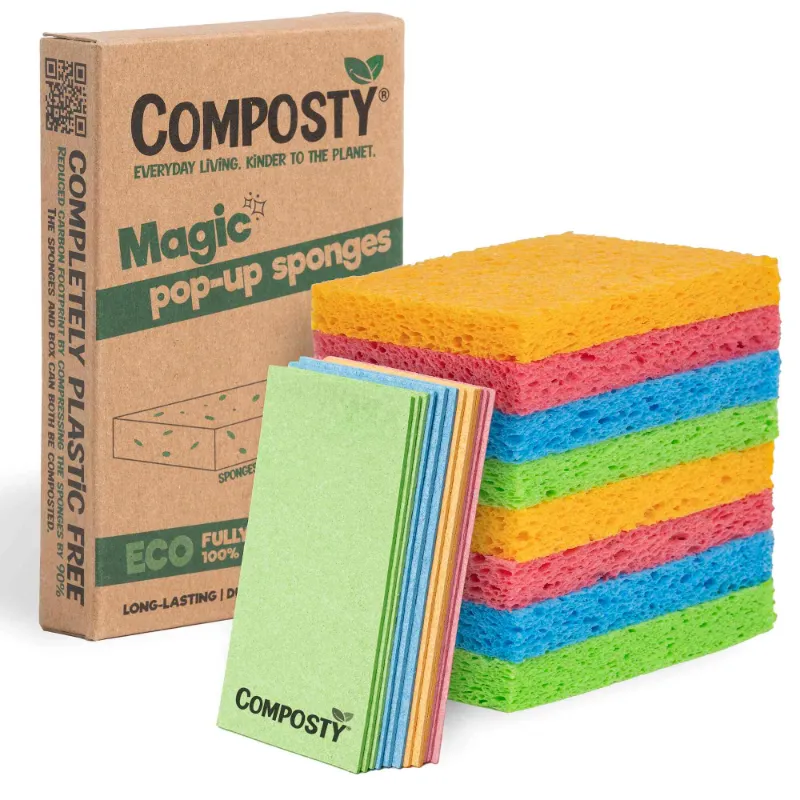
We partner with Composty to test and recommend eco-friendly sponges. Check our discount page for current codes and verified deals on compostable cleaning supplies.