
Do You Really Need a Dedicated Dip Station or Will a Power Cage Work?

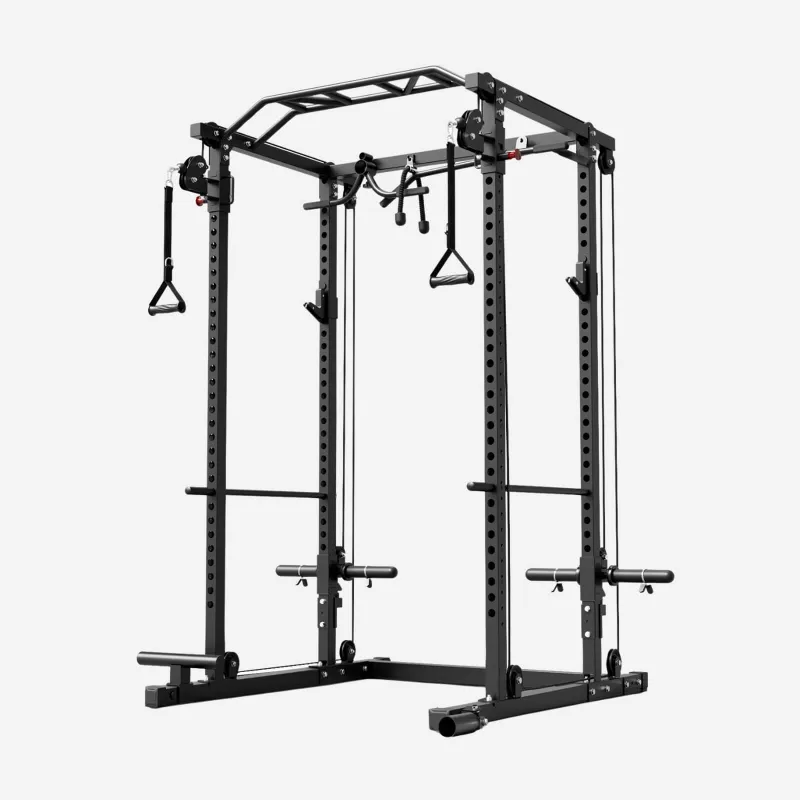
The Short Answer: Most Lifters Get Everything They Need from a Rack
A power cage equipped with dip handles delivers stable, adjustable dip bars without consuming extra floor space or budget. For the majority of home gym owners who prioritize compound lifts and want dips as an accessory movement, bolting or pinning dip attachments to your rack is the smarter play. Standalone dip stations shine only when you need multiple grip widths, angled handles for triceps isolation, or a lightweight frame you can move between rooms.
We tested both setups across dozens of workouts and found that rack-mounted dips feel rock-solid once you dial in the attachment height, while dedicated stations offer faster grip changes and a lower entry price if you skip the full cage. Below we break down stability, versatility, space, and cost so you can decide which fits your training style.
Stability and Load Capacity: Racks Win for Heavy Dips
Rack dip attachments inherit the steel frame and floor footprint of your power cage, so they barely flex under load. Most quality cages handle 800+ lb total capacity, meaning your dips—even with a 45 lb plate on a belt—stay wobble-free. Dedicated dip stations typically max out around 400 to 500 lb and can rock forward if your rack is narrow or the feet are undersized.
Where racks excel:
- Welded or bolt-through attachment points eliminate sway
- Wide base footprint prevents tipping during kipping dips
- Integrated spotter arms catch you if you bail mid-rep
Where standalone stations catch up:
- Rubber foot pads grip smooth floors better than cage uprights alone
- Lower center of gravity keeps lighter frames stable for bodyweight-only users
- No need to adjust J-cups or safeties out of the way
If you train weighted dips above bodyweight +50 lb or plan to use dips for max-effort sets, the cage is non-negotiable. For bodyweight circuits and light assistance work, a dip machine will hold steady.
Grip Width and Handle Options: Dedicated Stations Offer More
Most cage dip attachments lock you into a single grip width—usually 20 to 24 inches—because the bars slide into fixed receiver tubes. Standalone dip stations often feature angled or parallel handles at multiple widths, letting you shift emphasis between chest and triceps without swapping hardware.
| Feature | Power Cage Dips | Dedicated Dip Station |
|---|---|---|
| Grip width adjustment | Fixed (one width per attachment) | Multiple widths or angled bars |
| Handle angle | Parallel or slight flare | Parallel, angled, ergonomic options |
| Setup time | 30 seconds (pin in place) | Zero (always ready) |
If you rotate between narrow tricep dips and wide chest dips every session, a standalone station saves the hassle of unbolting attachments. If you pick one grip and stick with it, the cage setup is faster than it sounds—most pin-and-go systems take under a minute.
Pro tip: Check current GMWD Fitness rack bundles that include dip bars, spotter arms, and J-cups in one package. The 5% sitewide code often makes the all-in-one cage cheaper than buying a rack and standalone station separately.
Space and Portability: When Footprint Matters
A power cage already claims 4 to 6 feet of floor space, so adding dip handles costs you zero additional square footage—they hang inside or just outside the uprights. A dedicated dip station needs its own 3×3-foot zone, which matters in a single-car garage or basement corner gym.
Space scenarios:
- Tight quarters (under 80 sq ft): Cage dips keep your lifting zone compact. Pair with an incline bench press machine that slides under the rack when not in use.
- Multi-use room: A lightweight dip station moves easily, so you can train in the living room and stow it in a closet. Rack dips require the cage to stay planted.
- Full home gym (120+ sq ft): Both fit comfortably. Add a lat machine or back row equipment to round out your upper-body station.
If you train outdoors or move your setup seasonally, a 40 lb dip station beats dragging a 300 lb cage. Otherwise, the rack's fixed footprint is an advantage—no chance of the frame walking forward during explosive reps.
Cost Breakdown: What You Actually Pay
Standalone dip stations start around the price of a basic attachment set, but quality cage dips often come bundled with your rack purchase. When we calculated total cost for a working dip setup, the cage route saved money if you already own or plan to buy a rack for squats and bench.
Budget path:
- Buy a mid-tier power cage with included or compatible dip attachments
- Grab the 5% discount code to offset shipping
- Skip the standalone station entirely
Standalone path:
- Purchase a dedicated dip machine
- Add parallettes or gymnastic rings for grip variety
- Budget for a separate squat stand if you need barbell work later
The cage wins on value unless you train only bodyweight movements and never plan to load a barbell. Even then, the resale value of a full rack holds better than a single-purpose dip frame.
Who Should Choose Each Option
Pick rack-mounted dips if you:
- Already own or are buying a cage for squats, bench, and pull-ups
- Train weighted dips or plan to progress past bodyweight +25 lb
- Want one stable station for all vertical-press and dip work
- Prefer fixed equipment that never needs repositioning
Pick a standalone dip station if you:
- Train primarily calisthenics with minimal barbell work
- Need to move your dip setup between rooms or store it after sessions
- Want quick grip-width changes without tools
- Have a separate squat stand and don't need a full cage
For most home gym builders, the power cage route delivers better long-term value. You gain dip capacity, pull-up bars, spotter safety, and plate storage in one frame. Dedicated stations make sense for apartment athletes, travelers, or anyone who maxed out their barbell budget and needs an affordable upper-body finisher.
Final Recommendation: Cage First, Station Only if Specialized
We recommend starting with a quality power cage and its included or add-on dip bars unless you train exclusively bodyweight circuits or have zero interest in barbell lifts. The stability, footprint efficiency, and bundled value beat standalone dip stations for 80% of home gym scenarios. If you later find you need angled grips or a portable frame for outdoor training, a budget dip station is an easy second purchase—but you will rarely need both.
Check the latest pricing and bundle options at GMWD Fitness to see which cage packages include dip attachments at no extra cost. That 5% code stacks on multi-item orders, so bundling your cage with an incline bench press machine or hack squat leg press machine often costs less than buying each piece separately.
Frequently asked questions
Can I add dip bars to any power cage?
Most cages accept universal dip attachments that slide into 2×2 or 3×3-inch uprights, but always verify hole spacing and tube dimensions before buying. Some proprietary racks require brand-specific bars.
How much weight can rack-mounted dip handles support?
Quality cage dip attachments typically handle 400 to 600 lb when properly installed, which covers bodyweight plus significant added resistance for most lifters. Check your specific rack's rated capacity.
Do I need a dip belt if I train on a power cage?
A dip belt lets you add plates for progressive overload once bodyweight dips become easy. Rack dips and standalone stations both work with belts, so pick whichever frame fits your space.
Are standalone dip stations harder to tip over than cage attachments?
No. Cage-mounted dips benefit from the rack's wide footprint and heavy frame, making them more stable under load. Lightweight standalone stations can rock if the base is narrow or feet are not rubberized.
Can I use a dip machine for inverted rows or L-sits?
Yes. Parallel dip bars double as supports for L-sit holds, knee raises, and inverted rows if the frame sits low enough. Cage dips offer the same versatility when mounted at the right height.
Is the GMWD Fitness discount code valid on power cage bundles?
The 5% sitewide code applies to most rack and attachment bundles. Check the coupon page for current exclusions, but cage packages with dip bars typically qualify for the discount.