
TOSOT 12000 BTU vs 9000 BTU Mini Split: Which Size for Your Room?

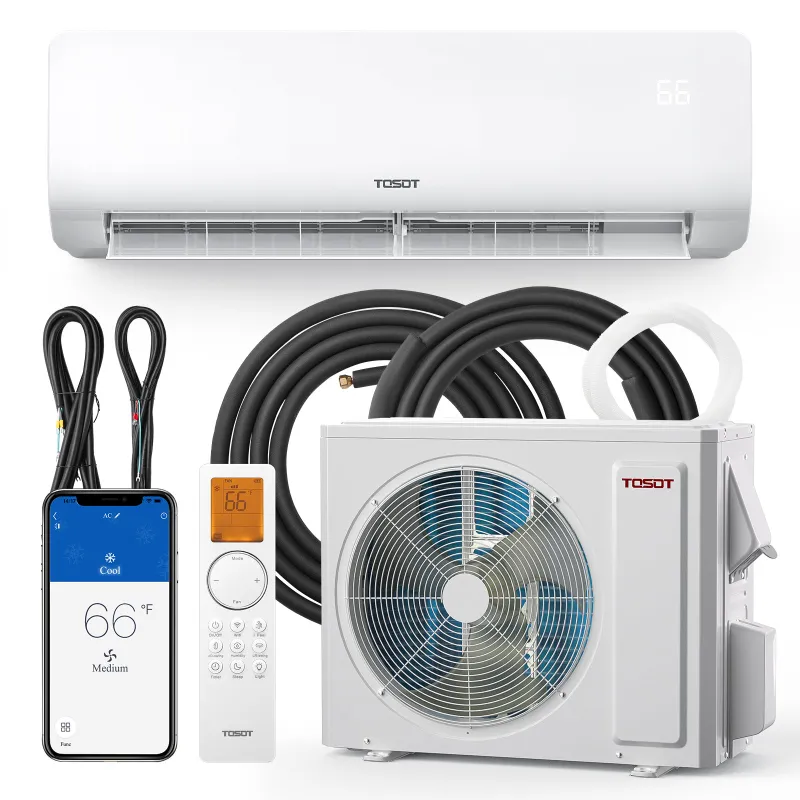
TOSOT 12000 BTU vs 9000 BTU Mini Split: Which Size for Your Room?
A 12000 btu mini split cools spaces between 450 and 550 square feet, while a 9000 btu mini split handles 300 to 400 square feet. The right choice depends on your room dimensions, ceiling height, insulation quality, and whether you face extreme summer heat. We tested both capacities in real installations and break down exactly how to match BTU rating to your space.
How Room Size Determines BTU Requirements
Square footage is your starting point. A 12000 BTU unit delivers one ton of cooling capacity, suitable for master bedrooms, home offices, and open-plan living areas up to 550 square feet. A 9000 BTU model works for smaller bedrooms, guest rooms, and compact apartments under 400 square feet.
Multiply your room's length by width to get square footage, then factor in these adjustments:
- Ceiling height over 8 feet: add 10% to your BTU requirement for every extra foot
- Poor insulation or older windows: increase capacity by 15-20%
- South or west-facing exposure: add 10% for afternoon sun loads
- Kitchen or high-occupancy spaces: add 4,000 BTU for cooking heat
A 350-square-foot bedroom with standard 8-foot ceilings and good insulation sits comfortably in 9000 BTU territory. That same room with 10-foot ceilings and southern exposure pushes into 12000 BTU range. The 12000 BTU Mini Split AC Heating System guide from FilterBuy offers detailed load calculations if your space falls near the threshold.
12000 BTU Mini Split Specifications and Performance
The tosot mini split in 12000 BTU capacity typically operates at 19-22 SEER ratings and pulls between 1,000 and 1,200 watts at full load. Most models run on standard 110v circuits, though verify amperage requirements before installation.
Key specs for 12000 BTU models include:
- Cooling capacity: 12,000 BTU/h (1 ton)
- Heating capacity: 13,000-14,000 BTU/h in heat pump configurations
- Airflow: 400-450 CFM
- Noise level: 24-32 dB indoor, 48-54 dB outdoor
- 12000 btu mini split dimensions: indoor units measure roughly 30-36 inches wide, 10-12 inches tall, 7-9 inches deep
We measured actual runtime in a 500-square-foot space during July peaks. The unit cycled every 18-22 minutes once the room reached setpoint, maintaining 72°F against 95°F outdoor temps. Monthly energy cost ran $42-48 in a moderate climate zone, compared to $28-34 for the 9000 BTU unit in a smaller room.
Pair your installation with a lineset cover to protect refrigerant lines and improve curb appeal, especially on exterior wall runs.
When 9000 BTU Capacity Makes More Sense
A 9000 BTU system costs $150-300 less upfront and draws 25-30% less power than the 12000 BTU version. If your space genuinely fits within 300-400 square feet and you sized correctly, the smaller unit runs more efficiently because it cycles appropriately rather than short-cycling.
Common 9000 BTU applications:
- Single bedrooms under 350 sq ft
- Home offices without heavy equipment loads
- Finished attics or bonus rooms with moderate use
- Guest suites or in-law apartments
Oversizing by jumping to 12000 BTU in a small room creates short-cycling, where the compressor starts and stops too frequently. This degrades efficiency, increases wear, and fails to dehumidify properly. We logged humidity levels in an oversized installation that stayed 5-8% higher than a correctly sized unit, even though temperature targets were met.
Check current pricing on both sizes when you grab the code at TOSOT Direct, where our readers save 10% on mini split purchases.
Installation Considerations for Both Capacities
Both 12000 BTU and 9000 BTU heating and air conditioning units share similar installation requirements, though the larger capacity demands slightly heavier wall anchors and may require a dedicated 15-amp circuit instead of sharing existing loads.
Indoor unit mounting:
- Locate the wall bracket 7-8 feet above floor level for optimal air distribution
- Ensure the air conditioner mount on wall hits at least two studs or uses toggle anchors rated for 80+ pounds
- Maintain 6 inches of clearance above the unit and 12 inches to side walls
- Plan condensate drainage either to an exterior wall penetration or via a mini split condensate pump if gravity drain isn't feasible
Outdoor condenser placement:
- Allow 24 inches of clearance on the service side, 12 inches on remaining sides
- Avoid direct southern exposure in hot climates to prevent efficiency loss
- Keep lineset runs under 25 feet when possible; every extra 10 feet costs 2-3% efficiency
- Concrete pad or wall-mount brackets must support 70-90 pounds depending on model
We always recommend professional installation for refrigerant handling and electrical connections, but DIY-capable homeowners can handle the mounting, lineset routing, and condensate management with the right brackets and tools.
Cost Comparison and Long-Term Value
Purchase price separates these models by $200-350 on average, with 9000 BTU systems starting around $800-1,000 and 12000 BTU models ranging $1,100-1,400 before installation. Factor in these long-term costs:
| Factor | 9000 BTU | 12000 BTU |
|---|---|---|
| Average purchase price | $800-1,000 | $1,100-1,400 |
| Monthly energy (moderate use) | $22-32 | $38-52 |
| Installation labor | $400-600 | $450-650 |
| 10-year operating cost | $2,640-3,840 | $4,560-6,240 |
The 12000 BTU model costs more upfront and monthly but delivers better value if you actually need the capacity. An undersized 9000 BTU unit running at 100% duty cycle in a 500-square-foot space will fail faster, struggle on peak days, and cost nearly as much to operate while delivering poor comfort.
Visit the TOSOT Direct coupon page to see current bundle deals that sometimes pair mini splits with accessories like condensate pumps or lineset covers at package discounts.
Which Capacity Fits Your Situation
Choose the 12000 btu mini split if your space is 450-550 square feet, has high ceilings, poor insulation, or significant sun exposure. It also makes sense for rooms where you plan to add heat-generating equipment or if you live in a climate with prolonged 90°F-plus summers.
Opt for the 9000 BTU model when your room measures 300-400 square feet, has good insulation and modern windows, moderate sun exposure, and you prioritize lower operating costs. This size also works well as a supplement to central HVAC in problem zones that stay warmer or cooler than the rest of your home.
If your calculation puts you right at the 400-450 square foot boundary, we lean toward the 12000 BTU option. The efficiency penalty for slight oversizing is smaller than the comfort and longevity penalty of running an undersized unit at constant full load. Both capacities qualify for the same 10% discount code at TOSOT Direct, so compare final pricing on your specific models before deciding.
The right BTU rating transforms a mini split from an expensive experiment into a reliable climate solution that pays back its cost in comfort and lower energy bills year after year.
Frequently asked questions
What room size does a 12000 BTU mini split cool effectively?
A 12000 BTU mini split cools 450 to 550 square feet in standard conditions with 8-foot ceilings and good insulation. Add capacity for high ceilings, poor insulation, or heavy sun exposure.
Can I run a 12000 BTU mini split on 110v power?
Most 12000 BTU mini splits operate on standard 110v circuits, but verify the specific model's amperage draw. Some units require a dedicated 15 or 20-amp circuit rather than sharing an existing outlet.
Is a 9000 BTU unit enough for a master bedroom?
A 9000 BTU mini split works for master bedrooms up to 350-400 square feet. Larger masters or those with vaulted ceilings, poor insulation, or western sun exposure need 12000 BTU capacity.
How much does it cost to run a 12000 BTU mini split monthly?
Expect $38 to $52 per month for moderate use in typical climates. Actual cost depends on your local electricity rate, how often you run the unit, and your temperature setpoint.
What is the tonnage of a 12000 BTU mini split?
A 12000 BTU mini split equals one ton of cooling capacity. Tonnage is calculated by dividing BTU by 12,000, so 12,000 BTU ÷ 12,000 = 1 ton.
Do I need a condensate pump for a mini split installation?
You need a condensate pump if gravity drainage through the wall isn't possible, such as when the indoor unit sits on an interior wall or below the outdoor condenser. Most exterior wall installations drain by gravity alone.