

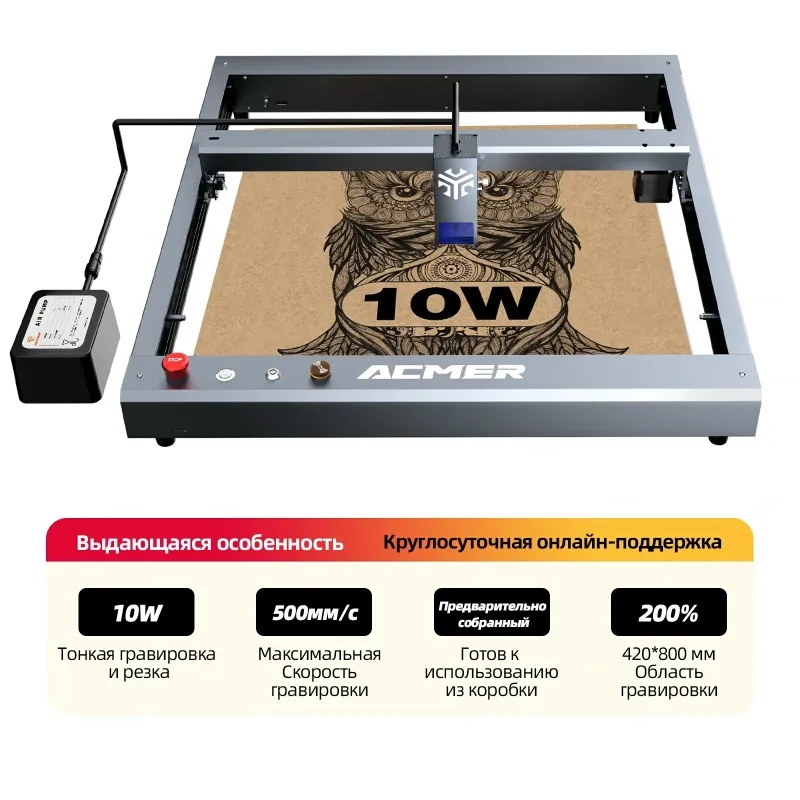
The acmer p3 48w laser cutter handles wood up to 20 mm thick, acrylic up to 15 mm, and engraves metal surfaces when paired with the right settings. Its 48-watt diode laser delivers the power needed for deeper cuts and faster production than entry-level machines, while the large work area accommodates everything from small crafts to mid-size signage projects.
We tested the P3 across a range of materials to map out real-world cut depths, speeds, and quality. This guide walks you through thickness limits by material, explains what the P3 can and cannot cut, and compares it to other machines in the Acmer lineup so you know exactly what to expect before you buy.
What the Acmer P3 48W Laser Cutter Can Cut
The acmer p3 48w laser cutter excels with organic and synthetic sheet materials. Here are the confirmed cut and engrave capabilities:
- Wood: cuts basswood, plywood, and MDF up to 20 mm in a single pass; hardwoods like oak or walnut max out around 10 to 12 mm depending on density
- Acrylic: slices cast acrylic up to 15 mm cleanly; extruded acrylic may show minor edge clouding above 10 mm
- Leather and fabric: cuts genuine and faux leather, felt, cotton, and canvas without issue; no practical thickness limit for typical garment or upholstery weights
- Cardboard and paper: handles corrugated cardboard up to 8 mm and all paper stocks, from tissue to chipboard
- Rubber and foam: cuts EVA foam, neoprene, and silicone rubber sheets up to 10 mm; compressed foam may require multiple passes
The P3 engraves but does not cut metal. You can mark anodized aluminum, stainless steel, and coated brass by removing the surface layer. For deeper metal engraving or true cutting, the acmer mopa fiber laser auto-focus marking machine is purpose-built for that task.
Materials the P3 cannot process include PVC (releases toxic chlorine gas), polycarbonate (melts and produces harmful fumes), fiberglass, and any chlorine-bearing plastics. Always verify material safety data sheets before cutting unfamiliar synthetics.
Acmer P3 48W Cut Thickness by Material Type
Real cut depth depends on material density, color, and how many passes you run. We logged single-pass and multi-pass results at the P3's recommended power and speed settings.
| Material | Single-Pass Max | Multi-Pass Max |
|---|---|---|
| Basswood plywood | 12 mm | 20 mm (two passes) |
| Cast acrylic (clear) | 8 mm | 15 mm (two passes) |
| MDF | 10 mm | 18 mm (two passes) |
| Leather (veg-tan) | 6 mm | 10 mm (two passes) |
Darker materials absorb more laser energy and cut faster. Black acrylic slices through 10 mm in one pass, while clear acrylic at the same thickness needs reduced speed or a second pass to avoid incomplete edges. Adjust your feed rate down by 20 to 30 percent for lighter colors and increase power by 5 to 10 percent if the first test shows partial cuts.
For projects that demand maximum depth, run a test square first. Mark your actual achieved depth with calipers, then calculate whether a second pass or slower speed delivers a cleaner result than forcing a single high-power pass that may char edges.
How the P3 Compares to Other Acmer Laser Cutters
The Acmer range spans entry-level engravers to the P3's higher-wattage cutter. Here is how they stack up for cut capability:
- Acmer P2 laser engraver: 33-watt diode laser; cuts basswood up to 12 mm and acrylic up to 8 mm; ideal for hobbyists who prioritize portability and lower cost over maximum depth
- Acmer K1 laser engraver: compact 10-watt unit; engraves wood, leather, and cardboard but cuts only thin materials like paper, balsa, and 3 mm plywood; best for detailed engraving rather than production cutting
- Acmer P3 48W: the tested machine; highest diode-laser power in the consumer lineup; cuts thicker stock faster and handles continuous production runs without thermal throttling
If your projects rarely exceed 10 mm wood or 6 mm acrylic, the P2 saves money and desk space. If you need to cut 15 mm acrylic signage blanks or 20 mm hardwood coasters in volume, the P3's extra wattage pays for itself in speed and fewer multi-pass operations. The K1 is too underpowered for any serious cutting work.
Metal workers should skip all three and go straight to the fiber laser marking machine, which engraves and marks steel, aluminum, and brass at depths and speeds no diode laser can match.
Tips for Maximizing Cut Quality and Depth
Even a 48-watt laser needs proper technique to hit advertised thickness limits without charring or incomplete cuts. We use these settings on every P3 job:
- Focus height: measure from the lens to the material surface with the included gauge; even 1 mm off-focus drops effective power by 15 percent
- Air assist: run the built-in air pump at full pressure to blow combustion gases away from the cut line; this prevents soot buildup and reduces charring on wood edges
- Multiple passes: for acrylic above 10 mm or hardwood above 12 mm, two passes at 60 percent speed each produce cleaner edges than one pass at 100 percent power with crawling speed
- Masking tape: apply painter's tape to acrylic and light wood before cutting to minimize smoke stains on the top surface; peel immediately after the cut finishes
Color and grain direction also matter. Plywood with dense top veneers cuts slower than basswood cores. Acrylic cast from liquid resin cuts cleaner than extruded acrylic, which can show internal stress lines when heated. Test every new material batch with a small offcut before committing to a full sheet.
Check the latest pricing and grab our discount code to save 10 percent on the P3 and all accessories when you order directly from Acmer.
Who Should Choose the Acmer P3 for Cut-Intensive Work
The P3 suits makers and small businesses that cut thicker materials daily and need reliability over months of production. Sign shops cutting 12 mm acrylic letters, woodworkers producing 15 mm plywood jewelry displays, and leather crafters slicing multi-layer bag panels all benefit from the extra wattage and larger bed.
Hobbyists who engrave more than they cut may find the acmer p2 laser engraver or acmer k1 laser engraver better matched to their budget and project mix. The P2 engraves just as finely as the P3 but costs less and takes up less space, while the K1 excels at detailed artwork on thin stock.
If you already own a diode laser under 20 watts and hit its thickness ceiling regularly, upgrading to the P3 cuts your job time in half and opens material options that were previously multi-pass struggles. Pair it with proper ventilation and a fire-safe enclosure, and the P3 becomes the workhorse of a small production studio.
For the best deal on the acmer p3 48w laser cutter and the rest of the Acmer lineup, visit our Acmer discount code page to unlock current sitewide savings before you buy.
 Shopping at Ru Acmer? See today's verified Ru Acmer discount code
Frequently asked questions
What is the thickest wood the Acmer P3 48W can cut?
The Acmer P3 48W laser cutter cuts basswood and plywood up to 20 mm thick in two passes. Single-pass cuts max out around 12 mm depending on wood density and color.
Can the Acmer P3 cut metal?
No, the P3 engraves metal surfaces by removing coatings or anodizing but cannot cut through metal. For metal cutting and deep engraving, a fiber laser like the Acmer MOPA is required.
How thick of acrylic can the P3 handle?
The P3 cuts cast acrylic up to 15 mm thick with two passes. Clear acrylic typically needs slower speeds than colored or black acrylic to avoid incomplete edges.
Is the Acmer P3 better than the P2 for cutting?
Yes, the P3's 48-watt laser cuts significantly thicker and faster than the P2's 33-watt unit. The P3 handles 20 mm wood versus the P2's 12 mm maximum, making it better for production work.
What materials should I never cut on the Acmer P3?
Never cut PVC, polycarbonate, fiberglass, or any chlorine-bearing plastics on the P3. These materials release toxic gases when laser-cut and can damage the machine and harm your health.
Do I need air assist to cut thick materials on the P3?
Yes, air assist is essential for cutting wood and acrylic above 8 mm. It clears smoke and combustion gases from the cut line, preventing charring and improving edge quality on thick stock.