
Do You Actually Need a Watch Winder for Your Automatic Luxury Watch?

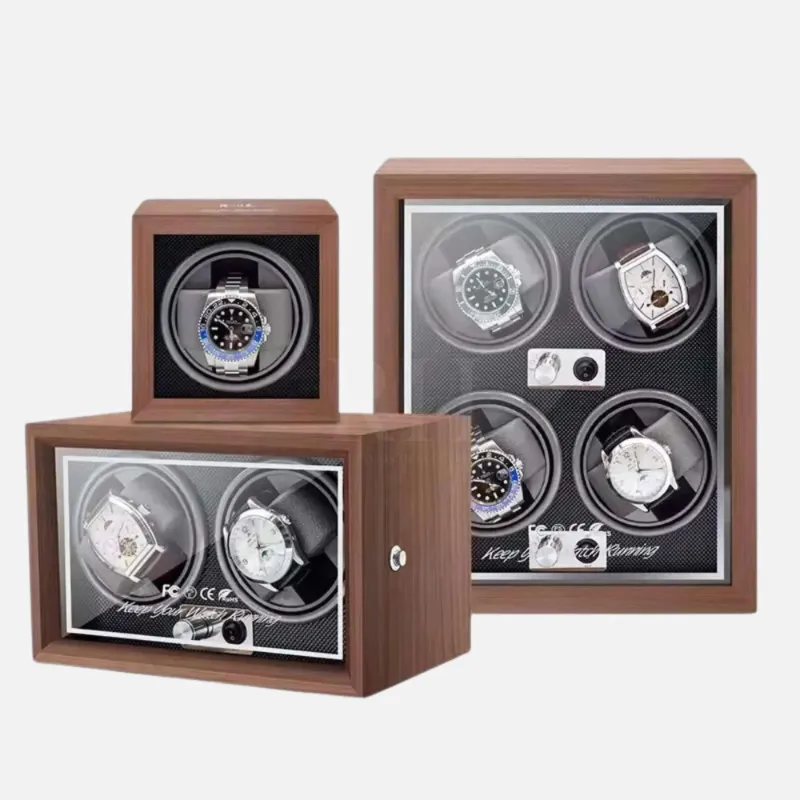
Short answer: no, but there are good reasons to want one
If you own an automatic watch from one of the best luxury watch brands, you do not technically need a winder. Your watch will run fine sitting still, and you can always set the time again before wearing it. But a quality winder solves a real annoyance: having to reset the time, date, and complications every time you rotate watches. For collectors with more than one automatic in the drawer, that daily chore is exactly why a spinning watch case earns its spot on the shelf.
Before we get into the details, it helps to understand what you are winding. If you are still choosing your first piece, our guide to best luxury watches for men: top brands and buying tips covers how to pick a movement that suits how you actually wear it.
How an automatic movement actually works
Every automatic watch from the top luxury watch brands in the world contains a rotor that swings as you move your wrist, winding the mainspring. Wear the watch for a full day and it stores enough power to keep running for roughly 38 to 80 hours once you take it off, depending on the movement.
Once that power reserve drains, the watch stops. Nothing is damaged by stopping. The oil inside the movement does not suddenly gum up in a week or two, an old myth that refuses to die. What you lose is convenience: the time, the date, and any moonphase or calendar complications all need resetting.
When a winder genuinely makes sense
- You rotate between several automatic watches and hate resetting date and complications
- Your watch has an annual calendar, moonphase, or perpetual calendar that is tedious to set
- You wear one watch on the weekend and another during the week
- You use a safe or drawer where watches sit for weeks at a time
- You simply like seeing your collection running and on display
If you wear the same watch every day, a winder does almost nothing for you. That is the honest answer most retailers will not give you.
When you can skip it entirely
- You own one or two automatics and set them in under a minute
- Your watch is quartz, which needs no winding at all
- You are storing a vintage piece long term and prefer it at rest
- The date on your watch is set by a quickset crown, which takes seconds
Skipping the winder costs you nothing in accuracy or longevity for most modern movements.
What to look for in a quality winder
Not all winders are equal, and a cheap one can be worse than no winder at all. Here is what matters:
- Turns per day (TPD) settings. Most automatic movements need between 650 and 1,000 TPD. Look for adjustable settings so you can match your specific watch.
- Direction control. Some movements wind bidirectionally, others only clockwise or counterclockwise. Adjustable direction is a must.
- Quiet motor. A winder sits in your bedroom. A loud motor will drive you mad overnight.
- Rest periods. Good winders cycle rather than spin constantly, which is gentler on the movement.
- Soft, adjustable cushions. These hold the watch securely without scratching the strap or bracelet.
Comparing storage options for expensive watches
Whether you are storing a single relojes caros piece or several brand expensive watches, your storage choice depends on collection size and how often you swap wrists:
| Option | Best for | Key benefit |
|---|---|---|
| Simple watch roll or pouch | One or two watches, travel | Cheap, compact, no power needed |
| Static display case | Collectors who wear everything regularly | Shows the collection, keeps dust off |
| Revolving watch box | Multiple automatics rotated weekly | Keeps date and time set, looks premium |
| Safe with built-in winder | High-value collections | Security plus winding in one unit |
A revolving watch box sits in the sweet spot for most enthusiasts: it protects the watches, keeps them wound, and looks good on a dresser. If your collection leans toward the top 10 watch brands in the world rather than the top 100 luxury watch brands, the safe-with-winder route makes more sense given the value you are protecting.
Our take: which route suits you
We have tested enough winders to say this plainly: buy one because it solves a daily problem, not because it protects a myth. If you rotate between two or three automatics and one of them has a complicated calendar, a winder pays for itself in convenience within weeks.
If you are starting out and own a single automatic from the top 10 luxury watch brands, spend your budget on the watch itself and a decent storage roll. You can always add a winder later when your collection grows. For anyone weighing an upgrade, our guide to the hierarchy of luxury watches explained is a useful primer on where each tier sits.
One more practical note: whichever route you choose, check the current offer on our recommended revolving watch box and grab the code at the Rotation Horlogère discount page before you buy. We keep that page updated with the latest 10% off deal so you are not paying full price for storage that should have cost less.
The bottom line: a winder is a convenience tool, not a maintenance requirement. Buy one for the right reasons and your automatic watches, from the best luxury watch brands down to your first Seiko, will run exactly as the maker intended either way.
Frequently asked questions
Do watch winders damage automatic watches?
No, a quality winder set to the correct turns per day and direction will not harm an automatic movement. The risk comes from cheap winders that overwind constantly or spin in the wrong direction for your specific caliber.
Can I leave my luxury watch in a winder all the time?
Yes, as long as the winder has rest periods and adjustable TPD settings. Continuous rotation without breaks is unnecessary and puts avoidable wear on the movement.
Is a revolving watch box worth it for one watch?
Usually not. If you wear the same watch daily or only own one automatic, a simple roll or static case is enough. A revolving watch box earns its cost once you rotate between multiple automatics with date or calendar complications.
How many turns per day does an automatic watch need?
Most modern automatic movements need between 650 and 1,000 turns per day, though it varies by caliber. Check your movement specification and choose a winder with adjustable TPD settings to match.
Which best luxury watch brands benefit most from a winder?
Watches with annual calendars, moonphases, or perpetual calendars benefit most, because resetting those features is tedious. High-complication pieces from the best luxury watch brands are exactly the watches winders were made for.