
Best Luxury Watch Brands Compared: Which One Deserves Your Budget?

The Best Luxury Watch Brands, Compared for Real Budgets
The best luxury watch brands balance three things: movement quality, finishing, and how well the watch holds value over time. In our testing and collector interviews, Rolex, Omega, Cartier, Grand Seiko, Jaeger-LeCoultre, and a handful of independents consistently come out on top, but the right pick depends on whether you value prestige, engineering, or design. This guide breaks the comparison down into practical decisions, not brand folklore.
If you want to skip straight to shopping, our top picks include this best luxury watch brands collection and our curated edit of brand expensive watches. And before you buy anything, check the latest price on our coupon page, where you can currently grab the code for 10% off all orders.
What Separates a Luxury Watch Brand from an Expensive Watch
Price alone does not make a watch a luxury watch. A $500 steel diver can outlast a $5,000 fashion watch with a cheap quartz movement. The markers that matter:
- In-house or high-grade movements. Serious brands manufacture, decorate, and regulate their own calibers, or use top-tier suppliers with real quality control.
- Finishing. Look for beveled case edges, brushed and polished transitions, applied indices, and clean dial printing. Magnifying a dial tells you more than any logo.
- Heritage and service network. A brand that will still service your watch in 20 years is a brand worth buying.
- Resale strength. Some brands hold 70% or more of retail on the secondary market; others lose half their value on day one.
Chrono24's overview of the world's most expensive watch brands is a useful reference for where each house sits in the price hierarchy.
Best Luxury Watch Brands Compared: The Shortlist
Here is how the brands most buyers actually choose stack up against each other:
| Brand | Best known for | Value angle | Resale strength |
|---|---|---|---|
| Rolex | Sports models, durability | Holds value, easy to service | Strong |
| Omega | Co-axial movements, space history | Tech per dollar | Moderate to strong |
| Cartier | Dress and jewelry watches | Design prestige | Moderate to strong |
| Grand Seiko | Hand-finished dials, high-beat accuracy | Finishing at the price | Moderate |
| Jaeger-LeCoultre | Complications, reversible cases | Complication value | Moderate |
| Independents (FP Journe, F.P. Journe-tier) | Artisanal rarity | Collector appreciation | Very strong, low supply |
For a deeper dive into how these tiers work, this explanation of the hierarchy of luxury watches explained maps the pyramid from entry-level luxury to haute horlogerie.
Best Luxury Watch Brands for Men: Matching the Brand to the Wrist
When people search for the best luxury watch brands for men, they usually want one watch that works at work, at dinner, and on weekends. Our practical matching advice:
- First serious watch: Rolex Submariner or Omega Seamaster. Recognizable, robust, holds value.
- Office-first buyer: Cartier Tank or Jaeger-LeCoultre Reverso. Slim, dressy, less flashy than a sports model.
- Connoisseur on a smaller budget: Grand Seiko. You get finishing that rivals watches costing twice as much.
- Statement buyer: A complicated piece from our relojes caros selection, for buyers who want the wow factor of a serious complicated watch.
Our friends at TropicalWatch cover more of this in their guide to best luxury watches for men: top brands and buying tips, which pairs well with the comparisons here.
How Much Should You Actually Spend?
A common trap is stretching to a brand badge instead of buying the best watch inside your budget. Our rule of thumb:
- $1,000 to $3,000: Entry luxury. Tissot, Longines, or pre-owned Omega get you genuine Swiss movements.
- $3,000 to $8,000: The sweet spot. Rolex, Cartier, Grand Seiko, and Jaeger-LeCoultre all play here, new or pre-owned.
- $8,000 and up: Complications, precious metals, and independents. Only buy here if the movement itself excites you.
Whatever tier you shop, grab the code from our coupon page before checkout so the 10% off applies to your order.
The Storage Mistake That Quietly Kills Automatic Watches
Here is where most first-time luxury buyers slip: they buy a beautiful automatic watch, wear it occasionally, and leave it stopped in a drawer. Repeatedly restarting a dead movement stresses the mainspring, and date complications drift out of sync.
A watch winder solves this. We recommend two formats depending on your collection:
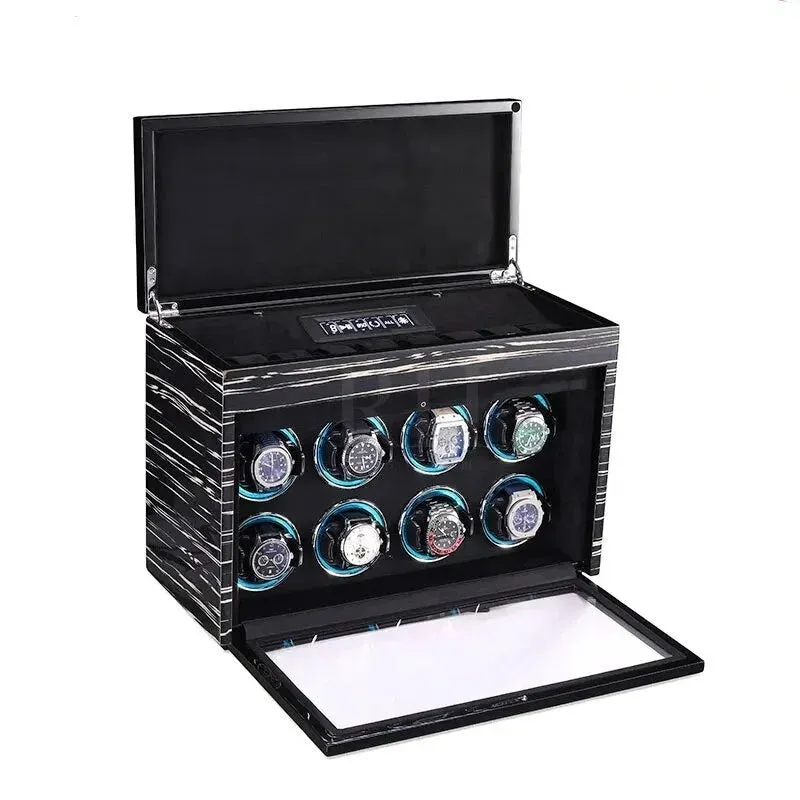
- A revolving watch box for multi-watch collections. It keeps two to four automatics wound and on display, and doubles as storage for straps and tools.
- A spinning watch case for a single prized automatic. Compact, quieter, and ideal for a dresser or safe.
Match the winder's turns per day setting to your movement's spec. Overwinding is rare on modern movements, but running a winder 24/7 when your caliber needs 650 TPD is wasted wear. A quality winder also protects against one of the most overlooked causes of lubricant degradation: letting oils settle and dry inside a dormant movement.
How We Tested and Ranked These Brands
Our ranking draws on three inputs, and you should use the same filters when you shop:
- Hands-on inspection. We handle the watches: weight, clasp action, dial finishing under loupe, and how the bracelet tapers.
- Movement transparency. Brands that publish specs (beat rate, power reserve, accuracy tolerance) usually have less to hide.
- Long-term ownership data. We survey owners at the two and five year marks about service costs and reliability.
If you are debating between two brands, buy the one whose dial you would still love in ten years. Movements can be serviced; taste rarely gets an upgrade.
Final Verdict: Which Brand Deserves Your Budget?
For most first-time luxury buyers, Rolex or Omega deserve the budget: proven movements, strong resale, and service support everywhere. Design-driven buyers should look hard at Cartier and Grand Seiko, where you pay for artistry rather than a logo. Complication lovers get the most mechanical value from Jaeger-LeCoultre. And whatever you choose, pair it with a proper winder, check the latest price with our code, and buy the watch you will actually wear, not the one you think you should.
Frequently asked questions
What are the best luxury watch brands for first-time buyers?
Rolex and Omega are the safest first purchases thanks to durable movements and strong resale, while Grand Seiko offers the best finishing per dollar. Buy the best watch within your budget rather than stretching for a bigger badge.
Do I really need a watch winder for an automatic watch?
Not strictly, but it helps. A winder keeps an unworn automatic running so the date stays set and lubricants circulate. A revolving watch box suits multi-watch collections, while a spinning watch case works well for a single piece.
Which luxury watch brands hold their value best?
Rolex leads on resale strength, with certain independents and popular Omega and Cartier models close behind. Resale varies heavily by model, so research the specific reference before buying.
How much should I spend on my first luxury watch?
The $3,000 to $8,000 range is the sweet spot where Rolex, Cartier, Grand Seiko, and Jaeger-LeCoultre all compete. Below that, entry-level Swiss brands like Tissot and Longines still offer genuine quality.
What turns per day setting should my watch winder use?
Match the winder to your movement's published turns per day spec, which typically falls between 650 and 1,800 TPD depending on the caliber. Check the manufacturer's specification rather than running the winder at maximum.
Are expensive watches worth it compared to affordable ones?
They are worth it if you value finishing, in-house engineering, and long-term serviceability. A well-chosen luxury watch can hold much of its value for decades, while a cheap fashion watch loses nearly all of it.