
How Long Do Luxury Watches Last? Care Tips to Protect Your Investment

How Long Do Brand Expensive Watches Actually Last?
A properly maintained brand expensive watch can easily last 20 to 50 years, and many high-end mechanical pieces are passed down through generations. Quartz models typically run 10 to 20 years before parts become harder to source, while a serviced mechanical movement has no fixed expiration date at all. The watch itself is rarely the limiting factor. How you wear, store, and service it is.
We test and wear luxury pieces year-round at The Planet Deals, and the difference between a watch that ages beautifully and one that becomes a parts donor almost always comes down to habits, not luck. Here is what actually determines lifespan, and the care routine we recommend.
What Actually Wears Out in a Luxury Watch
The case and crystal are nearly indestructible by daily standards. The weak points are smaller and more predictable:
- Gaskets and seals. Rubber seals that keep water out degrade over a few years, even if the watch never touches water.
- Lubricants. The oils inside a mechanical movement dry out and thicken, which increases friction and accuracy drift.
- Straps and bracelets. Leather cracks from sweat and humidity; spring bars and clasps loosen with wear.
- Battery and electronics. In quartz models, the battery is trivial to replace, but circuit boards eventually become obsolete.
- Mainspring and winding components. Overwinding by hand or aggressive automatic wear accelerates wear here.
None of these are dealbreakers. Every one of them is a scheduled maintenance item, the same way brakes and tires are for a car.
Servicing Intervals: The Single Biggest Lifespan Factor
Most manufacturers recommend a full movement service every 4 to 7 years for mechanical watches. Skipping it does not kill the watch immediately, but gritty old lubricants grind away at pivots and jewels, turning a routine service into a costly restoration later.
A sensible schedule:
- Every 2 to 3 years: pressure test and gasket check, especially if you swim with the watch.
- Every 4 to 7 years: full movement service with fresh lubricants and timing regulation.
- Immediately: any sudden accuracy change, moisture under the crystal, or a hard knock.
If you are still shopping and weighing which pieces justify service costs, our roundup of the best luxury watch brands covers which houses hold value and keep parts available for decades. It is also worth reading about luxury watch brands that are worth the investment to understand how servicing history affects resale value.
Daily Care Habits That Add Years
These cost nothing and prevent most of the damage we see:
- Wipe it down. A soft microfiber cloth after wear removes sweat and salt that corrode case backs and straps.
- Keep it away from magnets. Speakers, laptop cases, and magnetic clasps can magnetize a movement in seconds. A watchmaker can demagnetize it, but prevention is easier.
- Do not wind a stopped automatic by shaking it. Use the crown gently, 20 to 30 turns at most.
- Screw the crown down fully on dive-style models before any water exposure.
- Avoid extreme temperatures. A watch left on a car dashboard or in a sauna can suffer gasket and lubricant damage fast.
- Avoid the 9:30 to 3:30 crown zone for date changes on watches with quickset dates, to protect the date-change mechanism.
Storage Is Where Most Owners Slip
An automatic watch left unwound sits with dried, settled lubricants, and repeatedly resetting the time and date every time you wear it puts stress on the setting works. This is exactly the problem a winder solves.
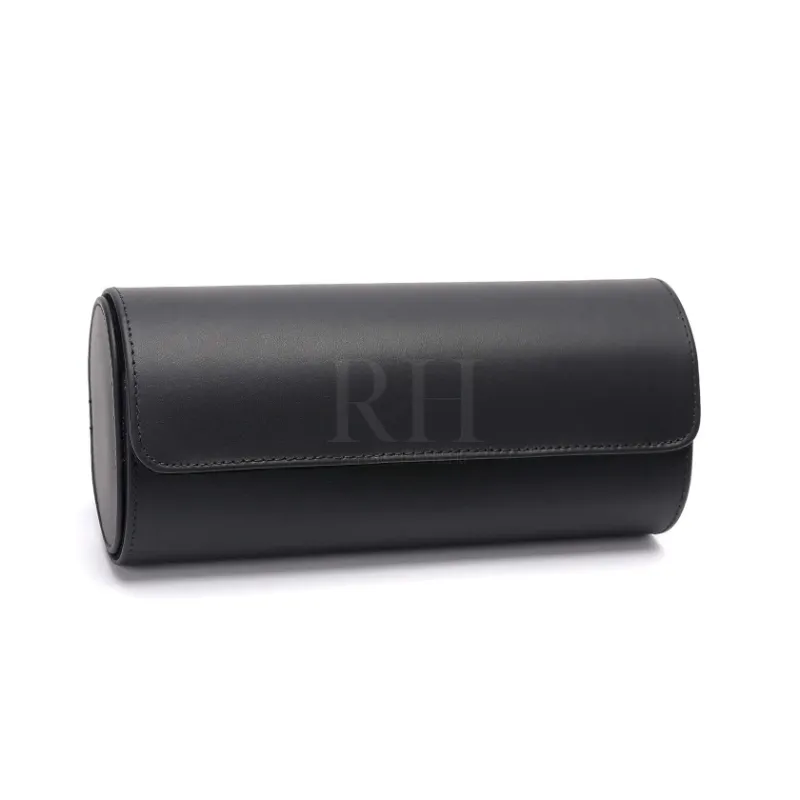
A quality revolving watch box keeps automatics running on a gentle, programmable rotation so oils stay distributed and complications like moonphases and perpetual calendars stay set. For a single daily wearer, a compact spinning watch case does the same job in a smaller footprint and often runs quieter.
Comparing Your Storage Options
| Option | Best for | Keeps automatics wound | Notes |
|---|---|---|---|
| Revolving watch box | Multi-watch collectors | Yes, multi-slot rotation | Best for rotating between several automatics |
| Spinning watch case | Single watch wearers | Yes, single rotor | Compact, quieter, lower power draw |
| Drawer or travel roll | Quartz watches, short storage | No | Fine for quartz, not ideal for automatics long-term |
For serious pieces, especially collectors of relojes caros, we consider a winder part of the purchase cost, not an accessory. If you are buying one alongside a new watch, grab the code at our coupon page before checkout, since Rotation Horlogère currently runs 10% off all orders.
Which Watches Are Worth This Level of Care?
Honestly, not every watch needs a winder and a service calendar. Here is how we split it:
- Worth full care: mechanical automatics, anything with a complicated movement, and pieces from houses with strong parts availability.
- Moderate care: quartz watches from premium brands, which need batteries, seals, and strap care but no winding.
- Light care: fashion watches and beaters, which you simply wear and enjoy.
If you are deciding where a new piece falls on that scale, browse our current picks of brand expensive watches and check the latest price with the discount applied. For perspective on what the top of the market looks like, the list of most expensive watches sold at auction is a good reminder that long-term care is precisely what turns a nice watch into a collector piece.
Our Bottom Line
Treat a mechanical luxury watch like a car you intend to keep: regular servicing, sensible daily habits, and proper storage. Do those three things and the watch will almost certainly outlast your interest in it, which is the best problem an owner can have.
Frequently asked questions
How long do brand expensive watches last with proper care?
A well-serviced mechanical watch can run for several decades and often becomes a heirloom piece. Quartz models typically last 10 to 20 years before parts availability becomes a concern.
Do I really need a revolving watch box for my automatic watch?
It is not mandatory, but if you own multiple automatics or rotate between watches, a revolving watch box keeps movements running and lubricants distributed while keeping complications like dates and moonphases set.
How often should a luxury mechanical watch be serviced?
Most manufacturers recommend a full service every 4 to 7 years, with a pressure test and gasket check every 2 to 3 years if the watch is exposed to water.
Can I store my automatic watch in a drawer instead of a spinning watch case?
You can, but it will stop and need resetting each time you wear it. A spinning watch case keeps a single automatic running gently, which is easier on the movement long-term.
What is the fastest way to ruin an expensive watch?
Magnets, unscrewed crowns near water, and skipped servicing are the top three. All three are avoidable with basic habits.
Where can I find a discount on watch winders and luxury watch storage?
Visit our Rotation Horlogère coupon page for the current 10% off code, then apply it at checkout on the store site.