
Can You Use Mica Powder in UV Resin and Epoxy Resin?

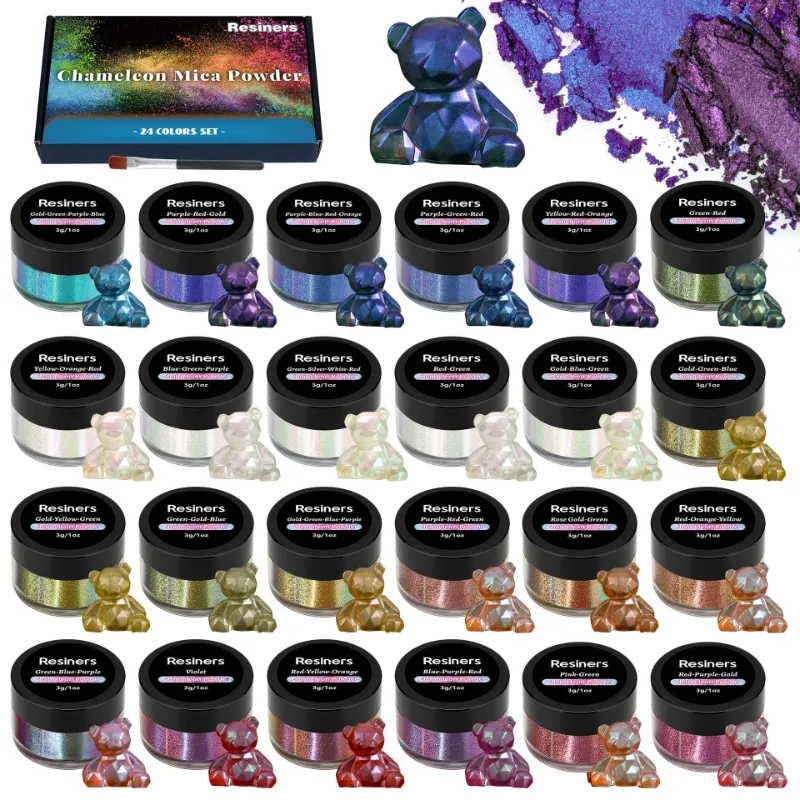
Yes, you can use a craft resin mica powder 30 colours pigment set in both UV resin and epoxy resin, and we regularly test both applications in our workshop. The powder disperses cleanly in both resin types, though the mixing technique and ratios differ slightly depending on which system you choose.
How Mica Powder Works in Epoxy Resin
Mica powder suspends evenly throughout epoxy because of the resin's longer working time and lower viscosity. The slow cure gives pigment particles time to distribute without clumping, and you get smooth, even color across your entire project.
We mix mica into epoxy resin at a ratio of roughly 3 to 6 percent by weight for translucent color, or up to 10 percent for opaque coverage. Start with a small amount, blend thoroughly with a stirrer or craft stick for two minutes, then add more if you want deeper saturation. The extended pot life of epoxy (typically 30 to 45 minutes) gives you plenty of time to fold in the powder without rushing.
When you pour epoxy colored with mica into silicone molds, the pigment stays suspended through the entire cure cycle. You will not see settling or separation if you mixed properly. For ocean waves, geodes, or layered pours, mica creates depth and shimmer that liquid dyes cannot match.
Using a Craft Resin Mica Powder 30 Colours Pigment Set in UV Resin
UV resin cures in seconds under a UV light bulb, which means mica powder must disperse fast or it will lock in streaks. The resin is thicker than epoxy, so you need to stir more aggressively and use slightly less pigment to avoid a gritty texture.
We recommend a 2 to 4 percent powder-to-resin ratio by weight for UV projects. Mix in a small silicone cup with a toothpick or metal tool, scraping the sides to pull in every speck of powder. Work in thin layers (no more than 3 mm per pass) so the UV light penetrates fully and cures the pigment along with the resin. Thick pours with heavy mica loads can stay tacky underneath because the powder blocks UV rays.
A craft resin mica powder 30 colours pigment set typically includes fine-grade pigments that blend into UV resin without settling, but always test a small batch first. If you see cloudiness or poor cure, reduce the powder or switch to a lighter shade. Metallic and interference colors tend to need less pigment than matte earth tones.
Check the latest pricing and grab our discount code before you stock up on mica powders and resin supplies.
Mixing Ratios and Techniques for Both Resin Types
| Resin Type | Mica Ratio (by weight) | Mixing Time | Layer Thickness |
|---|---|---|---|
| Epoxy Resin | 3–10% | 2–3 minutes | Up to 1 inch |
| UV Resin | 2–4% | 1–2 minutes | 3 mm maximum |
For epoxy, measure powder on a digital scale if you want repeatable colors across multiple batches. For UV resin, work by eye in small test cups, since you will cure and evaluate each layer before adding the next.
Always add mica powder to resin, never resin to powder. Pouring resin onto a pile of pigment creates clumps that are nearly impossible to break apart. Instead, dispense your resin into a clean cup, sprinkle a pinch of powder on the surface, and fold it in with a slow stirring motion. Scrape the bottom and sides every few seconds to catch settled pigment.
If you are working with 3d printer resin, follow the UV resin guidelines but reduce mica to 1 to 2 percent. Most photopolymer resins are tuned for transparency, and excess pigment will block the laser or LCD exposure and cause print failures.
Common Mistakes and How to Avoid Them
- Overmixing in epoxy: Aggressive stirring introduces bubbles that will mar your finish. Fold gently and let the resin rest for five minutes before pouring, or sweep the surface with a heat gun to pop trapped air.
- Undermixing in UV resin: Streaks and swirls look intentional in epoxy art, but in UV resin they read as incomplete blending. Stir until you see zero streaks, then cure immediately.
- Using too much powder: Heavy pigment loads make UV resin tacky and turn epoxy opaque and chalky. Start lean and add more in small increments.
- Skipping the test pour: Every mica brand behaves slightly different. Pour a thumbnail-sized test in a scrap mold, cure it fully, and inspect the color and clarity before committing to a large project.
When you combine mica with pressed flowers or other inclusions, add the powder to the resin first, then position your botanicals. This prevents pigment from sticking to delicate petals and gives you cleaner results.
Choosing the Right Mica Powder Set for Your Projects
A 30-color set gives you enough variety to blend custom shades without buying individual jars. Look for sets that include metallics, pearls, and a few matte earth tones so you can cover jewelry, coasters, river tables, and art pieces with one kit.
We prefer powder sets in small jars (5 to 10 grams each) rather than loose baggies because the jars keep pigment dry and prevent spills on your desk pad or crafting table. Screw-top lids also let you dip a dry brush directly into the jar for dusting techniques on half-cured resin.
Grab the code and save on your next order when you stock up on resin and pigment supplies.
Fine-grade mica (200 to 400 mesh) blends smoothly into both UV and epoxy resin without grit. Coarser powder (80 to 100 mesh) creates visible sparkle and texture, which works well for geode art or galaxy effects but can feel rough in jewelry or coating applications. If your set does not list mesh size, rub a pinch between your fingers. It should feel like silk, not sand.
For finishing and detail work on cured resin, a dremel tool or dremel tool kit helps you sand, polish, and carve without disturbing embedded mica. The pigment stays locked in the cured resin and will not smudge or flake during finishing.
Frequently asked questions
Can I use mica powder in both UV resin and epoxy resin?
Yes, mica powder works in both UV and epoxy resin. Use 3 to 10 percent by weight in epoxy and 2 to 4 percent in UV resin, and mix thoroughly to avoid streaks or settling.
How much mica powder should I add to resin?
Start with 3 to 6 percent mica powder by weight for translucent color in epoxy resin, or 2 to 4 percent in UV resin. Add more for opaque coverage, but stay under 10 percent to avoid tackiness and poor curing.
Why does my UV resin stay tacky after adding mica powder?
Heavy mica loads block UV light and prevent full cure. Reduce the powder to 2 to 4 percent by weight, pour thinner layers (3 mm max), and cure each layer separately under a UV light.
Do I need a 30-color mica powder set or can I use single jars?
A 30-color set gives you blending flexibility and variety for different projects without buying individual jars. Single jars work if you only need one or two signature colors.
Can I mix mica powder with 3D printer resin?
Yes, but use only 1 to 2 percent mica powder by weight. Excess pigment blocks the laser or LCD exposure and will cause print failures or incomplete curing.
Will mica powder settle or separate in epoxy resin?
No, mica powder stays suspended in properly mixed epoxy resin through the entire cure cycle. Stir for at least two minutes and scrape the sides to ensure even distribution before pouring.