

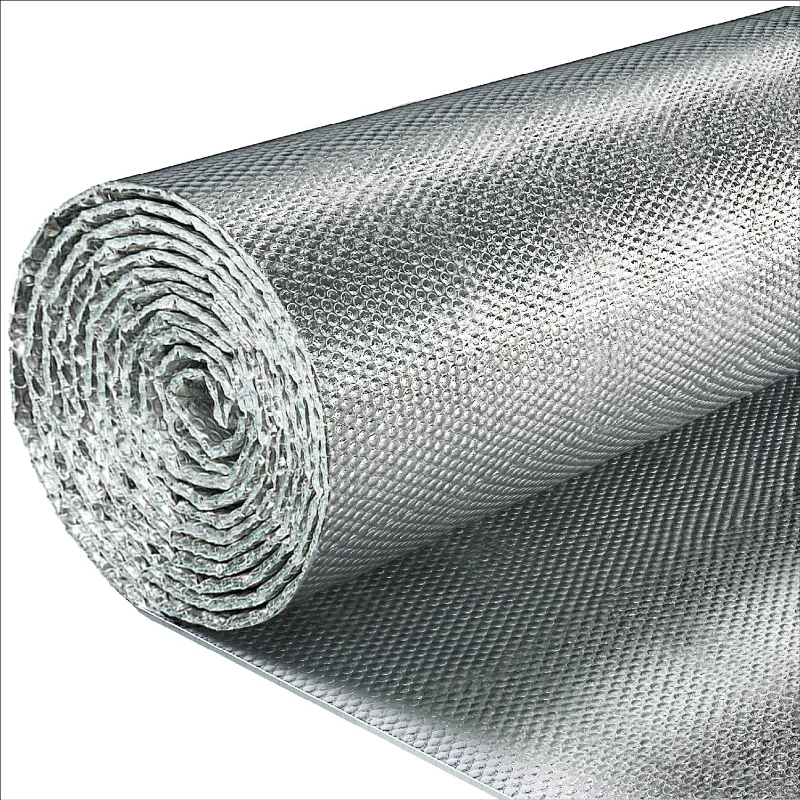
A foil insulation roll is one of the most cost-effective ways to reduce heat loss in walls, floors, attics, and crawl spaces — but the right choice depends on your application, climate, and existing structure. This guide walks you through every factor that matters so you buy once and install it correctly.
What Is a Foil Insulation Roll and How Does It Work?
Reflective insulation works differently from traditional fiberglass batts. Instead of trapping air pockets to slow conduction, a foil insulation roll reflects radiant heat away from the surface it faces. That makes it especially effective in hot climates where the sun hammers your roof, and in cold climates as an additional layer that bounces interior heat back inward.
Most rolls consist of one or two layers of low-emissivity foil laminated to a core material such as polyethylene foam, bubble film, or kraft paper. The foil face needs an air gap on at least one side to reflect effectively — without that gap, it behaves more like a vapor barrier than an insulator.
Key terms to know before you shop:
- Emissivity — the fraction of radiant energy a surface emits. Quality foil has an emissivity below 0.05, meaning it reflects more than 95% of radiant heat.
- R-value — a measure of thermal resistance. Reflective products list an "installed R-value" that assumes a minimum air gap; always check the installation spec.
- Perm rating — how much moisture vapor passes through. A low perm rating means the roll also acts as a vapor retarder.
Comparing Types of Reflective Insulation for Home Use
Not every roll suits every project. Use the table below as a quick-reference guide.
| Type | Best Application | Air Gap Needed | Vapor Retarder |
|---|---|---|---|
| Single-bubble foil | Walls, under rafters | Yes (25 mm min.) | Often yes |
| Double-bubble foil | Crawl spaces, floors | Yes (25 mm min.) | Often yes |
| Foam-core foil | Garage doors, shed walls | No gap required | Varies |
| Foil-faced kraft | Stud cavities, combined with batts | Yes | Usually yes |
The reflective insulation available through EconoHome is worth reviewing if you want a product that covers common residential applications. Check the product page for current specs and, while you are there, grab the EconoHome discount code to apply 10% off your order.
How to Size a Foil Insulation Roll for Your Project
Buying too little means a second shipment and mismatched batches; buying too much wastes budget. Here is a straightforward sizing process:
- Measure the total surface area — length times width for each wall, floor, or roof plane you plan to cover.
- Add 10% for cuts and overlaps — foil seams should overlap at least 50 mm and be taped with foil tape.
- Account for obstacles — doors, windows, joists, and pipes all reduce usable coverage.
- Check roll width against your stud or joist spacing — a roll sized to fit standard 400 mm or 600 mm centres minimises waste.
- Compare roll length options — longer rolls have fewer seams, which improves both thermal and vapour performance.
Most manufacturers list rolls in square metre coverage. Write down your calculated area before visiting the product page so you can order the right quantity in one go.
Where to Install Reflective Insulation in Your Home
A foil insulation roll can go in more places than most homeowners realise:
- Attic / roof rafters — the single highest-impact location in a hot climate; keep a 25–75 mm air gap between foil and roof deck.
- Exterior stud walls — install between the sheathing and cladding, or inside between studs with a service cavity.
- Under suspended timber floors — reflects heat upward into the living space and blocks ground moisture.
- Garage doors — foam-core foil panels cut to fit each panel section deliver a noticeable temperature difference.
- Crawl spaces — double-bubble rolls draped across the ground and up the walls control both heat and moisture.
- Behind radiant wall heaters — placing a reflective layer behind wall mounted heaters or radiant wall heaters directs heat into the room rather than into the wall, improving efficiency noticeably.
The same logic applies to bathroom wall heater installations. A thin reflective layer behind the unit keeps the wall cooler to the touch and pushes more warmth into the room, which is exactly what you want from a bathroom heater energy efficiency standpoint.
Installation Tips for a Clean, Effective Fit
Poor installation is the most common reason reflective insulation underperforms. Follow these practices:
- Always maintain the air gap — staple or mechanically fix the roll so it does not sag and touch the adjacent surface.
- Tape every seam and penetration — use foil-faced tape, not standard duct tape, which degrades with temperature cycling.
- Seal around electrical boxes and pipes — these are the hidden paths where conditioned air escapes.
- Install foil face toward the heat source — in a hot climate that means facing outward; in a cold climate it means facing the interior.
- Wear gloves and a dust mask — some cores contain fibres; foil edges are sharp.
- Follow local building codes — many jurisdictions require a specific minimum R-value for each building assembly; reflective products may need to be combined with mass insulation to meet code.
Pairing Insulation with the Right Heating Products
Insulation and heating work best as a system. Once your building envelope is tighter, smaller, more efficient heaters maintain comfort without the energy penalty. EconoHome carries a range of products that complement a well-insulated home:
- Bathroom heaters sized for insulated spaces run shorter cycles.
- An electric food warming mat or electric warming tray keeps meals at temperature in a dining area without cranking up the whole-room heat.
- A plate warmer on the counter means your dishes stay hot from an insulated kitchen rather than a drafty one.
For outdoor living in cooler months, a weatherproof outdoor bench paired with a well-insulated patio enclosure extends the season considerably.
If you are ready to put together a full home comfort order, check the latest pricing and coupon before checkout to make sure the 10% discount is applied.
Who Benefits Most from a Reflective Foil Insulation Roll?
Reflective insulation is a strong fit for:
- Homeowners in hot, sunny climates where radiant heat through the roof is the dominant problem.
- DIY renovators who want an easy-to-cut, easy-to-handle material that does not require specialist tools.
- Landlords and property managers retrofitting older buildings where cavity space is limited.
- Anyone adding a workshop, garage, or garden room where full structural insulation is impractical.
- Eco-conscious buyers who prefer low-embodied-energy materials alongside other sustainable choices like compostable plates and compostable paper plates for reducing household waste across the board.
If your project ticks one or more of those boxes, a quality foil insulation roll is likely the most practical and affordable first step toward a more energy-efficient home.
 Shopping at EconoHome? See today's verified EconoHome discount code
Frequently asked questions
What air gap do I need behind a foil insulation roll for it to work properly?
Most manufacturers recommend a minimum air gap of 25 mm (about 1 inch) on at least one side of the foil face. Without that gap, the product acts mainly as a vapor barrier rather than a reflective insulator, and its thermal performance drops significantly.
Can I use a foil insulation roll behind a bathroom wall heater or radiant wall heater?
Yes, and it is actually a smart move. Placing reflective insulation behind a bathroom wall heater or radiant wall heater directs more heat into the room instead of letting it absorb into the wall, improving both comfort and energy efficiency.
Does a foil insulation roll also act as a vapor barrier?
Many rolls have a low perm rating and do double duty as a vapor retarder, but you should check the product's perm specification before relying on it for moisture control. In high-humidity areas like basements and crawl spaces, verify it meets your local code's vapour control requirements.
How do I join two pieces of foil insulation roll without creating a thermal gap?
Overlap each seam by at least 50 mm and seal it with foil-faced tape rather than standard duct tape. This keeps the reflective surface continuous and also maintains any vapor-retarder properties across the joint.
Is there an EconoHome discount code available for insulation and heater orders?
Yes, EconoHome currently offers 10% off all orders. You can find the latest code and confirm it is still active on the EconoHome coupon page before you check out.
Can reflective insulation replace traditional fiberglass batts entirely?
In some climate zones and applications it can, but in colder climates building codes typically require a minimum R-value that reflective insulation alone may not meet. Using foil insulation alongside mass insulation like fiberglass or mineral wool usually delivers the best result and ensures code compliance.