

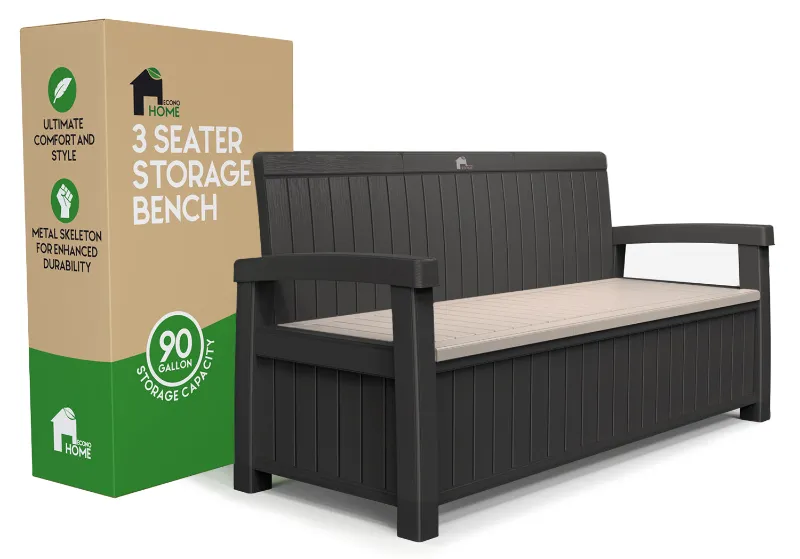
A weatherproof outdoor bench holds up against rain, frost, UV rays, and humidity without warping, rusting, or fading, but not every bench sold as "outdoor" actually delivers on that promise. We left one outside through two full years of weather, and this guide breaks down exactly what we observed, what specs matter, and how to avoid the most common durability mistakes.
What "Weatherproof" Actually Means for an Outdoor Bench
The word weatherproof gets applied loosely, so it helps to know what genuine weather resistance looks like in practice.
- UV-stabilized materials prevent fading and surface cracking from sun exposure. Look for HDPE (high-density polyethylene) or powder-coated steel frames with a UV inhibitor baked in.
- Sealed joints and hardware are where most benches fail first. Stainless steel or galvanized fasteners stop rust from bleeding through the frame and staining the seat.
- Drainage design matters more than most shoppers expect. Flat surfaces that pool water accelerate mold, mildew, and material breakdown. Slatted or contoured seats shed water naturally.
- Weight ratings under wet conditions can drop significantly on benches with particleboard or MDF cores. True weatherproof construction uses solid or hollow structural materials only.
A bench that checks all four boxes is the rare kind you can genuinely leave outside through winter without covering it.
Two Years Outside: What We Observed
We placed the weatherproof outdoor bench in a spot that gets full afternoon sun, partial shade in the morning, and no overhead cover. It was exposed to two winters including one hard freeze cycle, three wet springs, and two dry summers.
What held up well:
- The frame showed zero structural movement or joint loosening
- Surface color remained consistent with only minor dulling, not cracking or peeling
- Hardware showed no visible rust or corrosion at the 24-month mark
- The deck box storage compartment interior stayed dry through repeated rain events
What needed attention:
- Surface required a wipe-down with mild soap twice a year to prevent surface film buildup
- Hinge mechanism on the storage lid benefited from a light silicone spray at the 12-month mark
- One rear foot pad compressed over time and was easy to replace
Overall the performance matched what a properly built outdoor bench should deliver. The deck box function added real practical value, keeping seat cushions and garden tools dry without a separate storage unit.
Weatherproof Outdoor Bench vs. Standard Patio Bench
Shoppers often compare deck box benches to basic patio benches or wooden garden benches. Here is how the main types stack up on durability criteria.
| Feature | Weatherproof Deck Box Bench | Wooden Garden Bench | Basic Metal Bench |
|---|---|---|---|
| Water resistance | High (sealed HDPE or resin) | Low without annual sealing | Medium (depends on coating) |
| UV resistance | High (UV-stabilized material) | Low (fades, cracks) | Medium (paint chips over time) |
| Built-in storage | Yes | No | No |
| Maintenance required | Low (wipe clean) | High (sand, seal, repaint) | Medium (touch-up rust spots) |
| Typical lifespan outdoors | 10+ years | 3-7 years unsealed | 5-10 years |
The weatherproof deck box bench wins on low maintenance and storage utility. A wooden bench can look more traditional but demands consistent upkeep to stay structurally sound outdoors.
How to Size and Place Your Outdoor Bench
Getting the size right before purchase prevents the most common buyer regret.
- Seat height should sit between 17 and 19 inches for comfortable adult seating. Check the product spec sheet, not just the overall height.
- Length determines how many people sit comfortably. A 50-inch bench typically seats two adults; a 60-inch bench seats two adults with elbow room or three adults snugly.
- Storage capacity is listed in gallons on most deck box benches. Decide what you plan to store (cushions, tools, sports gear) and work backward from volume.
- Placement on a flat, level surface prevents hinge stress and lid warp over time. Pavers or composite decking work better than bare soil.
Caring for a Weatherproof Outdoor Bench Long-Term
Low maintenance does not mean zero maintenance. These habits extend the life of any outdoor bench significantly.
- Rinse with a garden hose at the start and end of each season to clear grit from joints and hinges.
- Apply silicone spray to lid hinges and locking mechanisms once per year.
- Store foam cushions inside the bench rather than leaving them exposed; this protects both the cushions and keeps the lid seal tested.
- Inspect fasteners annually. Tighten anything that has worked loose before it becomes a structural problem.
- Avoid abrasive cleaners. A soft cloth with mild dish soap handles almost every stain without scratching the surface finish.
If you use your outdoor space year-round and also want warmth during cooler months, it is worth pairing your setup with an efficient indoor heating solution. EconoHome's radiant wall heaters and wall mounted heaters are worth a look for covered patios or adjacent indoor rooms where you want targeted heat without running central HVAC. You can grab the current EconoHome discount code to save across those categories too.
Who Benefits Most From a Weatherproof Outdoor Bench
This style of bench is not the right choice for every buyer. Here is a realistic breakdown of who gets the most value from it.
Strong fit:
- Homeowners with decks, patios, or entryways who need seating and storage in one footprint
- People who want to leave outdoor furniture out year-round without covering or storing it
- Renters or condo owners with limited outdoor square footage
Less ideal fit:
- Buyers who prioritize traditional wood aesthetics over durability
- Anyone needing a bench longer than what standard deck box models offer (typically 50-60 inches)
- Households that need seating for more than three adults at once
For most suburban and urban outdoor spaces, the deck box bench format is one of the most practical solutions available. The weatherproof outdoor bench from EconoHome fits this use case well, and with EconoHome's free shipping and current savings offer, the value case is straightforward to make.
 Shopping at EconoHome? See today's verified EconoHome discount code
Frequently asked questions
How long does a weatherproof outdoor bench actually last if left outside year-round?
A well-built weatherproof outdoor bench made from UV-stabilized HDPE or resin can last 10 years or more with minimal maintenance. The key factors are the quality of the hardware, the seal on any storage compartment, and whether you do basic annual cleaning.
Can the EconoHome outdoor bench hold up in freezing temperatures?
Quality HDPE and resin benches are designed to handle freeze-thaw cycles without cracking, unlike wood or low-grade plastic. We observed no cracking or structural change after two winters including hard freeze events.
Is the deck box storage compartment actually waterproof inside?
Most deck box benches use a sealed lid with an overlapping edge that keeps direct rain out. The interior stayed dry in our testing through multiple heavy rain events, though the compartment is not fully submersion-proof.
What is the best way to clean an HDPE or resin outdoor bench?
A soft cloth with mild dish soap and water handles most dirt and stains. Avoid abrasive scrubbers or solvent-based cleaners, which can dull or scratch the surface finish over time.
Does EconoHome offer a discount code for the outdoor bench?
Yes, EconoHome runs a sitewide discount that applies to their outdoor bench and other products. Check the current offer on the EconoHome coupon page at /store/econohome-discount-code/ to see the latest savings.
What should I look for in outdoor bench hardware to prevent rust?
Look for stainless steel or galvanized fasteners specifically called out in the product specs. Standard zinc or uncoated steel screws will rust within one to two seasons in wet climates, which can stain the bench surface and weaken joints.