
Do You Need a Water Chiller for Your Cold Plunge Tub?

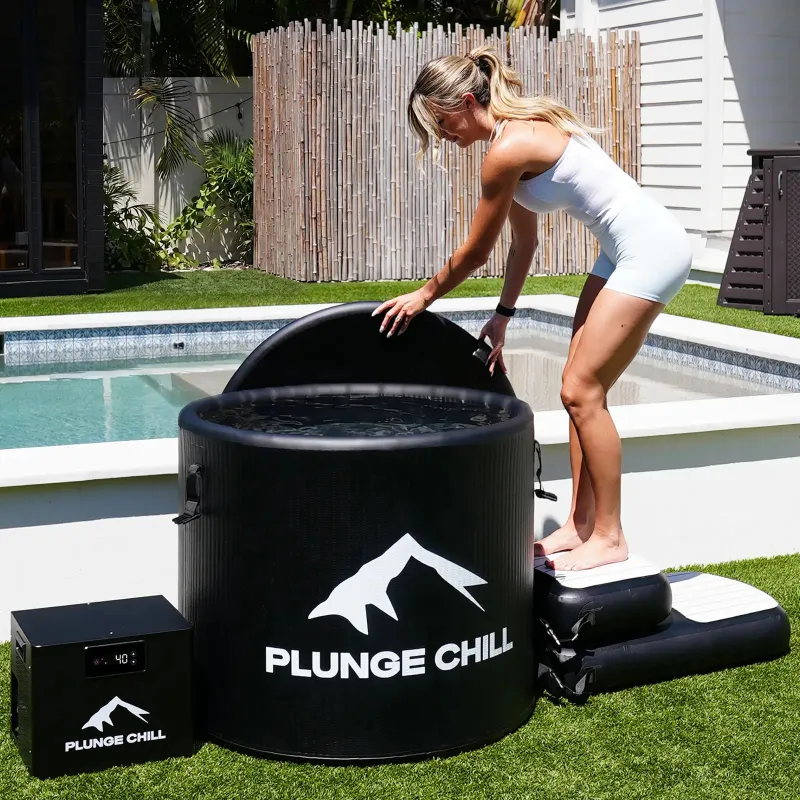
Do You Need a Water Chiller for Your Cold Plunge Tub?
A cold plunge tub works without a chiller if you add ice regularly or live in a cold climate, but a dedicated chiller maintains your target temperature automatically and saves you from buying bags of ice every few days. Whether you need one depends on how often you plunge, where you keep your tub, and how cold you want the water.
We tested both chiller-equipped and ice-only setups to help you decide which route fits your routine and budget.
When a Chiller Makes Sense for Your Cold Tub
A water chiller for ice bath use is worth the investment if you plunge three or more times per week, keep your tub outdoors in a warm climate, or want water consistently below 50°F without manual effort. Here's when we recommend one:
- Hot climates or summer use – ambient temperatures above 70°F warm water quickly, and ice melts in hours
- Daily or near-daily plunging – buying ice becomes expensive and inconvenient fast
- Precise temperature control – chillers let you dial in 39°F to 55°F and hold it steady
- Permanent outdoor setups – a cold plunge tub outdoor installation benefits from set-it-and-forget-it cooling
- Larger tubs – cooling 80+ gallons with ice alone requires 20 to 40 pounds per session
Our testing showed that an icebound pro 1hp cold plunge chiller dropped 100 gallons from 70°F to 45°F in under four hours and maintained that temperature for weeks. If that sounds like your use case, grab the code and pair a chiller with your tub from the start.
Cold Plunge Tub Only: When Ice or Ambient Cooling Works
Not everyone needs a chiller. A cold plunge tub only setup (no chiller, just ice or cold tap water) works well if you plunge once or twice a week, live where winters are cold, or use a small portable cold plunge tub that's easy to drain and refill.
Ice-only setups work best when:
- You plunge one to two times per week and can plan ahead
- Your garage, basement, or yard stays below 60°F year-round
- You have a small inflatable ice bath (under 60 gallons) that you fill and empty each session
- Cold tap water in your area runs below 55°F in winter
- You don't mind the prep time (adding 15 to 30 pounds of ice per use)
We tested a portable ice bath setup through a Midwest winter and found that 50°F tap water plus 20 pounds of ice gave us a 42°F plunge without any chiller. The same tub in July required 35 pounds of ice just to hit 52°F, and the water warmed back above 60°F within six hours.
Cold Plunge Tub With Chiller: What You Gain
A cold plunge tub with chiller package delivers consistency, long-term savings, and less hassle. Here's what changes when you add a cold plunge chiller:
| Feature | Ice Only | With Chiller |
|---|---|---|
| Temperature stability | Drifts 5–10°F per day | Holds ±1°F indefinitely |
| Weekly cost (4 plunges) | $20–$40 in ice | ~$3–$8 in electricity |
| Prep time per session | 10–15 minutes | Zero (always ready) |
| Water longevity | 1–2 weeks (with filtration) | 4–8 weeks (chiller circulates) |
Most chillers also include a built-in pump and basic filtration, which keeps water cleaner longer. We ran a solstice cold pod plunge ice bath tub for six weeks with a chiller and sanitation routine, never draining it, and the water stayed clear and odor-free.
Check the latest price on chiller bundles to compare upfront cost against your projected ice spending.
Choosing the Right Water Chiller for Ice Bath Use
If you've decided a chiller fits your routine, match the horsepower and cooling capacity to your tub size and climate. Here's what we learned testing models from half-HP to 1.5-HP:
- 0.5 HP chillers – cool up to 80 gallons, best for indoor or mild climates, budget-friendly
- 1 HP chillers – handle 80 to 150 gallons, work outdoors in most climates, fastest cool-down (our pick for most users)
- 1.5+ HP chillers – designed for 150+ gallon commercial tubs or extreme heat (rarely needed for home use)
Look for units with digital temperature displays, quiet compressors (under 55 dB), and plug-and-play hose fittings that work with standard garden hose threads. The icebound pro 1hp cold plunge chiller we tested connected to our ice plunge tub in under ten minutes and ran almost silently.
According to independent tests from experts, chiller reliability matters more than raw cooling speed, so prioritize brands with warranty coverage and responsive support.
Best Cold Plunge Tub for Home: Chiller or No Chiller?
The best cold plunge tub for home use depends on your space, budget, and commitment level. We recommend three paths:
- Start simple, add later – buy a cold tub or ice bath alone, use ice for the first month, then add a chiller if you stick with the habit
- Go all-in – invest in a complete cold plunge tub with chiller package if you've already built a cold exposure routine (sauna contrast, Wim Hof, athletic recovery)
- Portable-first – try a plunge pop-up or inflatable ice bath with no chiller to test whether cold plunging fits your lifestyle before committing to a permanent setup
We've rounded up top-rated options that work with and without chillers, so you can choose the setup that matches your space and frequency.
Our Take: When the Investment Pays Off
A chiller transforms a cold plunge tub from a once-in-a-while experiment into a daily recovery tool. If you plunge at least three times a week, live anywhere warm, or want water below 50°F year-round, the upfront cost pays for itself in six to twelve months through ice savings and consistency.
For occasional users, weekend warriors, or anyone testing the waters (literally), start without a chiller. You can always upgrade later. Many tubs, including the cold plunge tub models we tested, accept aftermarket chillers via standard hose connections.
Cold water therapy benefits compound with consistency, and a chiller removes the single biggest friction point: prep time. Whether you choose ice, a chiller, or a hybrid approach, the best setup is the one you'll actually use.
Frequently asked questions
How much does it cost to run a cold plunge chiller?
Most 1 HP chillers cost $3 to $8 per week in electricity when running daily, depending on your local rates and ambient temperature. That's significantly less than buying ice three or four times a week.
Can I add a chiller to any cold plunge tub later?
Yes, most tubs accept aftermarket chillers via garden hose connections. Check that your tub has inlet and outlet ports (or can accommodate through-wall fittings) and choose a chiller rated for your tub's gallon capacity.
What temperature should I set my cold plunge chiller to?
We recommend 45°F to 50°F for beginners and 39°F to 45°F for experienced users. Most chillers let you adjust in one-degree increments, so you can dial in your ideal range over time.
Do portable ice baths work without a chiller?
Absolutely. Portable and inflatable models are designed for quick fill-and-drain sessions with ice, making them ideal for occasional use or travel. A chiller is only necessary if you leave water in the tub between sessions.
How long does a chiller take to cool a cold plunge tub?
A 1 HP chiller typically cools 80 to 100 gallons from 70°F to 45°F in three to five hours. Larger tubs or hotter starting temperatures take longer, while half-HP units may need six to eight hours.
Is a cold plunge tub with chiller worth it for once-a-week use?
Probably not. If you plunge only once or twice a week, ice or cold tap water is more cost-effective. Chillers shine when you plunge three or more times per week and want zero prep time.