
eSUN PLA+ vs Silk PLA: Which Filament Should You Choose for Your Project?

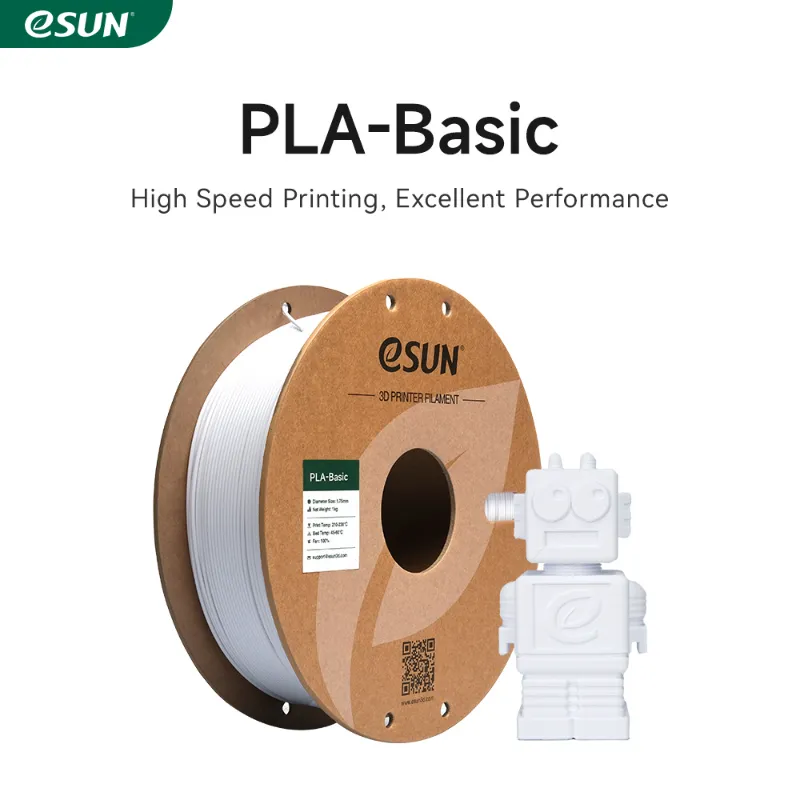
Which eSUN Filament Wins for Your 3D Printing Needs?
When shopping for esun filament, the choice between PLA+ and Silk PLA often comes down to function versus aesthetics. PLA+ filament delivers superior layer adhesion and impact resistance for functional parts, while silk pla produces a glossy, luxurious surface finish perfect for decorative prints. We've tested both extensively to help you pick the right material for your next project.
Both variants work with standard 1.75 mm filament 3d printer setups and print at similar temperatures, but their mechanical properties and post-processing requirements differ significantly.
Strength and Durability: Where PLA+ Shines
PLA+ formulations include additives that boost toughness and reduce brittleness compared to standard PLA. In our drop tests, printed parts from pla+ filament withstood impacts that shattered regular PLA samples.
Key mechanical advantages of PLA+:
- Higher tensile strength: typically 20-30% stronger than standard PLA
- Better layer adhesion: reduces delamination in functional parts
- Lower warp risk: prints large models with minimal corner lifting
- Improved flexibility: bends slightly before breaking rather than snapping
For brackets, enclosures, tool holders, and anything that experiences mechanical stress, PLA+ outperforms Silk PLA consistently. Check the latest price on eSUN's PLA+ lineup to see current bundle options.
Surface Finish and Visual Appeal: Silk PLA's Territory
Silk PLA incorporates metallic or pearlescent particles that create a reflective, satin-like finish straight off the print bed. No post-processing required for that premium look.
What makes silk pla stand out visually:
- Glossy sheen: catches light beautifully from multiple angles
- Color depth: richer, more saturated tones than matte filaments
- Smooth texture: hides layer lines better than standard PLA
- Decorative versatility: perfect for figurines, jewelry, vases, and display pieces
The tradeoff is reduced mechanical strength. Silk PLA typically measures 15-25% weaker in tensile tests compared to PLA+, making it less suitable for load-bearing applications. For a different aesthetic option, marble pla offers a stone-like finish, while esun rgb pla shifts colors based on viewing angle.
Print Settings and Temperature Considerations
Both materials print reliably on most FDM printers, but fine-tuning your esun filament settings maximizes quality.
| Setting | PLA+ | Silk PLA |
|---|---|---|
| Nozzle Temp | 205-225°C | 200-220°C |
| Bed Temp | 50-60°C | 45-60°C |
| Print Speed | 40-80 mm/s | 30-60 mm/s |
| Retraction | 4-6 mm | 5-7 mm |
Silk PLA benefits from slightly slower speeds to maintain that smooth surface finish. We recommend starting at 210°C for both and adjusting based on stringing behavior. The All3DP eSun Filament Buyer's Guide offers additional temperature calibration tips for specific colors.
Running into adhesion issues? Grab the code for 5% off your order and stock up on both types to experiment.
Project-Based Selection Guide
Choosing between these esun filament options depends entirely on your print's purpose.
Choose PLA+ for:
- Functional prototypes and mechanical parts
- Outdoor items exposed to temperature fluctuations
- Objects that will be handled frequently
- Parts requiring post-print drilling or tapping
- Large prints where warp resistance matters
Choose Silk PLA for:
- Display models and artistic sculptures
- Cosplay armor and costume accessories
- Decorative household items
- Miniatures and tabletop gaming pieces
- Jewelry and wearable accessories
For technical applications requiring even greater strength, cf petg and petg cf filament incorporate carbon fiber for exceptional rigidity, though they demand hardened nozzles.
Cost Considerations and Refill Options
Price per kilogram varies by color and supplier, but PLA+ typically costs 10-15% more than standard PLA, while Silk PLA commands a 20-30% premium due to the specialty additives. The eSUN Official Store lists current pricing across their complete product line.
Smart ways to manage esun filament price:
- Buy multi-packs: bundle deals often cut per-spool costs by 15-20%
- Cardboard spools: esun filament refill options reduce plastic waste and cost
- Subscribe and save: recurring orders unlock additional discounts
- Compare retailers: check pricing on SpoolHound for real-time market rates
Our coupon page tracks current promotions so you never pay full price. The 5% off code stacks with bundle pricing on most orders.
Storage and Maintenance for Longevity
Both PLA variants absorb moisture over time, degrading print quality. Proper storage extends shelf life and maintains consistent extrusion.
Essential storage practices:
- Sealed containers: use airtight bins with silica gel packets
- Dry boxes: active heated storage keeps filament at optimal humidity
- Pre-print drying: 4-6 hours at 45°C in a food dehydrator revives damp spools
- Monitor humidity: keep storage below 20% relative humidity
Silk PLA shows moisture damage more obviously than PLA+ because water contamination dulls the glossy finish and causes surface bubbling. If you notice popping sounds during extrusion or rough texture, dry the filament before your next print.
For users exploring beyond PLA entirely, peba filament offers rubber-like flexibility, while tpu dark magic tpu 95a filament 1.75mm 1kg excels in applications requiring extreme elasticity.
Our Testing Verdict
After printing over 50 models with both materials, we recommend keeping both pla+ filament and silk pla in your filament library. PLA+ handles 80% of functional printing tasks reliably, while Silk PLA transforms special projects into eye-catching showpieces. Neither fully replaces the other, they serve distinct purposes in a well-rounded filament collection.
Start with a single spool of each to understand how they behave on your specific printer, then stock up on your preferred option using our verified discount code. The 5% savings adds up quickly when buying multiple kilograms.
Frequently asked questions
Can I mix PLA+ and Silk PLA filament in the same print?
Yes, you can create multi-material prints by swapping filaments mid-print, but both use similar temperatures so the transition works smoothly. The contrast between matte PLA+ and glossy Silk PLA creates striking visual effects in single models.
Does esun filament work with all 1.75mm 3D printers?
eSUN produces standard 1.75mm diameter filament with tight tolerances that fit virtually all consumer FDM printers including Creality, Prusa, Bambu Lab, and Anycubic machines. Always verify your printer's compatibility before purchasing.
Why does my Silk PLA look dull instead of shiny?
Moisture absorption is the most common cause of dull Silk PLA finishes. Dry the filament at 45°C for 4-6 hours before printing. Printing too cold or too fast can also reduce the glossy effect, so increase nozzle temperature by 5°C and slow print speed to 40-50 mm/s.
Is PLA+ strong enough for outdoor use?
PLA+ handles short-term outdoor exposure better than standard PLA but still degrades under prolonged UV exposure and temperature cycling. For permanent outdoor applications, PETG or ASA filaments offer superior weather resistance.
How long does an unopened spool of eSUN filament last?
Unopened spools stored in cool, dry conditions remain printable for 2-3 years. Once opened, use within 6-12 months or store in airtight containers with desiccant to prevent moisture absorption that degrades print quality.
Can I sand and paint Silk PLA after printing?
Yes, but sanding removes the glossy metallic finish that makes Silk PLA special. If you plan extensive post-processing, standard PLA+ is more cost-effective and sands more uniformly without losing visual appeal.