
How to Fit a Martingale Dog Collar Without Choking Your Dog

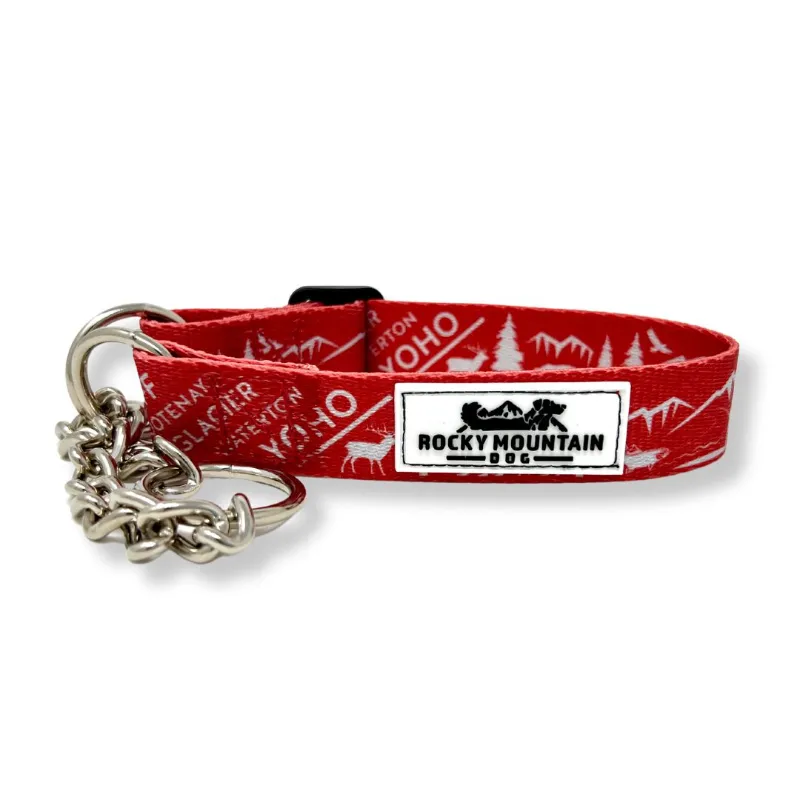
A martingale dog collar fits correctly when you can slip two fingers comfortably between the collar and your dog's neck when it's loose, and it tightens just enough to prevent escape without choking when your dog pulls. This limited-slip design makes martingales safer than choke chains and more secure than flat collars, especially for dogs with narrow heads like greyhounds and whippets.
We've tested dozens of collars on escape artists and pullers, and proper fit makes all the difference between a training tool and a hazard. Here's how to measure, adjust, and verify the fit so your dog stays safe and comfortable.
Why Martingale Collar Fit Matters More Than Regular Collars
Unlike a flat collar that stays the same size, a martingale dog collar) has a control loop that tightens when tension is applied. The two-loop design means the collar contracts just enough to prevent your dog from backing out, but the limited slip stops it from constricting like a choke chain.
Fit too loose: your dog slips out during walks or when startled.
Fit too tight: the collar doesn't loosen properly and can restrict breathing or cause discomfort even when there's no tension on the leash.
Most injuries we see come from owners sizing martingales like flat collars. The key difference is that you're measuring for the *relaxed* state while ensuring the *tightened* state still allows airflow.
How to Measure Your Dog for a Martingale Dog Collar
Start with two measurements using a soft fabric tape measure or a piece of string you can mark and measure against a ruler.
Measurement 1: Neck circumference Measure around the widest part of your dog's neck, typically right behind the ears where a flat collar would sit. Pull the tape snug but not tight. Add one inch to this number.
Measurement 2: Head circumference Measure around the widest part of your dog's head, across the top of the skull and under the jaw, just behind the ears. This measurement ensures the collar can slip over the head when fully loosened but won't slip off when tightened.
The martingale collar you order should have a size range that includes both numbers. Most brands list a range like "12-18 inches" covering both the tightened and loosened states.
If your dog falls between sizes, we recommend sizing up. You can always adjust a slightly larger collar tighter, but a too-small collar will never loosen enough. Check the latest sizing guidance for specific collar options.
Step-by-Step: Adjusting a Martingale Dog Collar With Chain or Fabric
Once you have your collar, follow this sequence for both martingale dog collar with chain styles and all-fabric versions.
1. Loosen the collar completely Slide the adjuster to create the maximum circumference. The control loop (the smaller loop with the D-ring) should hang loose.
2. Slip it over your dog's head The collar should pass over the ears and skull with slight resistance but no forcing. If you have to stretch it hard, you need the next size up.
3. Position it high on the neck Slide the collar up so it sits just behind the ears and across the top of the neck, not down near the shoulders. This is the strongest part of the neck and gives you the most control.
4. Tighten the adjustment slider Pull the excess webbing through the slider until the collar sits snug against your dog's neck without any tension on the control loop. At this point, you should be able to slip two fingers flatly (not just the tips) between the collar and neck.
5. Test the tightened fit Gently pull the D-ring (where you'd attach a leash) to simulate a pull. The control loop should tighten evenly around the neck, and the two sides of the control loop should come close together but never touch. If the metal rings or fabric edges meet, the collar is too loose and needs to be adjusted tighter at the slider.
6. Test the loosened fit Release tension and make sure the collar loosens immediately. Shake it gently. If it stays snug or doesn't expand back to the resting position, the control loop may be twisted or the slider is binding.
Martingale Dog Collar vs Regular Collar: Key Fit Differences
We tested both styles on the same dogs to measure the practical differences in everyday use.
| Feature | Martingale Collar | Flat/Buckle Collar |
|---|---|---|
| Fit adjustment | Tightens under tension, loosens at rest | Fixed diameter |
| Escape prevention | High (tightens before slipping) | Low to moderate |
| Pressure distribution | Spreads across neck when tightened | Concentrated at pull point |
| Best for | Pullers, narrow heads, training | Calm walkers, ID tag holding |
A flat collar works for dogs who walk calmly and have heads wider than their necks. But sighthounds, some terriers, and strong pullers can back out of a standard buckle collar in seconds. That's where the limited-slip design shines.
The best martingale dog collar keeps your dog secure without the risk of trachea damage from a choke chain.
Are Martingale Collars Cruel? What the Fit Test Reveals
This question comes up constantly, and the answer depends entirely on fit. A properly fitted martingale is not cruel because it's engineered with a physical stop that prevents full constriction. The control loop can only tighten as far as the main loop allows.
Red flags that indicate a problem:
- The collar stays tight even when your dog is standing calmly next to you
- You hear coughing, gagging, or wheezing during walks
- The metal rings or edges of the control loop touch when tightened
- Your dog's eyes bulge or the collar leaves marks after a short walk
Green flags for a safe fit:
- The collar hangs loose with visible space between fabric and neck at rest
- It tightens smoothly when your dog pulls, then releases immediately when tension stops
- Your dog can pant, drink, and breathe normally while wearing it
- No redness or hair loss around the neck after regular use
If you're transitioning from a harness or flat collar, expect a short adjustment period. Most dogs adapt within a few walks once they learn that pulling tightens the collar and walking calmly keeps it loose.
Buckle vs No-Buckle Martingale: Does It Change the Fit?
A martingale dog collar with buckle has a side-release clip that lets you open and close the collar without slipping it over the head. A martingale dog collar no buckle (slip-style) must be pulled on and off.
Buckle style advantages:
- Easier for dogs with large ears or sensitive heads
- Faster to put on and remove
- Can achieve a slightly more custom fit since you're not limited by head size
No-buckle style advantages:
- No hardware to fail or accidentally release
- Often lighter and less bulky
- Traditional design some trainers prefer for the psychological "slip-on" feel
Fit principles are identical for both. The buckle is a convenience feature, not a safety difference, as long as you adjust the slider correctly. We use both styles depending on the dog and situation, and grab the code when stocking up on either type for our test pack.
Quick Fit Check: Three Tests Before Every Walk
Even after the initial fit, recheck periodically as dogs gain or lose weight, grow, or wear down the collar material.
1. Two-finger test: Slide two fingers flatly under the loosened collar at the side of the neck. You should feel slight resistance but not have to force them in.
2. Pull test: Attach the leash and give a gentle tug. Watch the control loop. It should tighten smoothly and stop before the two sides meet, with at least a half-inch gap remaining.
3. Slip test: Try to pull the collar forward over your dog's head while it's in the loosened position. It should require a firm pull and feel snug going over the ears. If it slides off easily, tighten the adjustment slider another inch and retest.
After your walk, inspect the neck for any redness, chafing, or hair loss. A well-fitted martingale leaves no marks.
Who Should Use a Martingale Collar (and Who Shouldn't)
Martingales work best for specific dogs and situations. We recommend them for dogs with narrow skulls (greyhounds, whippets, salukis, collies, Shelties), strong pullers in training, and escape artists who've slipped flat collars before.
Skip the martingale if:
- Your dog has a collapsed trachea or respiratory issues (use a harness instead)
- You tie your dog out unsupervised (risk of the loop catching on objects)
- Your dog is under six months and still growing rapidly (you'll need frequent resizing)
For puppies and dogs with neck sensitivities, pair martingale training with other gear. We often rotate between a martingale for leash training and a harness with dog panniers for hiking, depending on the activity.
And for year-round comfort during outdoor adventures, don't overlook protection for paws and eyes. We pair quality collars with dog paw cream for winter walks and dachshund goggles or chihuahua goggles for dogs sensitive to sun and debris.
Final Fit Tips and Where to Find Quality Options
A correctly fitted martingale gives you control and safety without discomfort. Always adjust before the first walk, recheck monthly, and replace the collar if webbing frays or hardware bends.
For reliable options and current pricing, visit our martingale dog collar reviews or check martingale dog collar reviews from independent testers. When you're ready to order, use our discount code for 10% off and spend the savings on a backup or a quality feeding mat to complete your dog's everyday gear.
Frequently asked questions
How tight should a martingale collar be when loose?
When loose, a martingale collar should allow you to slip two fingers flatly between the collar and your dog's neck with slight resistance. It should hang comfortably without pressing into the fur or skin.
Can a martingale dog collar choke my dog?
A properly fitted martingale collar cannot fully choke your dog because the limited-slip design stops tightening before it constricts the airway. The control loop can only tighten as much as the main loop allows, leaving space for breathing.
How do I know if my martingale collar is too loose?
Your martingale is too loose if the metal rings or fabric edges of the control loop touch when you pull the leash, or if you can easily slip the collar over your dog's head when it's in the tightened position. Adjust the slider to reduce the loosened circumference.
Should I leave a martingale collar on my dog all day?
No, remove the martingale collar when your dog is unsupervised, crated, or playing with other dogs. The control loop can catch on objects or other dogs' teeth, creating a strangulation risk. Use a flat collar with ID tags for everyday wear.
Do martingale collars work better than flat collars for pullers?
Yes, martingales provide more control for dogs who pull because they tighten in response to tension, giving immediate feedback without the choking risk of a choke chain. They're especially effective for dogs with narrow heads who slip flat collars.
How often should I check the fit of a martingale collar?
Check the fit monthly and whenever your dog gains or loses weight. Puppies and young dogs may need weekly adjustments during growth spurts. Always inspect for fraying webbing or bent hardware before each walk.