

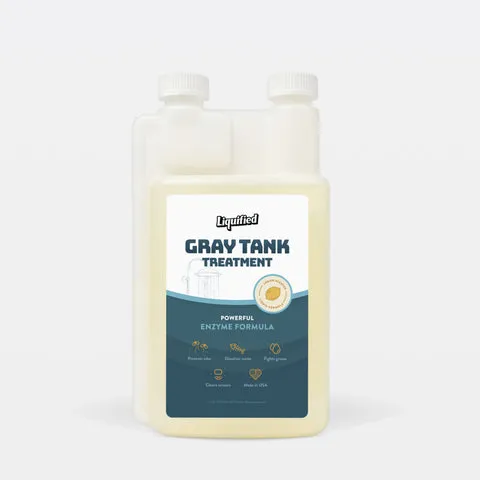
A rv grey tank cleaner fixes the tank, not the whole system, and that is why your sink and shower drains still stink a day after you treated them. Odors almost always come from three places at once: biofilm on the grey tank walls, gunk in the drain traps and P-traps you never reached, and the toilet side of the same holding system. Clean only the tank and you leave two of the three sources untouched.
Here is the order of operations we use on our own rigs, along with the rv grey tank cleaner and treatment products that do the heavy lifting.
Why Grey Tank Odors Come Back After Cleaning
Grey tank water is not dirty in the way black tank water is, which is exactly why people underestimate it. Soap scum, food fat, hair, skin cells and toothpaste all go down the drain and coat the tank walls in a slimy layer. Bacteria feed on that layer, not on the water. Rinse the water out and you have removed the smell of the moment while leaving the food source behind.
Common reasons the smell returns:
- You cleaned the tank but not the drain traps. Kitchen and shower P-traps hold standing organic matter that smells worse than the tank itself.
- The rinse was too short. A quick fill-and-dump does not break biofilm loose from the walls; it needs contact time and agitation from a full tank of water.
- You used a household cleaner that kills the wrong things. Bleach and dish soap can knock down odor for a few days and then leave residue that traps more debris.
- Your vents or air admittance valves are clogged. A blocked vent pushes sewer gas back into the coach instead of outside.
- The toilet side is untreated. Even a grey tank odor can travel through shared venting, and an untreated toilet tank makes everything smell worse.
If you recognize two or more of those, the fix below takes an afternoon and costs far less than repeated single-product guessing.
What an RV Grey Tank Cleaner Can (and Can't) Fix
A dedicated grey tank formula is built for the specific mess in that tank: fats, soap residue and the biofilm they create. Good ones are septic safe formulas, meaning they break down organics with enzymes or bacteria rather than killing everything with harsh chemistry, and they keep working after you dump because the bacteria stay on the walls.
What it cannot do is clean your drain traps, sanitize your toilet tank, or unclog a vent. Treat the rv grey tank cleaner as one stage of a system, not a silver bullet.
| Odor source | Will a grey tank cleaner fix it? | What actually fixes it |
|---|---|---|
| Tank walls and biofilm | Yes, with contact time | Enzyme or bacterial tank treatment, full fill, overnight dwell |
| Sink and shower P-traps | No | Manual flush of each trap with hot water |
| Toilet holding tank | No | Separate rv toilet treatment dosed per the label |
| Roof vent or air valve | No | Physical inspection and clearing |
The Real Fix: Treat the Whole Holding Tank System
Grey tanks and black tanks share a rig, shared venting and often shared smell complaints, so treat both in the same session. For the toilet side, pick a treatment that matches how you camp: a rv toilet treatment for full-size black tanks, or a camper toilet treatment if you run a smaller or cassette-style system in a travel trailer or truck camper. Match the dose to tank size and follow the label, because over-dosing wastes money and under-dosing leaves the bacteria short of food.
Keep the system consistent:
- Use the same class of product in both tanks so you are not fighting one with chemistry and feeding the other.
- Skip bleach in the grey tank. It sets you back to zero and can damage valve seals over time.
- Dose after every dump, not just when you notice a smell.
- Store the products in the rig so treating at the dump station becomes automatic.
A Grey Tank Reset Routine That Works
- Dump and rinse the grey tank at the station, then close the valve.
- Fill the tank roughly half to two-thirds with fresh water. Contact and agitation matter more than concentration.
- Add the grey tank treatment at the label dose and drive to your next stop. Road movement does more scrubbing than anything you can do while parked.
- Flush every P-trap with hot water while the tank sits. Kitchen first, then shower, then bathroom sink.
- Dump again at the next station and check the drain water clarity.
- Redose with a maintenance amount after the final dump so bacteria stay ahead of new soap scum.
For heavy buildup, repeat twice. If you want to see the current formulation, size options and price, check the latest price on the store page before you buy.
RV Holding Tank Basics: Habits That Prevent Odor
Cleaning is the repair. These habits stop the problem from coming back:
- Scrape plates into the trash, not the sink. Food fat is the single biggest grey tank odor fuel.
- Use a drain screen in the shower to catch hair before it reaches the tank.
- Keep a little water in each P-trap when the rig sits in storage so gas cannot travel up.
- Avoid antibacterial dish soap if you are running a bacterial treatment, since it works against the product you paid for.
- Check roof vents and air admittance valves once a season.
Don't Ignore the Exterior: Black Streak Remover and Wash & Wax
Half the complaints we see about a rig "smelling like a campsite" are actually about the outside: runoff streaks down the sidewalls, mildew in window tracks, grime on the roof that bakes in the sun. A black streak remover handles the dark runoff lines that come from roof lap sealant and dirty rain, and it works best applied to small sections and rinsed before it dries. Follow with rv wash wax products so the surface sheds water and dirt instead of holding it.
A quick exterior routine:
- Rinse the roof line first so you are not chasing streaks downward.
- Spot-treat black streaks section by section, then rinse thoroughly.
- Wash and wax in shade, working top to bottom.
- Dry the window tracks and compartment seals, where mildew actually starts.
Where to Buy and Save
Prime RV carries the full lineup in one place, so you can restock grey tank treatment, toilet treatment and exterior care in a single order, which is cheaper on shipping than buying piecemeal. Our readers can currently use 20% off all orders through the Prime RV discount code, which applies across the products in this guide.
Buy the grey tank cleaner and the toilet treatment together. Odors that come back are almost always a system you only half-treated.
Who This Routine Suits
This approach fits weekenders, full-timers and seasonal site campers equally, because it is about order of operations rather than equipment. If your rig sits for long stretches, lean harder on trap flushing and vent checks. If you move every few days, road agitation does most of the work and you can keep doses modest. Either way, start with a product built for the tank you are treating rather than a general-purpose cleaner, and read the label dose once before you pour.
 Shopping at Prime RV? See today's verified Prime RV discount code
Frequently asked questions
Why does my grey tank still smell right after I use a rv grey tank cleaner?
Because the tank is only one of the odor sources. Drain P-traps, the toilet tank and blocked vents all contribute, and a grey tank formula cannot reach any of them. Flush each trap with hot water and treat the toilet side in the same session.
How long should grey tank treatment sit before I dump?
Give it contact time and agitation rather than a quick fill and dump. Filling to roughly half to two-thirds, dosing per the label and driving to your next stop is the most effective approach we have used.
Can I use the same product in my grey tank and my rv toilet treatment routine?
Use a product labeled for the tank you are treating. Grey tank formulas target fats and soap scum, while toilet treatments are built for black tank waste. Keep both in the same product family and dose each per its own label.
Is bleach safe for cleaning a grey tank?
We avoid it. Bleach can degrade valve seals over time and it wipes out the bacterial cultures that keep working between dumps, which usually means odor returns faster.
Should I buy camper toilet treatment or a full-size rv toilet treatment?
Match it to your system. Smaller and cassette-style toilets in travel trailers and truck campers usually do better with a camper toilet treatment, while full black tanks take a standard RV toilet treatment dosed to tank size.
Where do I find the current price and discount code?
The Prime RV store coupon page lists the live offer, currently 20% off all orders, and links to current pricing on each product.