

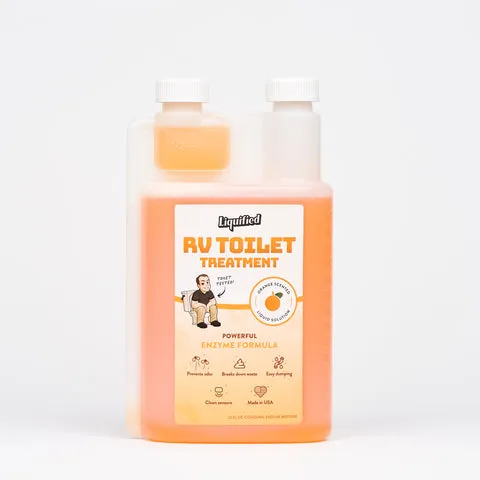
The short answer: a camper toilet treatment and an RV toilet treatment do the same core job, breaking down waste and keeping odour down in the black tank, so the real choice comes down to tank size, how long waste sits, your water and whether you need septic safe formulas. Buy the treatment that matches your tank volume and your camping rhythm, then add a grey tank cleaner and exterior products separately, because they solve completely different problems. Here is how we work out which one your holding tank actually needs.
What a Camper Toilet Treatment Actually Does
RV holding tank basics first, because most tank problems start with confusion about what goes where.
- Black tank: holds toilet waste only. This is where a camper toilet treatment or rv toilet treatment belongs.
- Grey tank: holds sink, shower and dishwater. It does not smell like a black tank but it can smell just as bad.
- Fresh tank: drinking and washing water. Never put treatment in here.
A treatment works in two ways. It either adds bacteria and enzymes that digest solids and paper, or it uses chemistry to break waste down and hold back gas. Both keep the tank from turning into a crusted, gassy mess between dumps. Neither one is a substitute for actually emptying the tank, and neither fixes a blocked valve.
If you camp in one spot for a week or more, buy for holding time, not for price per bottle. If you dump every two or three days, a lighter dose is fine.
RV Toilet Treatment vs. Camper Toilet Treatment: What Changes
The names get used interchangeably online, but the products behind them are aimed at slightly different campers. Use this as a map, not a rulebook.
| Product | Goes in | Handles |
|---|---|---|
| camper toilet treatment | Black tank | Odour control and waste breakdown on shorter trips and smaller tanks |
| rv toilet treatment | Black tank | The same job where the tank is larger and waste sits longer |
| rv grey tank cleaner | Grey tank | Soap scum, food film and the sulphur smell from sinks and showers |
| black streak remover | Exterior walls | The dark vertical runs that build up under windows, seams and roof edges |
The overlap is real. A camper toilet treatment will work in a big motorhome black tank if you follow the dosing on the label, and an RV treatment will work in a truck camper or hybrid. What matters is that you match the dose to the tank, not the badge on the outside of the rig.
Practical differences to weigh:
- Tank size: a 40-gallon black tank needs more product per dose than a 12-gallon one. Dosing by tank volume beats dosing by habit.
- Water: hard water and heavy well water reduce how well some formulas perform. If you always fill from the same source, that is a known variable.
- Heat: a tank baking in summer sun generates gas faster. That is when a dedicated odour-control treatment earns its money.
- Dump routine: full-timers and weekenders should not be buying the same size bottle.
- Septic safe formulas: if you dump at a campground, a friend's septic or a home system, check that the label says septic safe before you pour.
Toilet Treatment Types: Liquids, Drop-Ins and Septic Safe Formulas
Toilet treatment types roughly split four ways.
- Liquid concentrates: easy to dose, easy to store, and the most common choice for campers who want to add a measured amount after every dump.
- Drop-in pods or packs: fastest to use, no measuring, and handy when you are setting up in the rain and want one less step.
- Enzyme and bacteria formulas: digest waste and paper over time. Best when the tank has hours or days to work.
- Chemical deodorisers: knock down smell quickly, which suits hot weather and short trips.
A few rules we have learned the hard way:
- Do not stack a chemical deodoriser on top of a bacterial treatment. You can kill the bacteria you paid for.
- Do not over-dose. More product does not mean a cleaner tank, and it can make dumping messier.
- Do not switch brands every trip. Pick one, learn how it behaves, and adjust the dose instead.
Where to buy matters less than freshness and getting the right format for your tank. You can check the latest price on the Prime RV range before you commit to a bottle size.
How to Use a Camper Toilet Treatment Without Wrecking the Tank
A simple routine covers most rigs.
- Dump and rinse first. Treatment goes into an empty tank, not on top of a full one.
- Add water before product. A splash of water gives the treatment somewhere to work and stops it sitting dry against the valve.
- Dose for your tank size, following the label rather than guessing.
- Let it sit. Overnight on the drive home is ideal. The motion helps, and so does time.
- Dump when the tank is reasonably full. Emptying a nearly empty tank is the classic reason people end up with a mound of solids.
- Store wet, not dry. A tank left bone dry between trips is where the crust and the smell come from.
Grey Tank Odors Need Their Own Product
Grey tank odors catch people out because the tank looks clean. Soap, shampoo, coffee and food particles coat the walls, and that film turns into a sulphur smell that drifts up through the shower drain. A black tank treatment will not fix it.
Use a dedicated rv grey tank cleaner a few times a season, and treat the grey tank as part of the same routine as the black tank rather than an afterthought. Running hot water and a degreasing cleaner through before a longer drive does a lot of the work for you.
Black Streak Causes and the Exterior of Your Rig
None of this touches the outside of the camper, and that is a separate job. Black streak causes are almost always water running down dirty panels and carrying debris with it, which is why the streaks reappear under windows, around roof seams and along trim.
- Clean the streaked area with a product made for it, then rinse, rather than scrubbing with an abrasive pad.
- Follow with a proper exterior wash and wax routine so water beads and runs clean.
- Test any new exterior product on a hidden panel, especially near decals.
A black streak remover is the right first step for the streaks themselves; wax is what slows them coming back. Doing both in one session saves you a second weekend on a ladder.
Which One Does Your Holding Tank Need?
Pick by situation rather than by label:
- Weekend camper, small black tank: a camper toilet treatment with a drop-in or liquid format.
- Full-timer, big tank, hot climate: a stronger odour-control treatment dosed to tank volume, plus a grey tank cleaner on rotation.
- Septic or campground dump station: septic safe formulas only, and read the label before the first pour.
- Seasonal exterior cleanup: black streak remover first, then wash and wax.
Our store range covers all five problems, and you can grab the code before you order to keep the tank and exterior kit affordable. If you are not sure which bottle matches your tank, check the current offer and product details first, then buy the size that matches how often you dump.
 Shopping at Prime RV? See today's verified Prime RV discount code
Frequently asked questions
Do I need a separate camper toilet treatment and grey tank cleaner?
Yes. A camper toilet treatment is formulated for the black tank and does not break down the soap and food film that builds in the grey tank. Use a dedicated grey tank cleaner a few times a season to stop odours coming up through the shower drain.
Is camper toilet treatment septic safe?
Only if the label says so. Many treatments are septic safe, but some chemical deodorisers are not, so check before you dump at a campground, a friend's septic or a home system. If you are unsure, keep a septic safe formula on board specifically for those dumps.
How often should I add toilet treatment to the black tank?
Add a dose after every dump, and top it up on longer stays when the tank is part-filled. In hot weather, tanks generate gas faster, so it helps to dose at setup rather than waiting until the smell arrives.
Can I use RV toilet treatment in a small camper or cassette toilet?
Generally yes if the product is designed for holding tanks, but dose for the smaller volume rather than copying a big-tank dose. Cassette and portable toilets hold far less water, so less product is usually correct.
Will black streak remover damage my RV decals or paint?
Used as directed and rinsed off, it is the safer choice compared to abrasive scrubbing, which is what usually dulls decals. Test on a small hidden panel first, avoid letting it dry on the surface, and follow with wax to protect the finish.
Where do I find the Prime RV discount code?
The current offer and code live on our Prime RV store page, along with the product range. Apply it at checkout before you pay, and check the offer terms since the discount is usually applied to the order total.