

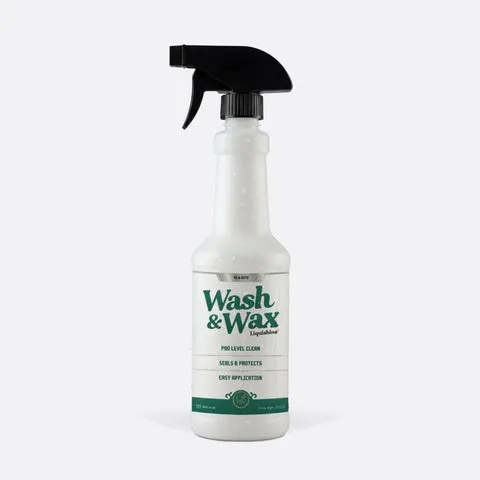
The short answer on rv wash wax products is this: wash the rig every three to four weeks and wax it every three to four months, then adjust for sun, dust, and how often you actually move. Spot-clean after every trip, rinse off bugs and bird droppings within a day or two, and never let black streaks sit through a season. We test this stuff on our own coach, so below is the schedule we follow, the products we reach for, and how tank care fits into the same weekend.
How Often Should You Wash and Wax Your RV?
Frequency depends far more on exposure than on mileage. A rig parked in full sun in the Southwest ages differently than one stored under cover in the Midwest. Our rule of thumb:
| Situation | Wash | Wax |
|---|---|---|
| Full-time travel, sun and road dust | Every 2 to 3 weeks | Every 2 to 3 months |
| Weekend use, stored under cover | Every 4 to 6 weeks | Every 4 to 6 months |
| Coastal air or winter road salt | After every trip | Every 2 to 3 months |
Two things override the table. First, the finish manufacturer's own guidance always wins, so read the label on the gel coat or paint. Second, anything corrosive gets handled immediately regardless of the calendar: bird droppings, tree sap, diesel splash, and road salt all etch if you leave them.
A quick test we use: run the back of your hand across a clean, dry panel. If it drags instead of gliding, the wax layer is gone and the surface is exposed. That is the moment to wax, not when the calendar says so.
Choosing RV Wash Wax Products That Protect the Finish
There is a real difference between a wash and a wash-and-wax. A plain wash lifts dirt. A wash-and-wax leaves a thin polymer or carnauba layer behind so the surface sheds water and resists UV between full wax jobs. Most owners do not need both, and reaching for the heavier product every single time is wasted effort.
What we look for in rv wash wax products:
- pH-neutral formula, so it does not strip an existing wax layer or attack decals and sealant.
- Safe on gel coat, fiberglass, painted aluminum, and rubber roof edges, which is where cheap soaps cause chalking.
- Biodegradable and rinse-friendly, because you are often washing on grass, gravel, or a campsite pad where runoff matters.
- A concentrate you can dilute, which stretches a bottle across several washes and keeps storage simple.
Skip anything labeled as a degreaser for general bodywork. Degreasers do their job on engine grime and wheel wells, but they will pull wax off a full panel. Use a dedicated wash product on the coach and keep the harsh stuff for the toad and the hitch.
Why Black Streaks Show Up and How Remover Fixes Them
Black streaks are the number one finish complaint we hear, and the cause is almost always the same. Rainwater runs down the roof and sidewalls, picks up oxidized residue, dirt, and rubber roof chalk, then dries in vertical lines. Each cycle bakes the stain in a little deeper. On a light-colored rig they show up fast and read as neglect even when the coach is otherwise clean.
A regular wash will not lift them. You need a black streak remover that dissolves the oxidized residue rather than scrubbing the surface. Our method:
- Work in shade on a cool panel, never on hot sun-baked fiberglass.
- Test on a hidden spot first, especially on decals and painted graphics.
- Apply to the streak, let it dwell for the time the label allows, then agitate lightly with a soft brush.
- Rinse thoroughly and re-wax the area, because streak removers strip protection.
Prevention beats repeat treatment. Keeping the roof and awning rails clean, sealing lap sealant cracks, and waxing the sidewalls twice a year cuts streak formation dramatically.
A Wash and Wax Routine That Actually Gets Done
This is the sequence we use on a 30-foot coach, roughly two hours when the rig is not filthy.
- Rinse top down to float off loose grit before anything touches the surface.
- Clean the roof first, then work down, so runoff never lands on a panel you already finished.
- Use a two-bucket setup, one for soap and one for rinse water, with a grit guard in the rinse bucket.
- Wash in sections, top to bottom, and rinse each section before it dries.
- Hit wheel wells and the rear cap last, since they carry the most grease and road film.
- Dry with a microfiber towel or a filtered water rinse, not a chamois dragged over grit.
- Treat streaks with the method above before waxing, never after.
- Wax in shade, one panel at a time, and buff before it fully cures.
Do not wash in direct midday sun. Water spots on gel coat etch quickly and are far harder to remove than they are to prevent.
Don't Skip the Tanks: Toilet and Grey Tank Care
Exterior care protects resale value. Tank care protects your trip. The two belong in the same maintenance weekend, and it helps to know a few RV holding tank basics: black tank holds waste, grey tank holds sink and shower water, and both need a treatment routine rather than a once-a-season emergency.
Toilet treatment types come down to liquid, drop-in, and enzyme-based formulas. Enzyme blends digest waste and paper, which is why they work better in hot weather. Whatever you choose, look for septic safe formulas if you ever dump at a campground with a septic field or a home system, and match the dose to your tank size on the label.
We keep two products on hand because the black and grey sides do different jobs. A camper toilet treatment handles odor and breakdown in the black tank, while a dedicated rv grey tank cleaner cuts the soap scum and food grease that coat grey tank walls and sensors. Grey tank odors are almost always a scum problem, not a waste problem, which is why toilet chemicals alone never fully fix that smell.
A simple monthly habit works: add treatment after each dump, keep a few gallons in the black tank so solids never dry, and run the grey tank cleaner through on the last leg of a trip so agitation does the work before you dump.
Where to Buy, Shipping, and Savings
We buy from Prime RV because the catalog covers both halves of this routine in one order, from wash and wax to tank treatment. If you want to see current pricing, check the latest price on the store page rather than trusting a number in a blog post, since offers change.
A few practical notes before you check out:
- Ordering and checkout runs through the store page, and the discount applies at checkout, not on the product listing.
- Shipping and returns terms are listed on the same page, so read them before ordering liquids in cold weather, since freeze damage is usually excluded from returns.
- Savings offer terms are worth a skim. The current promotion is 20% off all orders, and stacking rules or exclusions live in the fine print.
When you are ready, grab the code and put the wash, the streak remover, and a tank treatment in the same cart. Doing the whole job in one weekend is far easier than remembering it piecemeal.
The Short Version
Wash every three to four weeks, wax every three to four months, treat black streaks the week you see them, and keep the tanks dosed after every dump. Buy concentrated, pH-neutral RV wash and wax products, keep a separate black streak remover, and remember that a clean roof is half the battle against the streaks on your sidewalls. For pricing and the current offer, visit the store page.
 Shopping at Prime RV? See today's verified Prime RV discount code
Frequently asked questions
How often should I use rv wash wax products on a rig stored outside?
Wash every four to six weeks and wax every three to four months if the rig sits in sun and weather. Step it up to every two to three weeks for washing if you are near the coast, in heavy dust, or traveling full-time.
Do I still need black streak remover if I use a wash and wax?
Yes. Wash and wax lifts surface dirt and leaves a protective layer, but it will not dissolve the oxidized runoff that forms vertical streaks. Treat streaks first with remover, then wash, then re-wax that section.
Can I use the same camper toilet treatment in a motorhome black tank?
Usually yes, as long as the formula is septic safe and you dose it for your tank size. Check the label for whether it is a liquid, drop-in, or enzyme type, since enzyme blends perform better in hot weather.
What does rv grey tank cleaner do that dish soap does not?
Grey tank odors come from soap scum and food grease coating the tank walls and sensors. A dedicated grey tank cleaner breaks that film down so sensors read accurately and the smell clears, which dish soap alone will not fix.
Where do I find the Prime RV discount code and current pricing?
Both live on the Prime RV store page. The current offer is 20% off all orders, and it applies at checkout, so confirm the terms and shipping details on that page before ordering.
Is it safe to wax over decals and painted graphics?
Yes, with care. Use a pH-neutral product, keep wax off matte or textured surfaces, and never buff a decal edge hard. Test any streak remover on a hidden section of graphics before using it on a visible panel.