

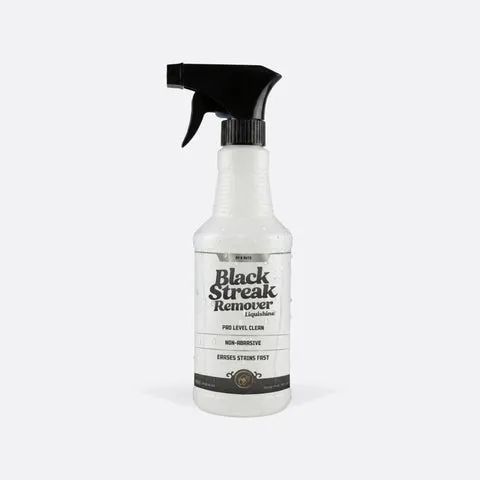
The safest way to clear those dirty vertical lines is to apply a dedicated black streak remover to a cool, shaded panel, work in small sections, and rinse before it ever dries. The streaks are not ordinary road dust. They are a cocktail of roof runoff, oxidized lap sealant, tannins from trees, and airborne grime that has had weeks to bond to the gel coat. Attack them with the wrong product and the streaks come off, but so does the gloss.
We test care products on real rigs before we recommend them, and this guide covers what actually works, what quietly ruins gel coat, and how to build the removal into a maintenance loop that includes the rest of your exterior and tank care.
What Causes Black Streaks on RV Gel Coat
Black streaks are a drainage problem more than a cleaning problem. Water sheets off the roof, picks up whatever it passes over, and tracks down the sidewalls in the same channels every time. The main culprits:
- Roof and sealant runoff. Lap sealant, Dicor, and rubber roof material oxidize slowly and wash down as a dark film.
- Tree tannins and sap. Especially under oak, pine, and walnut. Tannins stain warm surfaces fast.
- Air conditioner condensate. It runs a steady line down one sidewall and carries dirt with it.
- Road film and diesel soot. Bonds to wax and breaks it down, which is why streaks reappear where wax is thin.
- Long storage in sun. UV bakes all of the above into the gel coat until it looks like a stain rather than dirt.
Once you know the pattern, you can predict where streaks will start: under roof corners, behind the awning rail, below windows, and along the drip rail above the storage bays.
Why a Black Streak Remover Beats Abrasives and Harsh Chemicals
Gel coat is a resin layer, not paint. It is forgiving up to a point, and then it is not. The failure modes we see most often:
- Scouring pads, magic erasers, and stiff brushes leave a dull haze that only machine polishing removes.
- Bleach and strong acids strip wax, dry out sealant, and can etch the surface if they sit.
- Dish soap cuts grease well but leaves a film that attracts dust, so streaks come back faster.
- Pressure washing at close range drives water past seals and lifts decals.
A proper black streak remover is formulated differently. It uses surfactants and chelating agents to lift oxidized residue and hold it in suspension so it rinses away, rather than grinding it off. That means you keep the gloss while you remove the stain. We keep black streak remover on the shelf for exactly this job because it does not need heavy scrubbing to work.
Always test on an inconspicuous spot first, like the lower rear corner or inside a bay door. Ten seconds of patience beats a polish job.
Step-by-Step: How to Use Black Streak Remover Without Damage
- Work cool and shaded. Direct sun makes any cleaner flash-dry, and dried product is the number one cause of streaking or hazing. Early morning or an east-facing wall in the afternoon works.
- Pre-rinse the panel. Loosen loose grit so you are not dragging sand across the gel coat.
- Apply to a small section. Spray or wipe onto a two to three foot area. Do not coat the whole side at once.
- Let it dwell, do not let it dry. Thirty to sixty seconds is usually enough. Re-wet rather than scrub harder.
- Agitate with a soft wash mitt or flagged brush. Light pressure, vertical strokes following the streak direction.
- Rinse thoroughly and immediately. Flush the panel and the ground below it.
- Repeat on stubborn lines, then protect. Two gentle passes beat one aggressive one. Finish with wax while the surface is clean and dry.
Keep runoff away from grass and rinse any overspray off chrome, aluminum, and glass quickly. Read the label for the manufacturer's dwell guidance and follow it over anything in this guide.
Black Streak Remover vs RV Wash & Wax Products
These are different tools for different stages, and you need both.
| Product | Best for | When to use |
|---|---|---|
| Black streak remover | Targeted removal of oxidized runoff stains | Spot treatment, two to four times a season |
| RV wash & wax | Routine cleaning plus a protective layer | Every wash, especially before storage |
Think of it as treatment versus prevention. The remover deals with what has already bonded. RV wash wax products keep the surface slick so runoff has a harder time gripping in the first place, and the wax layer is what makes the next wash quicker. If you only ever remove streaks and never wax, you will be back out there in three weeks.
A practical rhythm we use: full wash and wax at the start of the season, spot treatment with remover after any trip through tree cover or heavy rain, and a second wax before winter storage.
Gel Coat Care Rules We Do Not Break
- No dry scrubbing, ever. Lubrication is what separates cleaning from sanding.
- No acidic wheel cleaners near the sidewalls. They strip wax in a heartbeat.
- Keep pressure washing at a distance and off the roof seams.
- Wax twice a year minimum, more if the rig sits outside in UV.
- Treat decals gently. They fade and crack long before gel coat does.
- Fix the source where you can. A $12 tube of lap sealant can end a streak that keeps coming back.
Do Not Forget the Tanks While You Are Out There
Exterior season and tank season overlap, and the same weekend you clean the coach is usually the weekend you de-winterize or prep for storage. If the rig is going to sit, a rv toilet treatment keeps the black tank from turning into a smell problem while it is parked, and a rv grey tank cleaner handles the kitchen and shower side, which is where most "mystery" odors actually come from. Grey tank odors in particular get blamed on the black tank constantly.
For shorter trips and smaller trailers, the camper toilet treatment is the version we hand out most often. Both are septic safe formulas designed for the holding tank chemistry you actually have, not a one-size-fits-all drop-in.
Where to Buy Black Streak Remover and Save
Prime RV is where we buy our care supplies, and the current offer is 20% off all orders. Grab the code before you check out, and use the same page to confirm current pricing and shipping and returns details. If you are stocking up for the season, check the latest offer once more, since savings terms and checkout minimums are listed there.
One last note on ordering: buy the remover and the wash and wax together. Buying one without the other is how streaks win.
 Shopping at Prime RV? See today's verified Prime RV discount code
Frequently asked questions
Can black streak remover damage RV gel coat if I leave it on too long?
Yes. Most formulas are designed to be rinsed within a minute or so, and letting them dry on a hot panel can leave a haze or dull patch. Work in shade, small sections, and re-wet rather than walking away.
Is black streak remover safe on decals and painted graphics?
It is generally fine on cured vinyl decals when you keep dwell time short and rinse well. Test on a corner first, and avoid scrubbing the edge of a peeling decal where water can get behind it.
What is the difference between black streak remover and RV wash and wax?
The remover is a targeted treatment for oxidized runoff stains that have already bonded. Wash and wax is your routine maintenance step that cleans the whole rig and leaves a protective layer so new streaks have a harder time sticking.
How often should I use a black streak remover?
For most rigs, spot treatment after heavy rain or tree cover is enough, which works out to a few times a season. If you are treating the same lines every month, the real fix is resealing the roof edge or adding a wax layer.
Do I need to do anything to the holding tanks while I clean the exterior?
If the coach is going into storage, yes. Add an RV toilet treatment to the black tank and a grey tank cleaner to the galley and shower side so odors do not build while the rig sits.
Where do I find the Prime RV discount code?
The current offer and code are on our Prime RV coupon page, along with the savings terms and checkout details. Apply it before you confirm your order.