

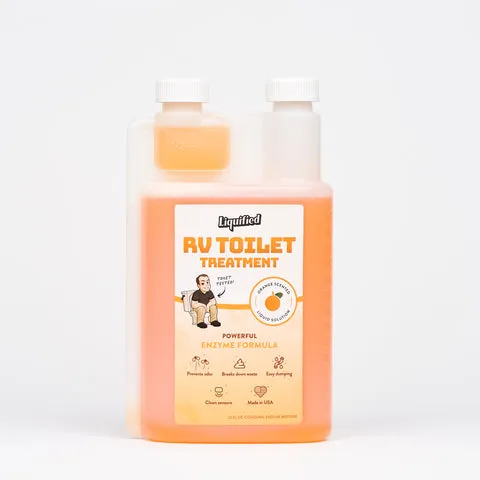
Shopping for an rv toilet treatment comes down to one decision: do you want live bacteria digesting the waste, or a chemical that knocks odor down on contact? For most rigs the answer is a bacterial enzyme product for everyday use, with a chemical formula on hand for hot weather, short trips, and emergencies. Everything else, scent, packaging, dose size, is secondary to that choice.
We test treatment products the same way we test everything else at The Planet Deals: dose them in a real tank, leave them in summer heat, and see what the tank smells like after a week. Here is what separates a treatment that works from one that just smells like perfume.
How to Choose an RV Toilet Treatment: Enzymes vs Chemicals
Enzyme and bacterial formulas
These products contain dormant bacteria and enzymes that wake up in water, colonize the tank, and break down paper, waste, and the sludge that causes odor. They are slow. You will not notice anything in the first hour, and that is normal. What you get is a tank that stays manageable between dumps.
- Best for full-time use, boondocking, and tanks that sit for days
- Gentler on seals, valves, and dump station plumbing
- Works with septic systems at campgrounds and RV parks
- Needs water and reasonable temperatures to stay active
- Does not mask odor, it removes the source
Chemical formulas
Chemical treatments use biocides, oxidizers, or pH adjusters to kill odor-causing bacteria and break down waste faster. They are effective and they work immediately, which is why they are popular for weekend trips and hot climates.
- Fast odor knockdown, useful when the tank already smells
- Good for short trips where you dump before bacteria can establish
- Some formulas can be harsh on rubber seals over long use
- Check the label for septic safe wording if you use campground hookups
The comparison at a glance
| Treatment type | How it works | Best for |
|---|---|---|
| Enzyme / bacterial | Live cultures digest waste and paper over days | Everyday use, longer stays, septic safe setups |
| Chemical | Biocides and oxidizers knock down odor fast | Weekend trips, hot weather, already-stinky tanks |
| Hybrid | Enzyme base with a light chemical or scent boost | Campers who want one bottle for everything |
Our honest read: keep both. Use a bacterial rv toilet treatment as your default and keep a small chemical bottle for the trips where you need the smell gone in an hour. You can check the latest price on both before you commit to a full season's supply.
Match the Product to the Tank, Not Just the Toilet
RV holding tank basics matter here because black and grey tanks are not the same job. Your black tank holds toilet waste and needs bacteria or chemical to break down solids. Your grey tank holds sink and shower water, and the problem there is soap scum, grease, and hair, not waste.
Grey tank odors are the ones people misdiagnose. If the rig smells bad but the black tank is clean, the grey tank is the culprit. A dedicated rv grey tank cleaner is formulated to cut that grease film instead of trying to digest waste that is not there. Treat it every few dumps, especially if you cook with oil or shower daily.
One more thing: dosing. Follow the bottle, and remember that dose size usually tracks tank size, not toilet size. Overdosing does not make a treatment work harder, it just wastes product and can leave residue.
Camper Toilet Treatment: Smaller Tanks, Same Rules
Folding campers, truck campers, and small travel trailers have the same chemistry in a much smaller tank, which means mistakes show up faster.
- A 5-gallon cassette or small black tank can go bad in a weekend, so dose on day one, not after the smell starts
- Use the liquid or pod form your tank actually accepts, and skip anything that needs extra water to activate if you are dry camping
- Dump more often, and rinse the tank when you have a hookup
- A compact camper toilet treatment is easier to store than a large jug and keeps the dose consistent
The most common camper mistake is treating a small tank once a month. Small tanks need treatment every trip.
Septic Safe Formulas and Real World Usage
Most campground dump stations feed into a septic system, and some parks ask you to use septic safe products. Septic safe usually means the formula avoids formaldehyde and other harsh biocides that kill the good bacteria the septic field depends on. If you bounce between campground hookups and dump stations, buying septic safe formulas removes the guesswork entirely.
A simple routine that works for most setups:
- Add treatment with a couple of gallons of water right after you dump, so bacteria have a head start.
- Use enough water per flush in the black tank. Dry tanks are stinky tanks.
- Treat the grey tank on the same schedule as the black tank.
- Skip the tank deodorizer sprays that only mask smell. Fix the source instead.
- Store treatment bottles upright and out of direct sun so pods and liquids stay effective.
Tank Health Habits That Cut Odors for Good
Product cannot fix a plumbing habit. Keep the black tank valve closed until you dump, even at a full hookup site, because a constantly open valve lets liquids drain away and leaves solids behind to bake. Rinse the tank when you can. Check that your toilet seal holds water. And if the rig has been sitting all winter, start fresh with a full dose rather than a half dose of old product.
Don't Forget the Outside: Black Streak Remover and Wash Wax
Tank health gets all the attention, but a clean exterior protects resale value and keeps you from confusing dirt with damage. Black streak causes are usually tannins and minerals in rainwater running down the roof and sides, not mold, and no amount of scrubbing with dish soap fixes the staining. A proper black streak remover lifts the stain without stripping wax, and our RV wash and wax products help you re-seal the finish afterward so the streaks come back slower.
Wash the roof line first, work down, and wax the sides at least twice a season. It takes an afternoon and saves you a weekend of scrubbing later.
Where to Buy and How to Save
Prime RV carries the treatment, tank care, and exterior care products we recommend, and the store runs a current offer of 20% off all orders. You can grab the code here before checkout. Buying the treatment and the grey tank cleaner together is the cheapest way to fix the smell problem once instead of chasing it every trip.
If you are new to the brand, the store coupon page also covers the fine print on ordering, shipping, and returns, so read that before you plan a restock around a trip date.
Buy the enzyme product for the tank, the grey tank cleaner for the shower, and the streak remover for the sides. That trio covers most of what actually goes wrong on a camping season.
 Shopping at Prime RV? See today's verified Prime RV discount code
Frequently asked questions
Should I use an enzyme or chemical rv toilet treatment?
Use a bacterial enzyme treatment for everyday use and longer stays, since it digests waste and keeps the tank manageable between dumps. Keep a chemical treatment for weekend trips, hot weather, or a tank that already smells, because it works in minutes rather than days.
How often should I add camper toilet treatment?
Add it right after every dump, not once a month. Small cassette and black tanks in campers go bad quickly, so dose on the first day of a trip and again whenever you empty the tank.
Why does my RV smell bad when the black tank is clean?
The grey tank is usually the source. Sink and shower water leaves soap scum, grease, and hair behind that odor-causing bacteria feed on, so a dedicated rv grey tank cleaner is the fix rather than a toilet treatment.
Are septic safe formulas required at campgrounds?
Some parks ask for them, and many dump stations feed a septic system, so a septic safe formula avoids problems. That usually means it skips formaldehyde and other harsh biocides that kill the bacteria a septic field needs.
What causes black streaks on the side of my RV?
Rainwater running off the roof carries tannins and minerals that stain the sidewalls, which is why dish soap rarely removes them. Use a black streak remover, then wax the sides so the runoff has a slicker surface to work against.
Is the Prime RV discount code good on treatment products?
The store currently offers 20% off all orders. Check the coupon page for the current code, offer terms, and shipping details before you check out.