
How Long Do UV Laser Engravers Last? Maintenance and Lifespan Guide

A laser engraving machine typically lasts 10,000 to 100,000 hours depending on the laser source type, with UV systems averaging 20,000 to 30,000 hours of operational life before requiring tube replacement. Proper maintenance and usage patterns directly impact whether your machine reaches the lower or upper end of that range.
What Determines UV Laser Engraver Lifespan
The heart of any uv laser engraver is its laser tube or diode module. UV lasers use a shorter wavelength (typically 355 nm) than CO2 or fiber systems, which makes them ideal for marking sensitive materials like glass, certain plastics, and electronics without heat damage. However, UV laser tubes are generally rated for 20,000 to 30,000 hours of active engraving time.
Several factors influence how quickly you approach that limit:
- Duty cycle – Running the machine continuously at maximum power degrades the tube faster than intermittent use at moderate settings.
- Cooling system health – UV lasers generate heat that must be dissipated. A clogged or failing chiller shortens tube life dramatically.
- Power supply quality – Voltage spikes and unstable current accelerate wear on the laser diode.
- Environmental conditions – Dust, humidity, and temperature extremes stress optical components and electronics.
By contrast, a fiber laser etching machine can exceed 100,000 hours because fiber sources are solid-state, while older CO2 tubes in a laser engraving machine for wood typically last 10,000 to 15,000 hours. Understanding your machine's laser type helps you set realistic replacement timelines.
Essential Maintenance to Extend Machine Life
Routine care is the single biggest factor separating a professional laser engraving machine that reaches 30,000 hours from one that fails at 15,000. We recommend a tiered schedule:
Daily (or after every 8-hour session)
- Wipe down mirrors and lenses with isopropyl alcohol and lint-free cloths.
- Clear debris from the engraving bed and exhaust port.
- Check coolant level and ensure the chiller display shows normal temperature.
Weekly
- Inspect and clean the air-assist nozzle to prevent clogs that cause uneven engraving.
- Vacuum the exhaust fan and filter to maintain airflow.
- Verify that all belts are tensioned and free of cracks.
Monthly
- Replace or clean the exhaust filter (depending on workload).
- Lubricate linear rails and guide rods with manufacturer-approved grease.
- Test focus calibration and realign if accuracy drifts.
Many laser engraving machine for beginners users skip lens cleaning, which allows residue to absorb laser energy and crack the optic. A $50 lens replacement becomes a $200 realignment service if ignored.
Check current prices and maintenance kits to keep your Xlaserlab system running smoothly.
When to Replace Consumables vs. the Whole System
Not every performance drop means you need a new uv laser. Consumables account for most issues:
| Component | Typical Lifespan | Replacement Cost (Approx.) |
|---|---|---|
| UV laser tube | 20,000–30,000 hrs | $800–$2,500 |
| Focusing lens | 1,000–3,000 hrs | $30–$150 |
| Mirror set | 5,000–10,000 hrs | $50–$200 |
| Cooling chiller | 5–10 years | $300–$1,000 |
If your engraving depth has dropped by 30 percent and cleaning optics does not restore it, the tube likely needs replacement. However, if the controller board fails or the frame warps, repair costs may approach 60 to 70 percent of a new machine's price. At that point, upgrading to a newer model like the xlaserlab x1 pro often makes more financial sense, especially when our coupon code brings down the upfront cost.
For complementary tools, a laser cleaning machine or laser rust remover can extend the life of metal parts and fixtures, reducing downtime from corroded work surfaces.
How Usage Patterns Affect Longevity
Two laser engraving machine for metal owners can see wildly different lifespans based purely on workflow:
- Hobbyist use (5–10 hours per week) – A UV engraver may last 8 to 12 years before tube replacement, totaling 2,000 to 6,000 operational hours.
- Small business (40 hours per week) – The same machine hits 20,000 hours in under 10 years, requiring a tube swap around year 8 or 9.
- Production shop (80+ hours per week) – Expect tube replacement every 4 to 5 years and more frequent consumable changes.
Running a laser engraving machine for clothes or delicate substrates at lower power (40 to 60 percent) extends tube life compared to maxing out power for thick acrylic or hardwood. Pulse frequency and speed also matter: faster passes with higher frequency distribute thermal load more evenly than slow, high-power burns.
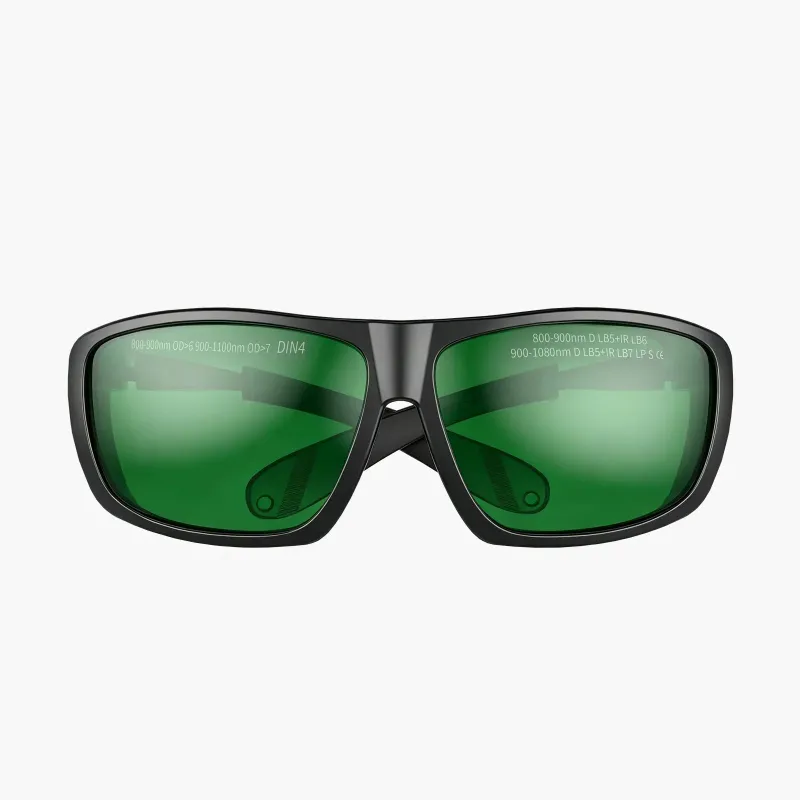
Always wear laser safety glasses rated for your machine's wavelength, and keep the work area ventilated to protect both your health and the machine's internal components from fume buildup.
Signs Your Machine Needs Service or Retirement
Watch for these red flags that indicate your laser engraving system requires immediate attention:
- Inconsistent engraving depth across the bed suggests misaligned mirrors or a weak tube.
- Excessive noise or vibration from the motor or gantry points to worn bearings or loose hardware.
- Frequent error codes related to temperature, power, or motion control hint at failing electronics.
- Burn marks on the machine body indicate reflected laser energy from damaged optics.
If your machine is under three years old and well maintained, most issues are repairable. Beyond the five-year mark, weigh repair quotes against the cost of a newer professional laser engraving machine that offers better speed, precision, or software. Grab the latest Xlaserlab pricing to compare.
For shops that also handle surface prep, investing in a clean lazer or laser cleaner can reduce contamination that fouls optics and shortens laser life. Similarly, a lazer welder rounds out a multi-process fabrication workflow without adding the maintenance burden of yet another engraving tube.
Maximizing Return on Investment
To get the most years and billable hours from your UV laser engraver:
- Log runtime – Track actual on-time to predict tube replacement before quality nosedives.
- Follow OEM schedules – Manufacturer maintenance charts are based on real failure data.
- Control the environment – A climate-controlled, dust-free workspace halves consumable wear.
- Train operators – Improper focusing and alignment cause more damage than hours of careful use.
- Budget for parts – Set aside 10 to 15 percent of annual revenue for consumables and contingency repairs.
Learn more about laser engraving systems and compare leading models to see how Xlaserlab systems stack up in long-term reliability. For detailed specs and current offers, visit our Xlaserlab coupon page to save 5% on your next order.
With disciplined maintenance and realistic usage expectations, a quality UV laser engraver delivers a decade or more of precise, profitable work.
Frequently asked questions
How many hours does a UV laser tube last before replacement?
Most UV laser tubes are rated for 20,000 to 30,000 operational hours. Actual lifespan depends on power settings, duty cycle, and cooling system maintenance.
Can I extend my laser engraving machine lifespan with better maintenance?
Yes. Daily lens cleaning, weekly exhaust filter checks, and monthly lubrication can add thousands of hours to your machine's operational life by preventing heat buildup and optical damage.
What fails first on a UV laser engraver?
Focusing lenses and mirrors typically degrade before the laser tube, especially if you engrave materials that produce sticky residue. Replace optics every 1,000 to 3,000 hours depending on workload.
Is it worth replacing the laser tube or buying a new machine?
If the frame, controller, and motion system are still solid, a tube replacement costs 30 to 50 percent of a new machine and extends life by another 20,000 hours. If multiple components need repair, upgrading makes more sense.
Do fiber lasers last longer than UV laser engravers?
Yes. Fiber laser sources often exceed 100,000 hours because they are solid-state with no consumable gas or glass tube. UV lasers prioritize wavelength for delicate materials over maximum lifespan.
How do I know when my UV laser tube is dying?
Watch for reduced engraving depth at the same power settings, longer job times, or uneven marks across the bed. A 20 to 30 percent drop in performance usually signals tube wear.