
Can a Laser Welder Replace Traditional Welding? Pros, Cons, and Use Cases

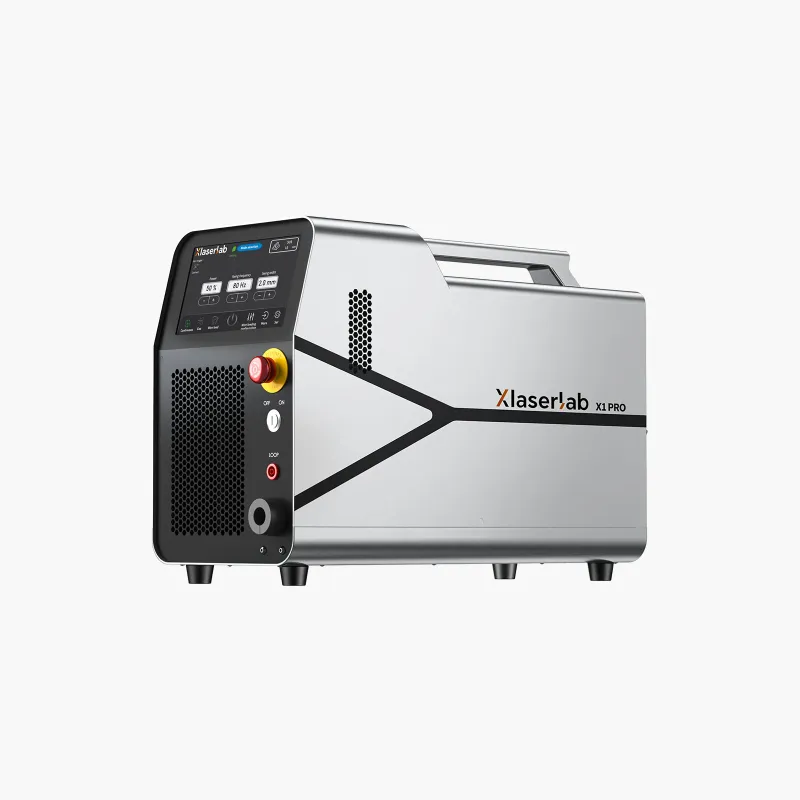
A lazer welder can replace traditional welding for precision work on thin metals, electronics, and jewelry, but it complements rather than fully replaces arc and MIG welding for heavy structural applications. Laser welding excels at speed, minimal heat distortion, and fine detail, while conventional methods still dominate thick steel fabrication and outdoor construction. The right choice depends on your material thickness, production volume, and budget.
How Laser Welding Differs From Traditional Methods
Traditional stick, MIG, and TIG welding use an electric arc to melt filler metal into a joint, creating a wide heat-affected zone. A lazer welder focuses a high-intensity beam onto a tiny spot, melting the base metal with minimal or no filler. This concentrated energy produces narrower welds, less warpage, and faster cycle times on materials under 3 mm thick.
Laser systems also integrate easily into automated production lines. Because the beam travels through air without contact, there's no electrode wear or spatter cleanup. However, joint fit-up must be tighter—gaps over 0.1 mm can cause porosity—and initial equipment costs run significantly higher than a basic MIG setup.
Advantages of a Laser Welder
Speed and throughput Laser welding operates at travel speeds up to ten times faster than TIG on thin stainless steel and aluminum, cutting cycle time in high-volume manufacturing.
Precision and aesthetics The narrow fusion zone preserves adjacent finishes and reduces post-weld grinding. Jewelers and medical-device makers rely on this for cosmetic seams and small assemblies.
Minimal distortion Low heat input keeps parts flat and dimensionally stable, critical for battery tabs, sensor housings, and aerospace brackets.
Automation-friendly Robotic arms and galvo scanners can position the beam without changing consumables, lowering labor costs in repetitive tasks.
Access to tight spaces Fiber-delivered beams reach recesses that a welding torch cannot, simplifying fixture design.
Drawbacks and Limitations
Upfront investment Entry-level laser welders start around $10,000, and industrial fiber systems exceed $50,000. Compare that to a $500 stick welder or $1,500 MIG machine for hobbyists.
Material thickness ceiling Most handheld and desktop lasers max out at 3–5 mm steel in a single pass. Structural I-beams and heavy pipe still require arc welding.
Strict joint preparation Laser welds demand clean, tightly fitted edges. Oil, rust, or gaps cause spatter and weak fusion, whereas MIG tolerates some contamination with the right shielding gas.
Safety requirements Class 4 lasers require laser safety glasses, interlocked enclosures, and operator training to prevent eye injury. Traditional welding uses a passive helmet.
Limited portability Fiber-coupled handpieces are more mobile than older systems, but field repairs on pipelines and building frames remain the domain of stick and engine-driven welders.
Best Use Cases for Laser Welding
| Application | Why Laser Wins | Traditional Alternative |
|---|---|---|
| Battery-pack tabs | Speed, no spatter on cells | Resistance or ultrasonic |
| Jewelry repair | Pinpoint heat, preserves stones | Micro-TIG or soldering |
| Thin stainless enclosures | Aesthetic seams, minimal distortion | TIG (slower, more skill) |
| Automotive body panels | Automated, high-volume consistency | Resistance spot welding |
For workshops that already own a laser engraving machine or laser cleaning machine, adding a welder creates a versatile metalworking cell. Xlaserlab's fiber systems, for example, let you etch serial numbers with a laser etching machine, remove rust with a laser rust remover, and weld tabs—all under one brand's service network. Check current bundles and pricing to see if a multi-tool setup fits your budget.
When Traditional Welding Still Makes Sense
Stick and MIG remain unbeatable for structural steel over 6 mm, outdoor field work without AC power, and repairs that tolerate wider tolerances. A construction crew can't haul a fiber laser to a job site, and a farmer fixing a plow benefits more from a $500 buzz-box than a $15,000 workstation.
Arc processes also handle rusty, painted, or gapped joints that would defeat a laser. If your work involves thick materials, rough surfaces, or remote locations, conventional methods deliver better value and flexibility.
Choosing the Right Laser System
For small businesses and makerspaces Look at 1000–1500 W handheld fiber welders. They tackle stainless, carbon steel, and aluminum up to 2 mm and cost $8,000–$15,000. Pair them with a laser cleaner to prep joints and a set of laser safety glasses for every operator.
For precision or electronics Desktop pulsed lasers (200–500 W) offer fine spot control for watch cases, hearing-aid shells, and sensor assemblies. The xlaserlab x1 pro and similar platforms combine engraving, marking, and light welding in one footprint.
For high-mix manufacturing Robotic fiber systems with seam tracking justify their $50,000+ price through unmanned second shifts and consistent quality on automotive components, appliance panels, and medical instruments.
Before committing, request sample welds on your actual material and thickness. Many suppliers, including Xlaserlab, will run test coupons to verify penetration and joint strength. Grab the latest discount code if you're ready to compare quotes.
Integration With Other Laser Tools
Shops investing in laser technology often discover cross-platform efficiencies. A single fiber source can drive a laser engraving machine for part marking, a clean lazer for pre-weld surface prep, and a welding head for final assembly. This modular approach spreads capital costs and simplifies maintenance.
If you already cut or engrave wood and acrylic with a CO₂ system, note that those machines cannot weld metal. Metal joining requires a fiber or Nd:YAG laser. For deeper background on how laser systems work, Epilog's technical library covers beam types and material interactions.
Our Recommendation
A lazer welder shines in production environments where speed, precision, and automation justify the investment. It complements traditional welding rather than replacing it outright—think of it as adding a scalpel to a toolbox that already holds a hammer. For heavy fabrication, field repairs, or budget-conscious startups, stick with MIG or TIG and consider laser welding once throughput or quality demands outgrow arc processes.
We regularly test both laser and conventional welding systems to verify real-world performance. If you're comparing models or planning a multi-tool laser cell, explore our tested buyer's guides and use our Xlaserlab coupon code to save 5% on your first order.
Frequently asked questions
Can a handheld laser welder work on thick steel?
Most handheld laser welders handle steel up to 3–5 mm in a single pass. Thicker sections require multiple passes or traditional MIG and stick methods for full penetration and structural strength.
Do I need special safety equipment for laser welding?
Yes. Class 4 laser welders require certified laser safety glasses rated for the specific wavelength, plus interlocked enclosures or curtains to protect bystanders from reflected beams.
Is a laser welder worth it for a small fabrication shop?
If you frequently weld thin stainless, aluminum, or precision assemblies in moderate to high volumes, a laser welder pays for itself through faster cycle times and reduced rework. For occasional thick-steel jobs, a MIG welder remains more cost-effective.
Can the same machine do both laser engraving and welding?
Some fiber laser platforms support interchangeable heads for engraving, cleaning, and welding, but CO₂ engraving machines cannot weld metal. Check whether the system's power and wavelength suit your applications before investing.
What materials can a laser welder join?
Fiber lasers weld carbon steel, stainless steel, aluminum, titanium, and nickel alloys. Copper and brass require higher power due to reflectivity, and dissimilar metals need careful parameter tuning to avoid brittle intermetallics.
How much does a professional laser welder cost?
Handheld fiber welders start around $8,000 to $15,000 for 1000–1500 W systems. Industrial robotic cells with seam tracking and automation range from $50,000 to over $200,000 depending on power and features.