
Laser Cleaning Machine vs Rust Removal Laser Gun: Which Tool Works Best for Your Project?

Understanding the Difference Between a Rust Removal Laser Gun and a Laser Cleaning Machine
A rust removal laser gun is usually a handheld laser rust remover designed for portability and spot work, while a laser cleaning machine offers higher wattage and continuous-duty performance for industrial applications. Both use pulsed fiber laser technology to vaporize rust, paint, and contaminants without chemicals or abrasives, but they serve different project scales and budgets.
If you're restoring classic car parts, cleaning welds, or running a mobile laser rust removal business, the handheld form factor gives you flexibility. For workshop-based production, stripping large fabrications, or all-day surface prep, a stationary or wheeled laser cleaner delivers more power and efficiency. We'll walk through the key differences so you can match the tool to your actual workload.
How Does Laser Rust Removal Work?
Laser rust removal works by firing ultra-short pulses of high-intensity light at a metal surface. The rust and oxidation absorb the energy, heat rapidly, and vaporize or flake off, while the underlying metal reflects most of the beam and stays cool. This selective absorption means you can strip decades of corrosion without grinding, sandblasting, or harsh chemicals.
Both handheld units and full-scale systems rely on fiber laser sources, typically in the 1064 nm wavelength range. Key parameters include:
- Pulse frequency – higher rates speed up coverage on large areas
- Average power – 50 W to 200 W for handhelds, 500 W to 3000 W for industrial models
- Spot size – adjustable from a pencil-beam for detail work to a wide sweep for panels
Because there's no consumable media or chemical waste, running costs stay low once you own the equipment. You will need laser safety glasses rated for 1064 nm to protect your eyes from reflections.
Handheld Laser Rust Remover: Who It Suits
A handheld laser rust remover (often called a "laser gun") pairs a fiber source with a pistol-grip head and a backpack or cart-mounted controller. Typical specs:
| Feature | Handheld Range |
|---|---|
| Power | 50 W – 200 W |
| Weight | 1.5 – 3 kg (gun only) |
| Cable length | 5 – 10 m |
| Best for | Automotive, marine, on-site repair |
When a handheld makes sense:
- You need to reach tight spaces, undercarriages, or vertical surfaces
- Projects move between job sites (mobile detailing, restoration shops)
- Budget caps around entry-level industrial tooling
- Work sessions are intermittent rather than full-shift production
Handheld units shine for DIY laser rust removal on classic cars, motorcycles, and garden tools. They're also popular in laser rust removal video content because the instant visual result—watching rust disappear in real time—is dramatic. Check the latest price to compare wattage tiers; our current code saves 5% across all orders.
Full-Scale Laser Cleaning Machine: Power and Throughput
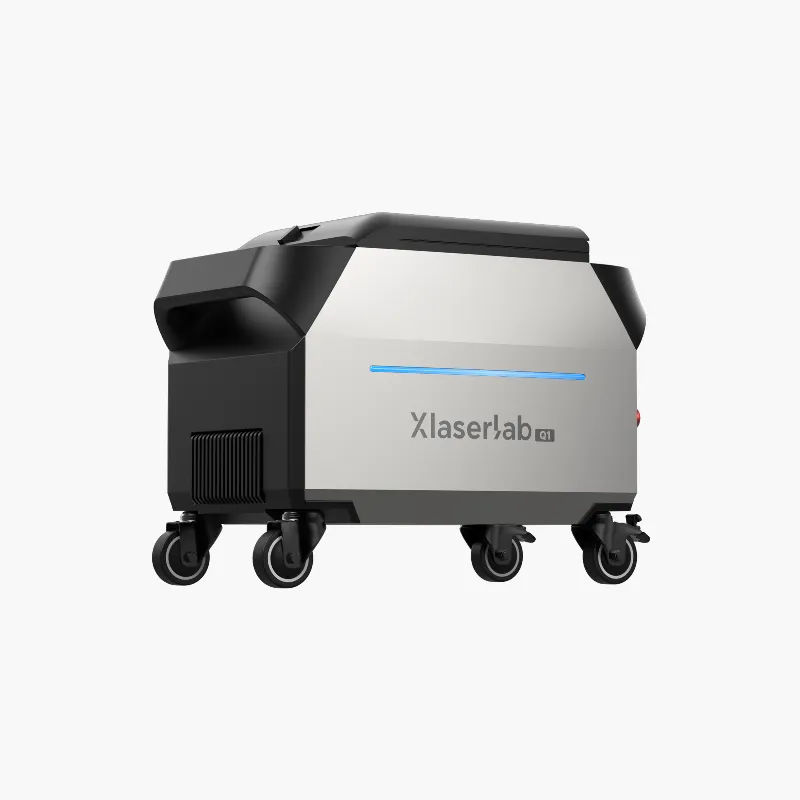
A dedicated laser rust remover or clean lazer system typically sits on a wheeled cart or workbench, with a separate hand piece connected by fiber and control cables. Industrial models range from 500 W continuous to 2000 W or higher, and some include automated XY gantries for repeatable cleaning of large panels.
Advantages over handheld guns:
- Higher duty cycle – run for hours without thermal cutoff
- Faster coverage – wider beam profiles and higher pulse rates
- Advanced controls – programmable patterns, real-time power adjustment
- Safety interlocks – enclosed work zones, fume extraction ports
If you're scaling a laser rust removal business, processing batches of fabricated steel, or preparing surfaces before a lazer welder pass, the extra investment pays back in speed and consistency. Rental options exist (search "laser rust removal machine rental" in your region), but ownership becomes cost-effective after a few dozen projects.
Manufacturers like PULSAR Laser and StyleCNC publish detailed comparison charts for industrial buyers. The xlaserlab x1 pro also bridges the gap, offering modular accessories that let you swap between engraving and cleaning heads on a single platform.
Comparing Costs: 100W Rust Cleaning Laser Price and Up
Pricing varies widely by wattage, brand, and included accessories. We never fabricate numbers, so grab the code to see live pricing on the models that fit your spec. In general:
- 50–100 W handheld kits – entry-level, suitable for hobbyists and light commercial work
- 100–200 W handheld or cart systems – the sweet spot for professional restoration and mobile services
- 500 W+ industrial cleaners – workshop and production environments
Factor in the cost of laser safety glasses, fume extraction (recommended for enclosed spaces), and any training or certification required in your jurisdiction. Because laser systems have no consumables beyond electricity, your per-hour operating cost is a fraction of sandblasting or chemical stripping.
Overlapping Use Cases: Engraving, Etching, and Welding Prep
Many buyers discover that a laser engraving machine or laser etching machine can double as a light-duty cleaner when you need to remove anodizing, paint, or oxidation before marking. Conversely, a cleaning system can etch serial numbers or logos by increasing power density in a focused spot. This crossover makes modular platforms like the xlaserlab x1 pro attractive: one fiber source, multiple heads.
If your workflow includes welding, a pre-weld cleaning pass with a laser removes mill scale and oil far faster than wire brushing, reducing porosity and improving bead quality. Pairing a laser cleaner with a lazer welder creates a chemical-free, single-operator surface-prep and joining station.
For specialized materials—plastics, glass, or coated aluminum—a uv laser or uv laser engraver may be necessary, though these are less common in rust-removal applications. Stick with fiber lasers for ferrous metals and steel.
Which Tool Works Best for Your Project?
Choose a handheld laser rust remover if you:
- Work on-site or in multiple locations
- Focus on automotive, marine, or restoration projects
- Need to maneuver around curves, tubes, and tight clearances
- Operate solo or with a small crew
Choose a full-scale laser cleaning machine if you:
- Run a production shop or fabrication facility
- Clean large flat panels, structural steel, or batches of parts
- Require all-day duty cycles and maximum throughput
- Plan to integrate fume extraction and safety enclosures
Both tools eliminate the mess and hazard of sandblasting, the cost of chemical disposal, and the labor of hand grinding. We recommend renting or demoing a unit in your power range before committing, especially if you're launching a laser rust removal business. Real-world experience with your specific metal types and coating thicknesses will clarify which wattage and form factor pays off fastest.
For current deals and verified discount codes, visit our Xlaserlab coupon page—we update it weekly with the latest offers across the full lineup of cleaning, engraving, and welding systems.
Frequently asked questions
What is the difference between a rust removal laser gun and a laser cleaning machine?
A rust removal laser gun is typically a handheld unit with 50–200 W power, designed for portability and spot work. A laser cleaning machine usually refers to a higher-wattage system (500 W and up) on a cart or workbench, built for continuous-duty production and larger surface areas.
Can I use a handheld laser rust remover for DIY projects at home?
Yes, entry-level handheld units are suitable for DIY laser rust removal on cars, motorcycles, tools, and metal furniture. Always wear laser safety glasses rated for 1064 nm and work in a ventilated area to avoid inhaling vaporized contaminants.
How long does it take to remove rust with a laser cleaner?
Speed depends on rust thickness, metal type, and laser wattage. A 100 W handheld can clean about 1–3 square meters per hour of light surface rust, while a 1000 W industrial system may cover 10+ square meters per hour on the same material.
Do I need special training to operate a laser rust removal machine?
Basic operation is straightforward, but we recommend manufacturer training or online tutorials to optimize settings for different coatings and metals. Some jurisdictions require laser-safety certification for commercial use, so check local regulations before starting a laser rust removal business.
Can a laser cleaning machine also engrave or etch metal?
Yes, many fiber laser cleaners can etch serial numbers, logos, or deep marks by increasing power density and reducing scan speed. Modular systems let you swap between cleaning and engraving heads on the same platform for maximum versatility.
Is renting a laser rust removal machine cheaper than buying one?
Rental makes sense for one-off projects or testing before purchase. If you have steady work—restoration jobs, fabrication prep, or a mobile service—ownership typically pays back within a few dozen projects because there are no consumables and operating costs stay low.