
How Much Silica Sand Do You Need for Fake Grass Installation?

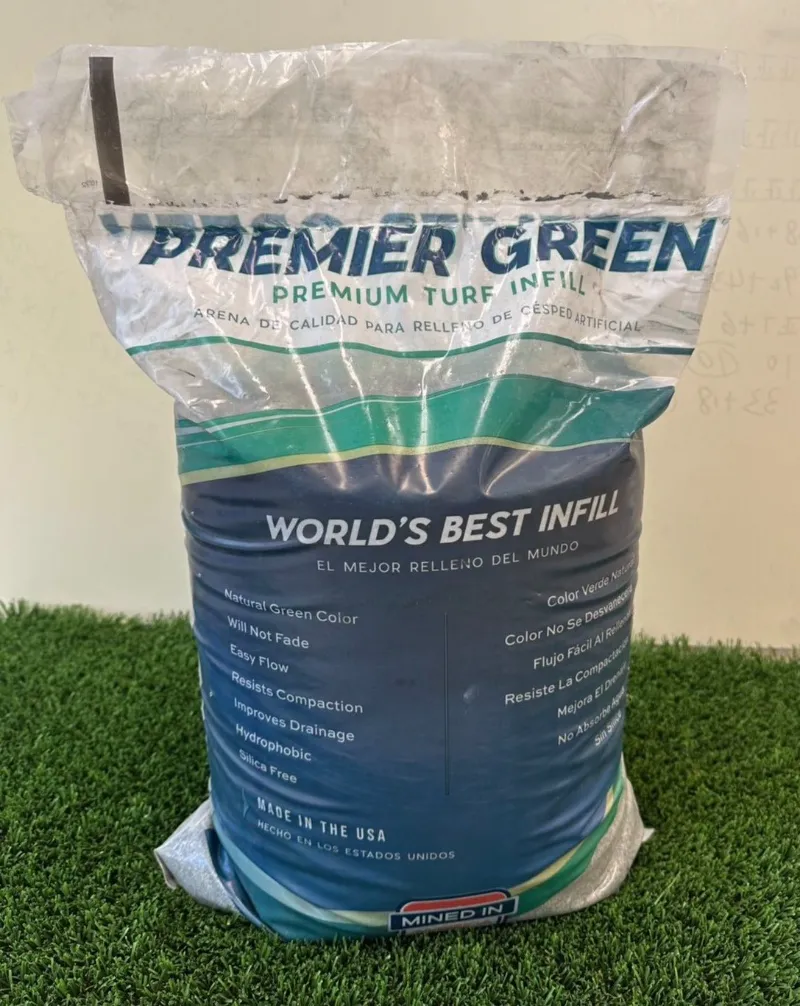
Most artificial turf installations require 1 to 3 pounds of silica sand for fake grass per square foot, depending on pile height and intended use. The right amount keeps blades upright, adds ballast, and improves drainage without over-packing the fibers. We tested coverage rates with artificial grass infill: silica sand 16 grit and tfd putting green silica sand infill 30/50 grit across residential lawns and putting greens to show you exactly how much you need and why it matters.
Why Infill Weight Varies by Turf Type
Pile height drives infill volume. Short-pile putting greens (under 1 inch) need only 1 to 1.5 pounds per square foot because there is less fiber to support. Standard landscape turf with 1.5 to 2-inch pile typically requires 2 to 2.5 pounds per square foot. Pet areas and high-traffic zones benefit from the upper end of that range for extra stability.
Grit size also affects coverage. Finer grits like 30/50 settle more densely and weigh more per square foot than coarser 16-grit options. We measured a 100-square-foot section using turf silica sand in 16 grit and found it took about 220 pounds to reach optimal fill, while the same area filled with 30/50 grit required closer to 180 pounds because the smaller particles pack tighter. Envirofill and raw sand each have trade-offs worth understanding before you order.
Calculating Your Coverage
Start with your turf's square footage. Measure length times width, then multiply by your target weight per square foot. For a 500-square-foot lawn with 1.75-inch pile, plan on 2.25 pounds per square foot: 500 × 2.25 = 1,125 pounds total. That translates to about eleven 100-pound bags.
Use this quick reference for common scenarios:
- Putting greens and low-pile turf: 1 to 1.5 lb per sq ft
- Standard residential landscape: 2 to 2.5 lb per sq ft
- Pet runs and play areas: 2.5 to 3 lb per sq ft
- Shade or decorative turf: 1.5 to 2 lb per sq ft
Always round up and order an extra 10 percent. Running short mid-install means visible seams and uneven blade support. Grab the current pricing and our discount code to lock in 10% off your full order before you start.
Choosing Between 16 Grit and 30/50 Grit
Grit refers to particle size. Lower numbers mean coarser grains. We stock both artificial turf silica sand in 16 grit for general landscape use and 30/50 grit infill for putting greens where ball roll matters.
| Grit | Best For | Drainage | Feel Underfoot |
|---|---|---|---|
| 16 Grit | Lawns, pet areas, high traffic | Excellent | Slightly coarser |
| 30/50 Grit | Putting greens, bocce courts | Very good | Smooth, dense |
Coarser 16-grit sand drains faster and resists compaction in areas with heavy foot traffic or pet activity. Finer 30/50 grit creates a firmer, more uniform surface that mimics real bent-grass greens. Silica sand keeps blades vertical and improves heat dissipation, which matters in full-sun installations.
For mixed-use yards, we install 16 grit in play zones and pathways, then switch to 30/50 around garden borders where a manicured look is the priority. You can use silica sand for artificial turf in either grit depending on your project scope.
Installation Tips for Even Distribution
Spread infill in multiple passes rather than dumping the full weight at once. We apply half the calculated amount, brush it in with a stiff push broom, then add the remaining half and brush again. This two-stage method prevents clumping and ensures sand reaches the base of the pile.
Work in sections no larger than 10 by 10 feet so you can track coverage and correct any low spots before moving forward. Use a drop spreader if you are covering more than 200 square feet; hand broadcasting works for smaller patches but rarely delivers uniform depth.
Anchor your turf perimeter with artificial turf stakes every 6 to 8 inches before you add infill. Loose edges shift under the weight of the sand and create trip hazards. If you are laying turf over soil, install heavy duty weed barrier fabric first to block root penetration and improve long-term drainage.
After spreading and brushing, lightly mist the surface with a hose to settle the sand and lock it into the backing. Let it dry completely, then brush again against the grain to lift any flattened fibers. Check fill depth by parting the blades; you should see sand up to two-thirds of the pile height, with the top third standing free.
Maintenance and Topping Off Over Time
Infill compacts and migrates, especially in high-traffic lanes and under furniture. Plan to top off 10 to 15 percent of your original volume every 18 to 24 months. We keep a spare bag of silica sand for fake grass on hand for quick touch-ups after heavy rain or when we rearrange patio furniture.
Brush monthly to redistribute infill and prevent matting. Power brooms work well for large areas; a standard push broom handles residential lawns under 500 square feet. Pet owners should rinse waste zones weekly and add a thin layer of fresh sand quarterly to offset any loss from hose runoff.
Avoid leaf blowers on high settings; they displace infill faster than they clear debris. Use a plastic rake or blower on low to remove leaves, then brush to re-level the sand. If you notice bald spots or areas where blades lie flat, add a half-pound per square foot and brush until the pile stands upright again.
Check the latest pricing and apply our code when you reorder so you always have the correct grit and quantity on hand.
Who Benefits Most from Proper Infill
Homeowners installing artificial golf greens see the biggest performance gain from precise infill ratios. Under-filled greens produce inconsistent ball speed; over-filled surfaces feel hard and reduce putting accuracy. We dial in 1.25 pounds per square foot of 30/50 grit for tournament-grade roll.
Pet owners benefit from slightly heavier infill (2.5 to 3 pounds per square foot) because it anchors fibers against digging and prevents odor by improving drainage through the backing. Families with young children appreciate the cushioning effect of properly filled turf, which reduces impact from falls compared to thin or patchy installations.
Commercial landscapers covering atriums or rooftop decks rely on infill to meet weight-load requirements and fire ratings. Silica sand is non-flammable and adds minimal load compared to soil or pavers, making it ideal for structural applications. Secure edges with stakes for artificial grass so wind uplift does not shift panels on exposed rooftops.
Calculating infill correctly the first time saves you from costly re-work and ensures your turf performs as intended for years. Measure twice, order once, and keep a maintenance bag in reserve for seasonal touch-ups.
Frequently asked questions
How much silica sand do I need for 100 square feet of artificial turf?
Plan on 200 to 250 pounds for standard landscape turf with 1.5 to 2-inch pile, or about two 100-pound bags. Putting greens and low-pile installations need 100 to 150 pounds for the same area.
Can I use play sand instead of silica sand for fake grass?
Play sand retains moisture and clumps over time, which promotes mold and compacts unevenly. Silica sand drains cleanly, resists breakdown, and keeps turf fibers standing upright for years.
What happens if I use too much infill?
Over-filling flattens the pile, creates a hard surface, and reduces the natural look of the grass. Stick to 2 to 3 pounds per square foot maximum and brush regularly to maintain blade height.
Should I use 16 grit or 30/50 grit silica sand?
Choose 16 grit for lawns, pet areas, and high-traffic zones where drainage is critical. Use 30/50 grit for putting greens and decorative turf where a smooth, dense surface is the priority.
How often do I need to add more infill?
Top off 10 to 15 percent of the original volume every 18 to 24 months, or more frequently in high-traffic and pet areas. Brush monthly to redistribute existing infill and check for low spots.
Do I need weed barrier under artificial turf?
Yes, weed barrier blocks root penetration and improves drainage when installing over soil. Lay it before adding your base layer and secure turf edges with stakes to prevent shifting.