
Trap Bar vs Barbell: Which One Should You Use for Deadlifts?

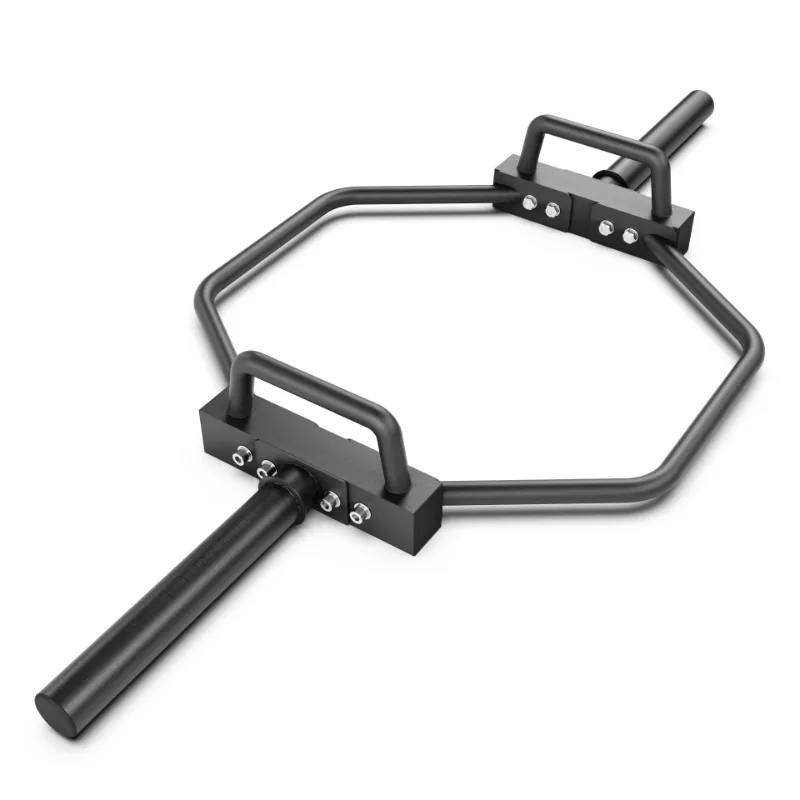
A trap bar shifts the load closer to your center of gravity and reduces lower back strain, making it ideal for beginners and high-rep training, while a bar bell demands more posterior chain engagement and is the standard for powerlifting. Both tools build serious strength, but the right choice depends on your goals, experience, and any mobility limitations you're working around.
What Makes a Trap Bar Different from a Barbell
The trap bar (also called a hex bar) surrounds you with a hexagonal or diamond-shaped frame and places handles at your sides. You stand inside the frame rather than behind the bar, which changes the mechanics entirely. This design moves the weight closer to your hips and keeps your torso more upright during the lift.
A traditional barbell sits in front of your shins, forcing you to hinge forward at the hips to reach it. That forward lean increases shear force on your lumbar spine and demands greater hamstring and glute flexibility. The trap bar eliminates much of that stress by letting you adopt a more squat-like stance with a neutral spine.
Most open trap bar designs also feature dual handle heights: a standard set and raised handles that shorten your range of motion by several inches. The raised grips help lifters with limited ankle or hip mobility train the movement pattern safely while they work on flexibility.
Muscle Activation: Trap Bar vs Barbell Deadlifts
Barbell deadlifts recruit your posterior chain heavily, targeting the erector spinae, glutes, and hamstrings. The forward torso angle and hip hinge pattern make this lift exceptional for building a strong lower back and powerful hip extension.
Trap bar deadlifts shift some of that demand to your quads because the more upright torso mimics a squat. Research from Stronger by Science shows that lifters typically move more weight with a trap bar and generate higher peak power, making it a favorite for athletic training and explosive strength development.
Here's how the two compare across major muscle groups:
| Muscle Group | Barbell Deadlift | Trap Bar Deadlift |
|---|---|---|
| Erector Spinae | High | Moderate |
| Glutes & Hamstrings | High | Moderate to High |
| Quadriceps | Moderate | High |
| Grip & Forearms | High | High |
Both variations demand serious grip strength, though the neutral handles on a trap bar feel more natural for many lifters. If grip becomes the limiting factor, a set of resistance bands can help you train grip endurance separately.
When to Choose a Trap Bar
New lifters often master trap bar exercises faster because the movement feels intuitive and the upright torso reduces the risk of rounding your back. If you've struggled with lower back pain during conventional deadlifts, switching to a trap bar may let you train heavy without aggravating old injuries.
Athletes who need explosive power—sprinters, football players, basketball players—benefit from the higher velocity and power output that trap bars allow. The open trap bar deadlift lets you accelerate through the lift without the bar scraping your shins, which is why strength coaches program it for speed work and plyometric progressions.
Trap bars also shine in high-rep conditioning circuits. The reduced spinal load means you can push volume without the same fatigue penalty that barbell deadlifts impose on your lower back. Pair a trap bar with a squat rack and you've got a versatile home gym setup for lower-body strength and metabolic training.
If you're shopping for one, check out our discount code to save on quality equipment. Expert reviews like this trap bar roundup from Garage Gym Reviews can help you compare open versus closed designs and weight capacities.
When a Barbell Is the Better Tool
Powerlifters and anyone competing in a sport that tests the conventional deadlift need to train with a barbell. The movement pattern, grip width, and bar path are all specific to competition standards, and no amount of trap bar work will perfectly translate to a barbell pull.
If your goal is maximal posterior chain development—especially for the erector spinae and hamstrings—the barbell deadlift remains unmatched. The longer moment arm and forward lean create tension that a trap bar simply can't replicate.
Barbell training also offers more variation. You can switch between conventional, sumo, Romanian, and deficit deadlifts without changing equipment. A quality barbell pairs with your existing squat rack for bench press, rows, squats, and dozens of other movements, making it the more versatile investment if you can only choose one.
How to Decide Which One Fits Your Program
Start by identifying your primary training goal. If you're chasing a bigger conventional deadlift for competition, stick with a bar bell and program assistance work to address weak points. If you're training for general strength, athleticism, or injury prevention, a trap bar offers a lower-risk, high-reward alternative.
Consider your injury history and mobility. Lifters with chronic lower back issues, limited ankle dorsiflexion, or tight hamstrings often find trap bar deadlifts more sustainable over the long term. You can still build serious strength and muscle without the same orthopedic cost.
Budget and space matter too. A quality trap bar costs roughly the same as a good barbell, but a barbell unlocks more exercise variety. If you already own a barbell and want to add a second tool for variation and joint-friendly training, grab the code and invest in a trap bar to round out your setup.
Many experienced lifters keep both in rotation: barbell deadlifts for heavy singles and triples, trap bar deadlifts for higher-rep accessory work and deload weeks. This approach lets you train the deadlift pattern year-round without overloading any single structure.
Programming Both Lifts for Maximum Results
You don't have to choose one forever. A well-designed program can include both trap bar and barbell deadlifts in different phases or on different training days. Use the barbell for your main strength work—sets of one to five reps at high intensity—and program trap bar work as a secondary movement for sets of six to twelve reps.
If you're running a four-day upper/lower split, you might deadlift with a barbell on your heavy lower day and use the trap bar for a metabolic finisher or explosive speed work on your second lower session. This strategy builds strength, power, and work capacity without frying your lower back.
Accessory exercises matter too. Pair your deadlift work with dip exercise bars for upper-body pressing, a roman chair for back extensions and core stability, and resistance bands for glute activation and mobility drills. A balanced program addresses every link in the kinetic chain.
For the best pricing on any of these tools, check the latest deals before you buy. We test everything we recommend, and our affiliate partnerships let us pass savings directly to you.
Frequently asked questions
Is a trap bar easier on your back than a barbell?
Yes, the trap bar keeps the load closer to your center of gravity and allows a more upright torso, which reduces shear force on your lumbar spine. This makes it a safer option for lifters with lower back sensitivity or mobility restrictions.
Can I build the same strength with a trap bar as a barbell?
You can absolutely build serious strength with a trap bar, and most lifters can handle heavier loads due to the favorable biomechanics. However, barbell deadlifts create slightly more posterior chain tension, so the strength gains are similar but not identical.
What is an open trap bar and should I get one?
An open trap bar has one side of the frame that's open or removable, making it easier to load plates and step in and out. It's a convenience feature that's especially helpful if you're doing high-rep sets or quick transitions during circuits.
Do powerlifters ever use trap bars?
Powerlifters primarily train with a barbell because that's what's used in competition, but many use trap bars as an accessory tool during off-season training or deload weeks to reduce spinal fatigue while maintaining pulling volume.
Which one should a beginner start with?
Beginners often find the trap bar easier to learn because the neutral grip and upright posture feel more natural and reduce the risk of form breakdown. Once you've built foundational strength and mobility, adding barbell deadlifts expands your training options.
Can I use a trap bar for exercises other than deadlifts?
Yes, trap bars work well for farmers carries, shrugs, split squats, and overhead presses. The neutral handles and balanced load make them surprisingly versatile for full-body training.