
Do Body Cameras with Audio Record Continuously or Only When Activated?

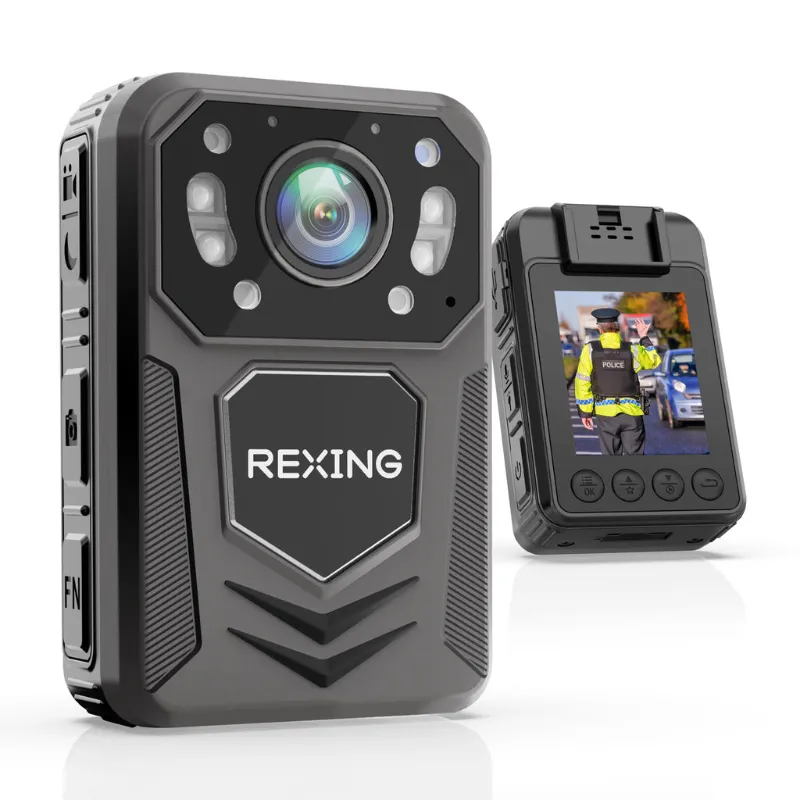
Most body cameras with audio support both continuous recording and activation-triggered modes, though the default behavior depends on your specific model and how you configure it. Understanding these recording modes helps you choose the right device and settings for security work, personal safety, or documentation needs.
How Continuous Recording Works on Body Cameras
Continuous recording means your device captures video and audio nonstop from the moment you power it on until the battery dies or storage fills up. Most models use loop recording, which automatically overwrites the oldest footage when the memory card reaches capacity. This ensures you never miss an incident because you forgot to press record.
The trade-off is battery life and storage. A typical body camera with audio running continuously might last 4 to 8 hours on a single charge, while storage depends on resolution and bitrate. A 64GB card at 1080p can hold roughly 8 to 12 hours before looping begins.
Continuous mode works well for:
- Law enforcement officers who need uninterrupted shift coverage
- Security personnel patrolling for extended periods
- Ride-share drivers who want constant cabin monitoring
- Anyone who prefers set-it-and-forget-it operation
Many users pair continuous recording with a rexing dash cam in their vehicle for comprehensive coverage both inside and outside the car.
Activation-Triggered Recording Modes
Activation-triggered recording starts and stops based on a manual button press, motion detection, or another trigger event. This approach conserves battery and storage by capturing only relevant moments. A mini body worn camera in standby mode can last days or even weeks before needing a recharge, then spring to life when you tap the record button.
Common activation triggers include:
- Manual button press (most common)
- Motion detection sensors
- Audio threshold detection (starts recording when sound exceeds a set level)
- Scheduled recording windows (record only during specific hours)
The smallest body camera with audio models often default to activation mode because their compact batteries cannot sustain hours of continuous recording. You gain portability but must remember to activate recording when needed.
This mode suits:
- Private investigators documenting specific interactions
- Journalists conducting interviews
- Personal safety users who want evidence on demand
- Anyone prioritizing battery longevity over constant coverage
Check the latest price to see which models offer both modes with easy switching.
Comparing Recording Modes: What Fits Your Use Case
| Feature | Continuous Recording | Activation-Triggered |
|---|---|---|
| Battery Life | 4-8 hours typical | Days to weeks on standby |
| Storage Usage | High, requires loop overwrite | Low, captures only events |
| Ease of Use | Set once, no button presses | Requires manual activation |
| Risk of Missing Events | None (always recording) | High if you forget to activate |
The best personal body camera with audio for your situation depends on whether you value comprehensive coverage or extended standby time. Security professionals typically choose continuous mode, while personal safety users often prefer activation triggers they control.
Some hybrid models let you switch between modes on the fly. For example, you might run continuous recording during a high-risk shift, then switch to activation mode for routine tasks. The wireless body camera with audio category includes models with smartphone apps that let you toggle modes remotely and review footage without removing the device.
We also see users combining devices: a hidden body camera with audio in activation mode as a backup to a continuously recording dash cam or mirror cam. This layered approach ensures you capture critical moments even if one device fails.
Battery, Storage, and Audio Quality Considerations
Recording mode directly impacts how long your device runs and how much you can store. Continuous recording drains batteries faster and fills cards quicker, but modern compression (H.265/HEVC) helps. A best mini body camera with audio using efficient codecs can stretch a 32GB card to 6+ hours at 1080p with audio.
Audio recording adds roughly 10 to 20 percent to file sizes compared to video-only modes, but it is essential for context. Many jurisdictions require audio for body camera footage to be admissible as evidence, so disabling it to save space often is not an option.
Battery chemistry matters too. Lithium-polymer cells in compact body cams handle frequent charge cycles better than older lithium-ion designs, and quick-charge support means a 30-minute top-up can add 2 to 3 hours of recording time.
If you are running multiple devices, grab the code for 10% off sitewide to stock up on spare batteries and high-endurance memory cards rated for constant write cycles.
Pre-Record Buffers and Loop Recording Features
Many activation-triggered models include a pre-record buffer that continuously captures the last 10 to 30 seconds in temporary memory. When you press record, the device saves that buffer along with the new footage, so you do not lose the critical moment that prompted you to activate recording.
Loop recording in continuous mode works similarly: the camera divides recordings into short clips (usually 1, 3, or 5 minutes each) and deletes the oldest clip when space runs low. This segmentation also protects footage if the device loses power suddenly, since only the current clip is at risk rather than an entire shift worth of recording.
Advanced features to look for:
- Adjustable loop intervals (1-minute clips for detailed review, 5-minute for simpler management)
- Protected file marking (lock important clips so they are not overwritten)
- Event tagging (bookmark moments during recording for faster review)
- Audio-only recording mode (extends battery life when video is not needed)
The mini body camera with audio and video recording category has evolved to include these professional features at consumer price points, making them accessible for personal safety and small business use.
For reference, the best body cameras in 2026 highlight models that balance recording flexibility with ease of use, while 3 Best Body Cameras in 2026 covers emerging features like live streaming and cloud backup.
Choosing the Right Recording Mode for Your Needs
Start by calculating your typical use duration. If you need more than 8 hours of coverage per day, you will either need continuous recording with spare batteries or activation mode with selective recording. For security shifts, continuous mode paired with a charging dock between rounds is standard.
Personal safety users often prefer activation mode with a pre-record buffer, giving them control over what is saved while still capturing the moments before they pressed record. The hidden body camera with audio models work well here because you can activate recording discreetly without drawing attention.
Test both modes if your device supports switching. Run a continuous recording session to understand your real-world battery life and storage consumption, then try activation mode to see if you remember to press record consistently. Many users discover they prefer one mode overwhelmingly after a week of testing.
Finally, verify local laws regarding audio recording consent. Some regions require two-party consent for audio capture, which may influence whether you run continuous recording in public spaces or limit recording to specific interactions. The body camera with audio product page includes compliance notes for common jurisdictions, and our store discount page links to detailed guides on recording laws by state.
Whether you choose always-on coverage or on-demand activation, modern body cameras give you the flexibility to match recording behavior to your specific security, safety, or documentation requirements.
Frequently asked questions
Do body cameras with audio record all the time or only when turned on?
Most body cameras with audio offer both options. Continuous recording captures nonstop from power-on until the battery or storage is exhausted, while activation mode records only when you press a button or a trigger event occurs. Many models let you switch between modes depending on your needs.
How long can a mini body camera record continuously on one charge?
Typical battery life for continuous recording ranges from 4 to 8 hours depending on resolution, audio settings, and battery capacity. Compact models with smaller batteries may last 2 to 4 hours, while larger professional units can reach 10 to 12 hours with extended battery packs.
What is loop recording and how does it work on body cameras?
Loop recording automatically overwrites the oldest video clips when your memory card fills up, ensuring the camera never stops recording. Most devices divide footage into short segments and delete the earliest one when space is needed, so you always have the most recent hours of coverage saved.
Can I switch between continuous and activation modes on the same device?
Many modern body cameras allow you to toggle between recording modes through a settings menu or companion app. This flexibility lets you use continuous recording during high-priority shifts and switch to activation mode for routine tasks to conserve battery and storage.
Does audio recording drain the battery faster than video-only mode?
Audio recording adds minimal battery drain, typically 5 to 10 percent compared to video-only operation. The microphone and audio encoder consume far less power than the image sensor and video processor, so enabling audio has a small impact on overall runtime.
What happens if I forget to activate my body camera during an incident?
If your device has a pre-record buffer feature, it continuously saves the last 10 to 30 seconds in temporary memory. When you press record, it includes that buffer in the saved file, capturing moments immediately before activation. Without this feature, you will miss any footage before you remembered to start recording.