
Kolinsky Sable vs Chinese Brush: Which Paint Brush Is Best for Detail Work?

Kolinsky Sable vs Chinese Brush: Which Paint Brush Is Best for Detail Work?
Kolinsky sable brushes are the gold standard for detail work thanks to their snap, fine points, and paint-holding capacity, while Chinese brushes excel at expressive line variation and traditional techniques. Both have their place, and choosing between a kolinsky sable and a chinese brush depends on your medium, subject matter, and painting style.
We tested both brush types across miniature painting, watercolor, and fine art to see how they handle fine lines, washes, and control. Here's what we found.
What Makes Kolinsky Sable Brushes Ideal for Miniatures
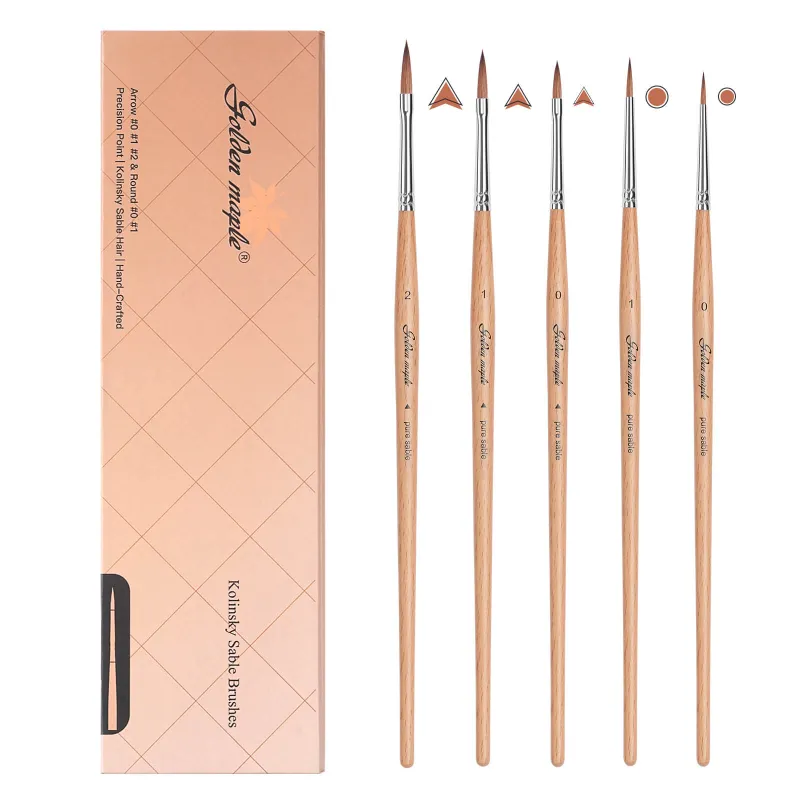
Kolinsky sable brushes for miniatures remain the first choice for tabletop painters and hobbyists because the hair comes from the tail of the Siberian weasel (the kolinsky sable animal), delivering a natural spring that synthetic fibers struggle to match. When you lift a loaded brush from the palette, the tip snaps back into a razor-sharp point without splaying.
That spring translates to control. Painting eyes, insignia, or edge highlights on a 28mm figure demands a brush that holds its shape under pressure, and kolinsky sable delivers:
- Fine point retention even after dozens of strokes
- High paint capacity so you complete a line without reloading
- Instant snap-back for consistent pressure and coverage
- Durability across hundreds of painting sessions when cared for properly
Kolinsky sable brushes acrylic painters love also work beautifully with oils, enamels, and watercolors. The natural hair wicks fluid evenly and releases it in a controlled flow, which matters when you're glazing a cheek or lining a 1:35 tank hatch.
For current pricing and to grab the code for 10% off, check Golden Maple's selection of kolinsky sable brushes set options.
How Chinese Brushes Differ in Construction and Technique
Chinese brushes use a variety of hairs—goat, wolf, weasel, or blends—and feature a tapered construction with no metal ferrule. The bamboo handle extends all the way to the tip, and the bristles are bound directly to it with thread and glue. This design creates a flexible, responsive tool that bends from the base rather than just the tip.
The result is a brush that excels at:
- Line variation in a single stroke, from thick to whisper-thin
- Expressive calligraphy and sumi-e ink work
- Soft washes and atmospheric effects in traditional watercolor
- Gestural painting where the brush becomes an extension of your arm
Chinese brushes reward a different grip and posture. You hold the handle vertically and paint from the shoulder, using the full length of the bristle to modulate pressure. For detail work, you can achieve incredibly fine lines by using only the very tip, but the technique takes practice and differs fundamentally from Western brush control.
Kolinsky Sable Brushes for Acrylic and Fine Detail
We paint miniatures and fine art with acrylics more than any other medium, and kolinsky sable brushes for acrylic paints handle the fast-drying formulas better than most alternatives. The natural hair holds a bead of thinned paint without drying out instantly, and the spring keeps the tip from dragging or skipping.
Here's how the two brush types compare for detail-heavy acrylic work:
| Feature | Kolinsky Sable | Chinese Brush |
|---|---|---|
| Point sharpness | Extremely fine, holds for hours | Fine when new, softens with use |
| Spring and snap | High; instant return to shape | Low to medium; flexible bend |
| Paint capacity | High; long uninterrupted strokes | Medium; depends on hair type |
| Best for | Miniatures, eyes, fine lines, edge highlights | Gestural marks, line variation, calligraphic effects |
For miniatures, sci-fi models, and anything requiring repeatable precision, the kolinsky sable wins. Pair it with a wet palette to keep your acrylics workable and your brush loaded evenly.
When to Choose a Chinese Brush Over Kolinsky Sable
Chinese brushes shine in watercolor, ink, and any medium where you want the tool itself to shape the mark. If you're painting bamboo, cherry blossoms, or loose landscape washes, a chinese brush offers the flex and character that kolinsky sable lacks.
Consider a Chinese brush when:
- You're learning traditional sumi-e, calligraphy, or Chinese watercolor techniques
- You want a single stroke to taper naturally from thick to thin
- You're working with fluid inks or very wet washes
- You prefer vertical brush holding and arm-based control
We also recommend Chinese brushes for travelers who paint loose, expressive studies on location. Grab a travel watercolor kit and a medium-sized Chinese brush, and you have a lightweight, versatile setup. For current pricing and our exclusive code, check Golden Maple's watercolor bundles.
Caring for Kolinsky Sable and Chinese Brushes
Both brush types demand proper care to maintain their points and longevity. Kolinsky sable brushes banned in some regions due to import restrictions make quality brushes harder to source, so protecting your investment matters.
For kolinsky sable:
- Rinse thoroughly in clean water after every session
- Never let paint dry in the ferrule
- Reshape the tip while damp and store upright or flat
- Use brush soap monthly to remove pigment buildup
For Chinese brushes:
- Rinse until the water runs clear, squeezing gently from base to tip
- Reshape and hang vertically to dry with the tip pointing down
- Store in a breathable wrap, never airtight
- Avoid soaking the bamboo handle for extended periods
We've kept kolinsky sable brushes in rotation for years by cleaning them immediately and never leaving them tip-down in water. Chinese brushes last just as long when you protect the binding and avoid crushing the delicate taper.
Our Recommendation: Match the Brush to Your Medium
If you paint miniatures, models, or Western fine art requiring repeatable precision, kolinsky sable brushes USA-made or imported versions deliver unmatched control. The snap and point make edge highlighting, eye detail, and fine lettering achievable even for beginners.
If you're exploring traditional Asian techniques, calligraphy, or expressive watercolor, a chinese brush teaches you to paint with your whole arm and embrace line variation. The learning curve is steeper, but the results have a gestural quality that stiff Western brushes can't replicate.
For most hobbyists, we recommend owning both. A size 0 or 1 kolinsky sable for miniatures and detail, and a medium Chinese brush for washes and expressive work, cover the full range. Add a miniature tool kit and a wet palette, and you have a complete precision painting setup.
Check the latest pricing and save 10% on your order at Golden Maple.
Frequently asked questions
Are kolinsky sable brushes worth the price for miniature painting?
Yes. Kolinsky sable brushes hold a finer point longer and snap back into shape after every stroke, which means fewer brush strokes and better control on tiny details. They last for years with proper care, making the upfront cost worthwhile for serious hobbyists.
Can I use a Chinese brush for miniature detail work?
You can, but it requires a different technique. Chinese brushes lack the spring of kolinsky sable and work best with a vertical grip and arm-based control. For repeatable precision on small models, a kolinsky sable brush is easier to master.
Why are some kolinsky sable brushes banned in certain countries?
Import restrictions stem from wildlife trade regulations, as the hair comes from the Siberian weasel. Some regions limit or ban kolinsky sable products, making synthetic or alternative natural-hair brushes the only legal option.
Which brush holds more paint, kolinsky sable or Chinese?
Kolinsky sable brushes hold more paint relative to their size and release it in a controlled flow. Chinese brush capacity depends on the hair type—goat holds more than wolf or weasel—but the flexible construction makes metering harder for fine detail.
Do kolinsky sable brushes work with acrylic paint?
Absolutely. Kolinsky sable brushes handle acrylics beautifully when you keep the paint thinned and clean the brush frequently. The natural hair wicks fluid evenly and resists the stiffness that kills synthetic brushes under heavy acrylic use.
How do I restore the point on a kolinsky sable brush?
Rinse thoroughly, apply a small amount of brush soap, and gently reshape the tip between your fingers while the bristles are damp. Let it dry flat or upright, and the natural spring should return the point. If paint has dried in the ferrule, soak in brush cleaner and repeat.