
Do You Really Need Airbrush Thinner or Can You Use Water?

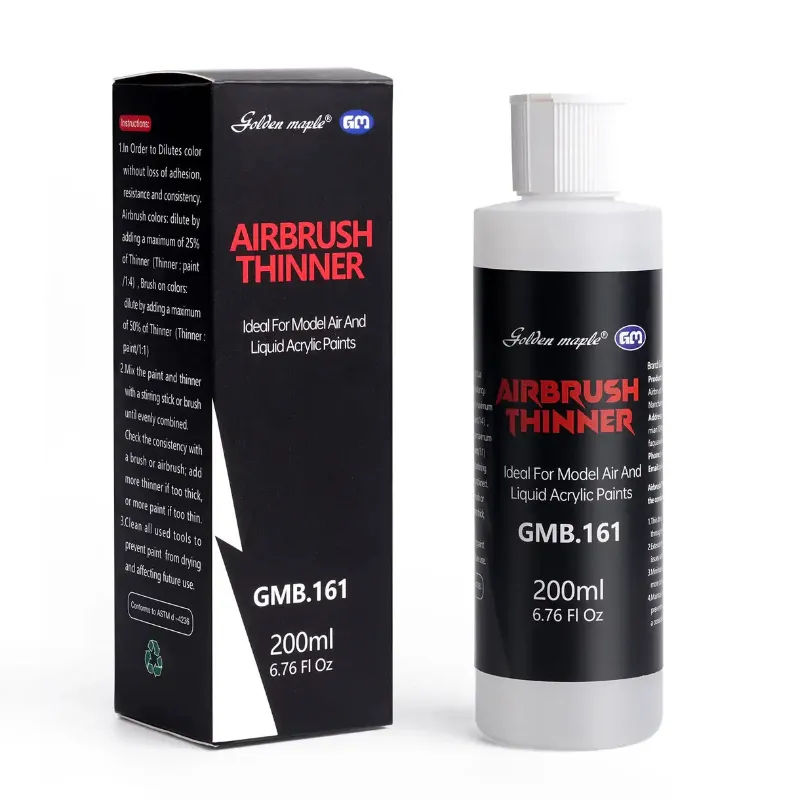
You can use water to thin some acrylic paints for airbrushing, but airbrush thinner delivers better flow control, prevents tip dry, and maintains proper paint adhesion across most formulas. Whether you need dedicated thinner depends on your paint brand, project demands, and how much control you want over drying time and finish quality.
We've tested both approaches across hobby paints, and the difference becomes obvious when you're chasing smooth gradients or working with miniature details. Here's what actually matters when choosing between thinner and water.
Why Airbrush Thinner Works Better Than Water
Dedicated airbrush thinner contains flow improvers, retarders, and surfactants that water simply doesn't provide. These additives slow drying time at the needle tip, reduce surface tension for finer atomization, and prevent paint from separating as it hits the surface.
Water thins paint mechanically but doesn't address how quickly it dries in the airbrush or how it behaves on the model. For paints like Citadel, Vallejo, or AK Interactive, airbrush thinner for acrylic paint keeps pigment suspension stable and prevents chalky finishes that straight water can cause.
The chemistry matters because acrylic binders need specific conditions to cure properly. Too much water weakens the polymer chains, leading to poor adhesion and a powdery surface. Thinner maintains the binder ratio while adjusting viscosity.
When Water Is Actually Good Enough
If you're spraying craft acrylics (Apple Barrel, DecoArt) for terrain or large surfaces where perfection isn't critical, distilled water works fine. These paints are already formulated with generous flow agents, and the lower cost makes water a practical choice for high-volume work.
Water also suits artists using the airbrush more as a wash tool than a precision instrument. When you're laying down transparent glazes or building up very thin layers on canvas, distilled water gets the job done without extra additives.
We keep both on hand: distilled water for terrain basecoats and bulk coverage, airbrush paint thinner for anything that demands smooth blends or fine detail. You can grab the current thinner pricing with our discount code and compare cost per session.
Best Airbrush Thinner Options for Hobby Paints
Different paint lines respond better to their brand-matched thinners, but some universal options handle multiple formulas well.
| Thinner Type | Best For | Flow Control |
|---|---|---|
| Vallejo airbrush thinner | Vallejo Model Color, Game Color | Excellent, retarder-heavy |
| Liquitex Airbrush Medium | Golden, Liquitex, heavy-body acrylics | Moderate, matte finish |
| Tamiya X-20A | Tamiya acrylics, lacquer-like finish | Fast-drying, gloss-friendly |
| Createx 4011 Reducer | Illustration work, t-shirts, canvas | High transparency control |
Vallejo airbrush thinner is our go-to for miniature work because it extends open time without pooling, which matters when you're shading 28mm faces or panel-lining armor plates. For Citadel paints, Vallejo thinner or Liquitex Medium both work better than Games Workshop's own Lahmian Medium, which can separate under pressure.
If you're thinning for the first time, start with a 1:1 paint-to-thinner ratio and adjust from there. Miniatures typically need 1:2 or 1:3 for basecoats, while fine highlights can go as thin as 1:4. Always test on scrap before hitting your actual model.
Airbrush Thinner vs Flow Improver: What's the Difference
Flow improver reduces surface tension so paint atomizes into finer droplets, but it doesn't thin the paint or slow drying. Airbrush thinner vs flow improver isn't really a versus situation—thinner often contains flow improver plus retarder and dilution medium.
Use flow improver (2-3 drops per 10ml paint) when your paint is already at spray consistency but you're getting spatter or uneven coverage. Use thinner when the paint is too thick to spray at all or when you need to slow down drying to prevent tip dry during long sessions.
We add a drop of flow improver to pre-thinned paints when airbrushing fine lines or working in dry climates. It's a finishing touch, not a replacement for proper thinning. Pairing quality thinner with tools from a solid miniature tool kit keeps your workflow smooth and your results consistent.
How to Avoid Tip Dry and Clogs
Tip dry happens when solvent evaporates faster than you're spraying, leaving dried paint at the needle tip. Thinner with retarder addresses this directly by keeping the paint wet longer. Water accelerates tip dry because it evaporates quickly and doesn't coat the needle.
To minimize clogs with any medium:
- Thin to whole milk consistency or slightly runnier for detail work
- Spray at 15-20 PSI for acrylics, adjust up for thicker mixes
- Keep a damp cotton swab nearby and wipe the needle tip every few minutes
- Run thinner or airbrush cleaner through the brush between color changes
- Use a wet palette to keep your paint reservoir from drying out while you work
When you're spraying for more than 20 minutes, tip dry becomes inevitable with water-thinned paint. Dedicated thinner cuts that maintenance time in half and keeps your spray pattern consistent. Check the latest deals on thinners and accessories to stock up before your next project.
Mixing Ratios and Testing for Your Paint Brand
Every paint brand has a different pigment load and binder formula, so no single ratio works universally. Start with the manufacturer's recommendation (usually printed on the bottle or their site), then adjust based on your airbrush and PSI.
For Citadel paints, we use 2:1 thinner to paint because the pigment is dense and the pots dry out fast. Vallejo Model Color sprays well at 1:1. Reaper HD paints are pre-thinned and often need just a few drops of flow improver rather than heavy dilution.
Always test on paper, plastic sprue, or a plinth base before committing to your model. Spray a gradient from thin to thick and check for:
- Smooth, even coverage with no spatter
- No pooling or running on vertical surfaces
- Consistent color saturation across the gradient
- Minimal tip dry after 30 seconds of continuous spray
If the paint sputters, thin more. If it runs, dial back the thinner or lower your PSI. If colors look washed out, you've over-thinned and need to start over.
Where to Buy Airbrush Thinner and What to Avoid
Hobby shops, art supply stores, and online retailers all stock airbrush thinner, but availability and markup vary wildly. We order direct from Golden Maple when we need airbrush thinner in bulk because their pricing beats local craft chains and shipping is fast.
Skip generic "acrylic medium" from the hardware store unless you're doing large-scale terrain. These products are designed for brush application and often contain fillers or matting agents that clog fine airbrush needles. Stick with products explicitly labeled for airbrushing.
Also avoid using rubbing alcohol or acetone as thinners. Alcohol can break acrylic binders and cause paint to bead on plastic. Acetone melts polystyrene and resin. If you're budget-constrained, distilled water is safer than improvised solvents, even if it's not ideal.
Our Take: When Thinner Is Worth It
If you airbrush more than once a month or you're working on miniatures, models, or any project where finish quality matters, dedicated thinner pays for itself in fewer clogs, better coverage, and less wasted paint. Water is fine for experimenting, terrain work, or practice sessions, but it's the budget option for a reason.
We keep a bottle of brand-matched thinner for each paint line we use regularly and a bottle of universal medium for oddball brands. The cost per model is negligible compared to the time saved on cleaning and rework, and the results look noticeably smoother. Pair your thinner with quality brushes like a kolinsky sable for detail touch-ups, and you've got a complete finishing workflow that handles everything from basecoats to final highlights.
Frequently asked questions
Can I use water instead of airbrush thinner for Vallejo paints?
You can, but Vallejo airbrush thinner gives better flow control and prevents tip dry. Water works for quick terrain jobs, but thinner maintains proper binder ratios and keeps paint from separating on the model.
What is the difference between airbrush thinner and flow improver?
Airbrush thinner dilutes paint and often includes retarders to slow drying, while flow improver only reduces surface tension for finer atomization. Use thinner to adjust viscosity and flow improver as a finishing additive for stubborn spatter.
How much airbrush thinner should I add to acrylic paint?
Start with a 1:1 paint-to-thinner ratio and adjust until you reach whole milk consistency. Miniature basecoats often need 1:2 or 1:3, while fine highlights can go as thin as 1:4 depending on your airbrush and PSI.
Does airbrush thinner work for Citadel paints?
Yes, dedicated airbrush thinner works better for Citadel paints than plain water or Lahmian Medium. We use a 2:1 thinner-to-paint ratio because Citadel pigments are dense and benefit from the extra flow control and slower drying time.
Can I mix different brands of airbrush thinner?
Mixing acrylic-based thinners from different brands usually works, but results can vary in drying time and finish. Stick with one thinner per session to avoid unexpected reactions, and always test on scrap before spraying your model.
Is distilled water better than tap water for thinning airbrush paint?
Yes, distilled water prevents mineral deposits and clogs that tap water causes. If you're using water instead of thinner, always use distilled to keep your airbrush clean and avoid spotting on painted surfaces.