
What to Pack in a Travel Watercolor Kit for Plein Air Painting

What to Pack in a Watercolor Travel Kit for Plein Air Painting
A watercolor travel kit should include paints, brushes, paper, water containers, and a portable palette so you can paint outdoors without hauling your entire studio. The right gear keeps you mobile, prepared for changing light, and ready to capture landscapes, cityscapes, or nature studies on location.
We've tested dozens of setups for plein air work and found that the best kits balance portability with enough color range and brush variety to handle most subjects. Whether you're hiking to a remote overlook or sketching in a city park, packing smart means more time painting and less time digging through a cluttered bag.
Start with a Professional Travel Watercolor Set
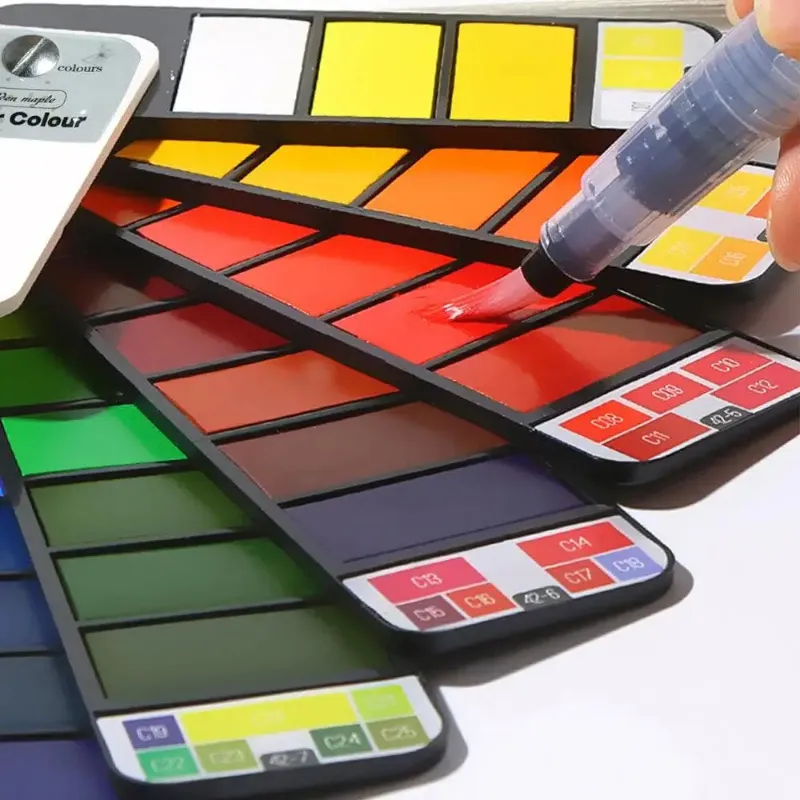
Your paint is the foundation. A professional travel watercolor set gives you artist-grade pigments in a compact form, usually as half-pans or small tubes arranged in a metal or plastic case that doubles as a mixing palette.
Look for sets that include at least 12 colors covering the primaries, a warm and cool version of each, plus earth tones and a few convenience mixes. We recommend a travel watercolor set with removable pans so you can swap in your most-used colors over time. The lid should offer multiple mixing wells, and the case should seal tightly to prevent leaks in your pack.
For a complete portable solution, many artists prefer a dedicated watercolor travel kit that bundles paints, a built-in palette, and sometimes a small brush or two. These all-in-one options are ideal for travelers who want a single, grab-and-go package. Check the latest pricing to see which configurations fit your budget.
Pack the Right Brushes for Outdoor Painting
Brushes make or break your plein air experience. You need versatility without carrying a full roll.
- Round brushes: sizes 4, 6, and 8 cover detail work through mid-sized washes
- Flat or one-stroke brush: size 1/2 inch for skies and large areas
- Detail liner: a size 0 or 1 for fine lines and signatures
A kolinsky sable round holds the most water and keeps a sharp point, making it the top choice for travelers who paint botanicals or architectural details. Synthetic blends dry faster and cost less, but they release water less predictably. For Eastern-style washes and calligraphic lines, a chinese brush adds expressive range with minimal weight.
Travel brushes with caps or retractable handles protect the bristles and save space. Store them tip-up in a brush holder or roll to prevent bending during transit.
Choose Paper That Fits Your Painting Style
Watercolor paper is heavy, so pack only what you'll use in a session or two. We've found that a watercolor painting kit for adults works best when it includes 6 to 12 sheets of 140 lb cold-press paper, either as loose sheets or in a block.
- Blocks: glued on all four sides, they stay flat without taping and you tear off each sheet when dry
- Pads: spiral or tape-bound, lighter but may buckle with wet washes
- Loose sheets: the most flexible, but you'll need clips or a board to secure them
A travel watercolor set with paper is the easiest option if you're new to plein air work. Many kits pair a compact paint set with a small watercolor block in the same case, giving you a true one-stop solution. Cut full sheets into quarters or sixths if you want to maximize variety and pack lighter.
Pack a Portable Palette and Water System
If your paint set doesn't have a built-in palette, bring a separate wet palette or a lightweight folding palette with at least six mixing wells. A wet palette keeps paints moist between sessions, which is helpful on multi-day trips or when you return to the same spot over several mornings.
For water, a collapsible silicone cup or a small screw-top jar works well. Bring two if you want to keep rinse water separate from clean water. Some artists carry a small spray bottle to rewet pans or mist the paper for soft edges.
- Collapsible water cups pack flat and hold 8 to 12 oz when open
- Wide-mouth jars (like baby food jars) don't tip as easily on uneven ground
- Water brush pens combine brush and reservoir in one tool, ideal for urban sketching
Add Essential Accessories for Field Work
A few small accessories make outdoor painting smoother and protect your work.
- Paper towels or a sponge: for lifting paint, blotting, and cleaning brushes
- Masking tape or clips: to secure paper to a board or block edges for a clean border
- Pencil and eraser: for light sketches before you paint
- Viewfinder or cropping L's: to frame compositions quickly
- Small craft knife: a precision craft knife trims paper, sharpens pencils, and scrapes highlights
Carry everything in a lightweight backpack, sling bag, or pochade box. We prefer bags with dedicated compartments so paints, brushes, and paper stay organized and nothing gets crushed. A sit pad or folding stool adds comfort if you'll be out for more than an hour.
Build Your Best Watercolor Travel Kit Setup
The best watercolor travel kit depends on how far you'll travel, how long you'll paint, and what subjects you prefer. For day hikes, prioritize weight and durability. For urban sketching, add a small sketchbook and a water brush pen. For serious plein air studies, bring a fuller palette and larger sheets.
We've built dozens of kits over the years and consistently return to this core setup: a 12 to 24 pan travel set, three versatile brushes, a watercolor block, a collapsible water cup, and a small towel. That combination fits in a daypack, handles most subjects, and leaves room for a camera or lunch.
Golden Maple offers a range of watercolor supplies for travelers, and you can grab the code for 10% off to make assembling your kit more affordable. Start with the essentials, test your setup on a local walk, and refine your packing list based on what you actually reach for in the field.
Plein air painting rewards preparation. Pack thoughtfully, keep your kit light, and you'll spend more time capturing the scene and less time managing your gear.
Frequently asked questions
What is the best watercolor travel kit for beginners?
A 12-pan travel watercolor set with a built-in palette, two or three round brushes in assorted sizes, and a small watercolor block or pad. This combination covers most subjects without overwhelming you with choices.
Do I need expensive brushes for plein air painting?
No, but a single quality kolinsky sable round in size 6 or 8 will hold more water and keep a better point than cheaper synthetics, making outdoor painting easier. Supplement it with affordable synthetic brushes for larger washes.
How do I keep my watercolor travel kit organized?
Use a dedicated bag or case with compartments for paints, brushes, paper, and water supplies. Store brushes tip-up or in a roll, and keep paper in a protective sleeve or block to prevent bending.
Can I make a watercolor travel kit homemade?
Yes. Fill an empty mint tin or small plastic case with half-pans of paint, add a small folding palette, pack a few brushes in a fabric roll, and carry paper in a zippered pouch. It's an affordable way to customize your setup.
What paper size should I pack for travel painting?
Quarter sheets (about 7.5 by 11 inches) or smaller work well for most plein air subjects. They're portable, dry quickly, and let you complete studies in an hour or two.
Do I need a wet palette for outdoor watercolor painting?
Not essential, but a wet palette keeps tube paints or rewetted pans moist between sessions, which is helpful on multi-day trips. For single outings, a dry palette or the lid of your paint set works fine.